Indica vs Sativa describes two historically distinct cannabis growth forms with different physical structures, terpene profiles, and reported effects. Indica plants grow short and bushy with broad leaves, traditionally associated with body relaxation. Sativa plants grow tall with narrow leaves, traditionally linked to energizing, cerebral effects. Modern science shows the real driver of your experience is cannabinoid and terpene chemistry, not the indica or sativa label alone.
Reviewed by Maya Chen, Cannabis Science Writer | Updated June 6, 2026
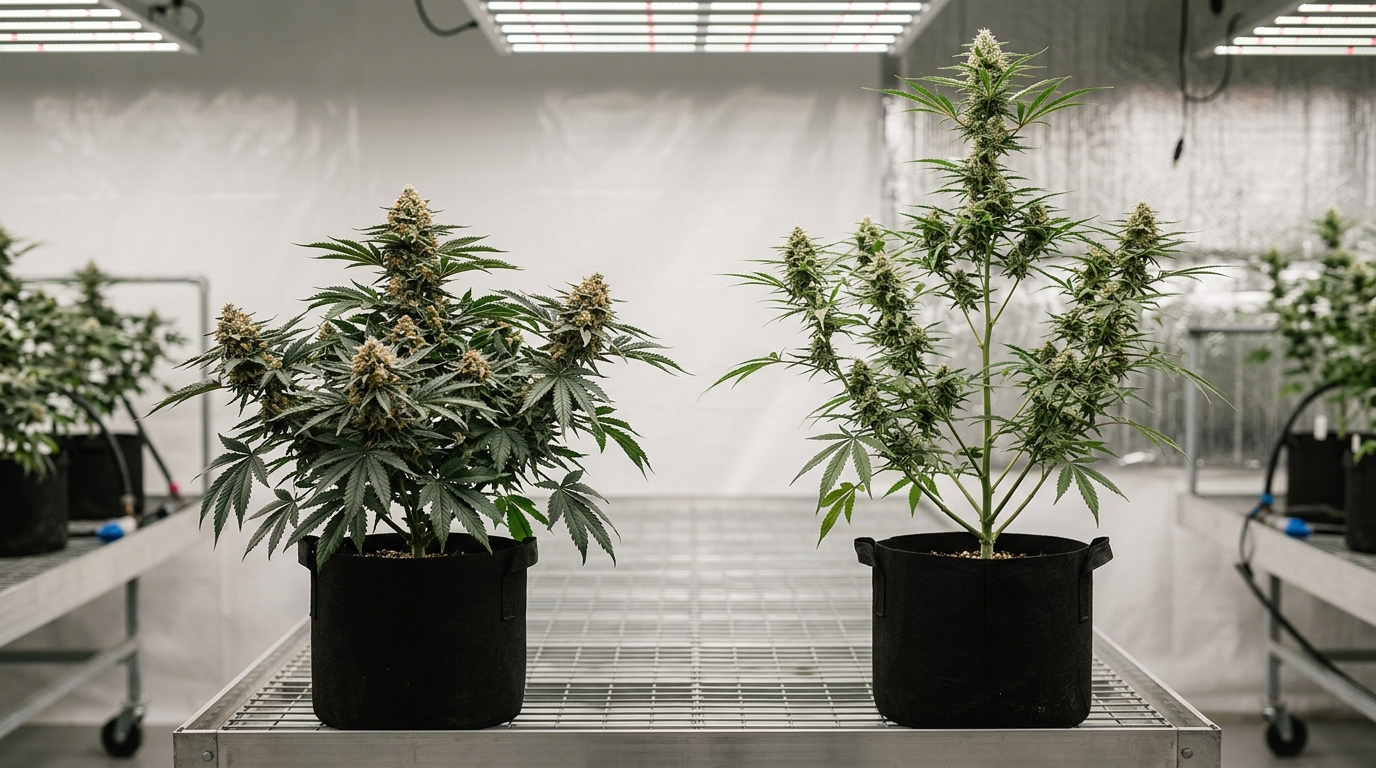
The indica vs sativa debate is one of the oldest conversations in cannabis culture. It shapes how budtenders recommend products, how seed banks categorize genetics, and how millions of consumers make purchasing decisions every single day. I’ve spent years analyzing terpene profiles and cannabinoid ratios, and I can tell you: the reality is more interesting than the simple two-category framework most people use. Understanding the genuine science here will make you a better consumer, a smarter grower, and far less likely to be disappointed by a purchase that didn’t deliver what the label promised.
What Is Indica?
Indica refers to a subspecies of Cannabis sativa L. originating from the Hindu Kush mountain range, spanning regions of Afghanistan, Pakistan, and northern India. These plants evolved in harsh, high-altitude environments, developing compact stature, dense resinous buds, and broad dark-green leaves. Flowering cycles typically run 7 to 9 weeks. Indica-leaning Landrace genetics include Afghan Kush, Hindu Kush, and Mazar-i-Sharif, all of which carry heavy Myrcene and Linalool terpene profiles.
What Is Sativa?
Sativa describes cannabis plants originating from equatorial regions including Colombia, Thailand, Mexico, and Jamaica. Tall and loosely branched, with thin, pale-green leaflets, these plants adapted to long growing seasons and humid climates. Flowering can stretch 10 to 16 weeks. Classic sativa Landrace genetics like Durban Poison, Acapulco Gold, and Thai carry terpene profiles dominated by Limonene, terpinolene, and pinene, which correlate with the bright, heady effects consumers typically associate with the category.
Key Differences
| Characteristic | Indica | Sativa |
|---|---|---|
| Plant Height | 2–4 feet (compact) | 6–12+ feet (tall) |
| Leaf Width | Broad, wide leaflets | Narrow, thin leaflets |
| Flowering Time | 7–9 weeks | 10–16 weeks |
| Bud Structure | Dense, compact, heavy | Loose, airy, elongated |
| Typical Aroma | Earthy, musky, skunky | Sweet, fruity, spicy |
| Dominant Terpenes | Myrcene, Linalool, Caryophyllene | Limonene, Terpinolene, Pinene |
| Traditional Effect Profile | Body relaxation, sedation | Cerebral energy, focus |
| Ideal Grow Environment | Indoor, limited vertical space | Outdoor, warm long season |
| Origin Climate | High-altitude, arid | Equatorial, humid |
| Example Strains | Northern Lights, Granddaddy Purple | Jack Herer, Sour Diesel |
Here’s where I need to be direct with you. The traditional indica/sativa framework is a useful shorthand, but the science has moved well past it. A landmark discussion published in Cannabis and Cannabinoid Research made the case that the terms “indica” and “sativa” as used in contemporary cannabis markets bear little relationship to the original botanical classifications proposed by Lamarck in 1785. The authors found that commercial strains labeled indica or sativa show overlapping chemical profiles with no consistent pattern that predicts effects.
I analyzed this problem from a terpene chemistry angle. The real predictor of whether a strain feels sedating or stimulating is not its morphological category. It’s the Terpenes present and the overall Entourage Effect those terpenes create alongside THC, CBD, and minor Cannabinoids. A high-Myrcene strain, regardless of whether it’s called indica or sativa, tends to produce heavier, more sedating effects because myrcene has demonstrated sedative properties in preclinical research. A strain loaded with limonene and terpinolene will feel brighter and more mentally active. That’s the chemistry talking, not the label.
A cross-sectional survey published in Scientific Reports found that while consumers do report different effects from indica and sativa products, those differences are partially explained by expectation and context, not just pharmacological action. Set and setting matter enormously here.
Did you know? According to the Oregon Liquor and Cannabis Commission, licensed Oregon dispensaries are required to provide product labels with cannabinoid and terpene content, giving consumers access to actual chemical data rather than relying solely on indica/sativa designations. This makes Oregon one of the more transparent cannabis markets in the country for consumers who want to choose by chemistry rather than category.
When to Choose Indica
Indica-dominant genetics make practical sense in several specific situations. Space is the first consideration. If you’re running an indoor grow with limited vertical clearance, an indica or indica-dominant Hybrid Strain will stay manageable without aggressive training. My own indoor runs with Northern Lights and Grape Ape both finished under four feet with minimal intervention, which is exactly what a tent grower needs.
From an effects standpoint, indica-leaning strains with high myrcene content are the category most consumers reach for in the evening. Research suggests that myrcene, which appears at higher concentrations in many indica-type cultivars, may contribute to sedating effects, though the evidence is still developing. If your goal is winding down after a long day, a strain like Granddaddy Purple or Ice Cream Cake with a Myrcene-forward terpene profile is going to align with that intention far more reliably than a broad “indica” label alone would suggest.
Flowering speed is another genuine advantage. Indica genetics finish 2 to 4 weeks faster than equatorial sativas. For growers running multiple cycles per year, that time savings adds up fast. The dense bud structure also tends to produce higher weight per square foot in a controlled indoor environment, which is why commercial cultivators have historically favored indica-dominant genetics for indoor production.
If you’re selecting by flavor, indica-dominant strains like LA Confidential or Kush Mints tend toward earthy, hash-like, and fuel-forward terpene profiles. Some consumers find those aromatic profiles more satisfying than the brighter, fruitier notes common in sativa-dominant plants.
When to Choose Sativa
Sativa genetics shine in outdoor grows with long warm seasons and unlimited vertical space. A true sativa-dominant plant given room to stretch can become a genuinely impressive specimen, reaching 10 to 12 feet and producing enormous yields when the climate cooperates. If you’re growing in a Mediterranean or subtropical climate with a growing season that extends into October or November, sativa genetics can outperform indicas on raw yield.
The reported effects profile is the main reason consumers seek sativa-dominant strains during daytime hours. Strains like Jack Herer, Amnesia Haze, and Strawberry Cough carry terpene profiles dominated by terpinolene and limonene. Those terpenes are associated with more uplifting, cognitively engaging experiences. I reach for these profiles when I need to stay focused and social rather than relaxed and horizontal.
Creative work is a common use case that sativa consumers mention consistently. The cerebral, thought-accelerating quality of a well-grown sativa like Sour Diesel or Green Crack can support brainstorming, music, or visual art in a way that a heavy indica typically does not. Individual responses vary significantly based on THC tolerance, personal biochemistry, and consumption method.
Sativa-dominant genetics also tend to carry more expressive terpene profiles. The aromatic range from tropical fruit to diesel to spice is broader in sativa-leaning cultivars, which makes them particularly interesting from a sensory standpoint. If you’re selecting cannabis the way a sommelier selects wine, sativa genetics offer more aromatic range to explore.
The Hybrid Reality
Almost every commercially available strain today is a Hybrid Strain. Pure landrace genetics represent a tiny fraction of what consumers actually encounter in dispensaries or grow from seed banks. When a seed bank labels a strain “indica-dominant,” they’re typically communicating that the plant leans toward indica growth structure and terpene characteristics, not that it’s a genetically pure indica specimen.
This is why I always recommend looking at the actual terpene profile data when it’s available. A strain labeled sativa-dominant but carrying 1.5% myrcene and 0.3% limonene is going to feel very different from a sativa-dominant strain with 1.2% terpinolene and 0.8% limonene. The Genotype sets the potential, but the expressed chemistry determines the experience. Check out our full cannabis glossary for deeper dives into individual terpenes and cannabinoids that shape those profiles.
Frequently Asked Questions
Is indica or sativa stronger?
Neither category is inherently stronger. Potency is determined by THC percentage and the overall cannabinoid ratio, not by whether a strain is classified as indica or sativa. You can find 30%+ THC indicas and 30%+ THC sativas. Strains like Bruce Banner and RS11 both carry extremely high THC concentrations despite sitting in different morphological categories. If you’re evaluating strength, look at the lab-tested cannabinoid numbers, not the category label.
Is indica or sativa better for anxiety?
This is one of the most common questions I get, and the honest answer is that it depends entirely on the individual and the specific product. Research suggests that high-THC products of any category can worsen anxiety in some users, particularly at high doses or in low-tolerance consumers. Some people find that CBD-rich strains with calming terpenes like Linalool and Caryophyllene are better suited for anxiety management than high-THC products regardless of indica or sativa classification. Microdosing is a strategy worth considering if anxiety is a primary concern. Set and setting, meaning your environment and mental state going in, often matter more than the strain category in determining whether an experience feels anxious or calm.
Do consumers prefer sativa or indica?
Preference splits pretty evenly in practice, with context driving the choice more than loyalty to one category. In my experience talking to seasoned consumers, most develop a time-of-day approach: sativa-leaning profiles for daytime and social situations, indica-leaning profiles for evenings and sleep. A cross-sectional survey published in Scientific Reports found that consumers report using indica-labeled products more often for sleep and pain, while sativa-labeled products were more commonly associated with euphoria and energy. The preference pattern is real, even if the underlying botanical classification is more complicated than the labels suggest.
What is the difference between indica, sativa, and hybrid?
Indica and sativa represent the two primary botanical growth forms of cannabis, with distinct physical structures, flowering times, and terpene tendencies as described throughout this entry. A Hybrid Strain is any cultivar that carries genetics from both. Since virtually all modern strains are hybrids to some degree, the practical distinction is about which characteristics dominate: indica-dominant hybrids lean toward compact growth and relaxing terpene profiles, sativa-dominant hybrids lean toward tall growth and energizing terpene profiles, and balanced hybrids sit somewhere in between. The Ruderalis subspecies adds a third genetic lineage used primarily in autoflowering breeding programs.
Ready to grow your own indica or sativa? Explore our full catalog of feminized seeds including indica-dominant, sativa-dominant, and balanced hybrids from verified breeders.