Caryophyllene (also called beta-caryophyllene or BCP) is a bicyclic sesquiterpene found abundantly in cannabis, black pepper, cloves, and cinnamon. It is the only known terpene that binds directly to CB2 cannabinoid receptors in the human body, making it a dietary cannabinoid as well as a terpene. Its aroma is spicy, peppery, and woody.
Reviewed by Maya Chen, Cannabis Science Writer | Updated May 22, 2026
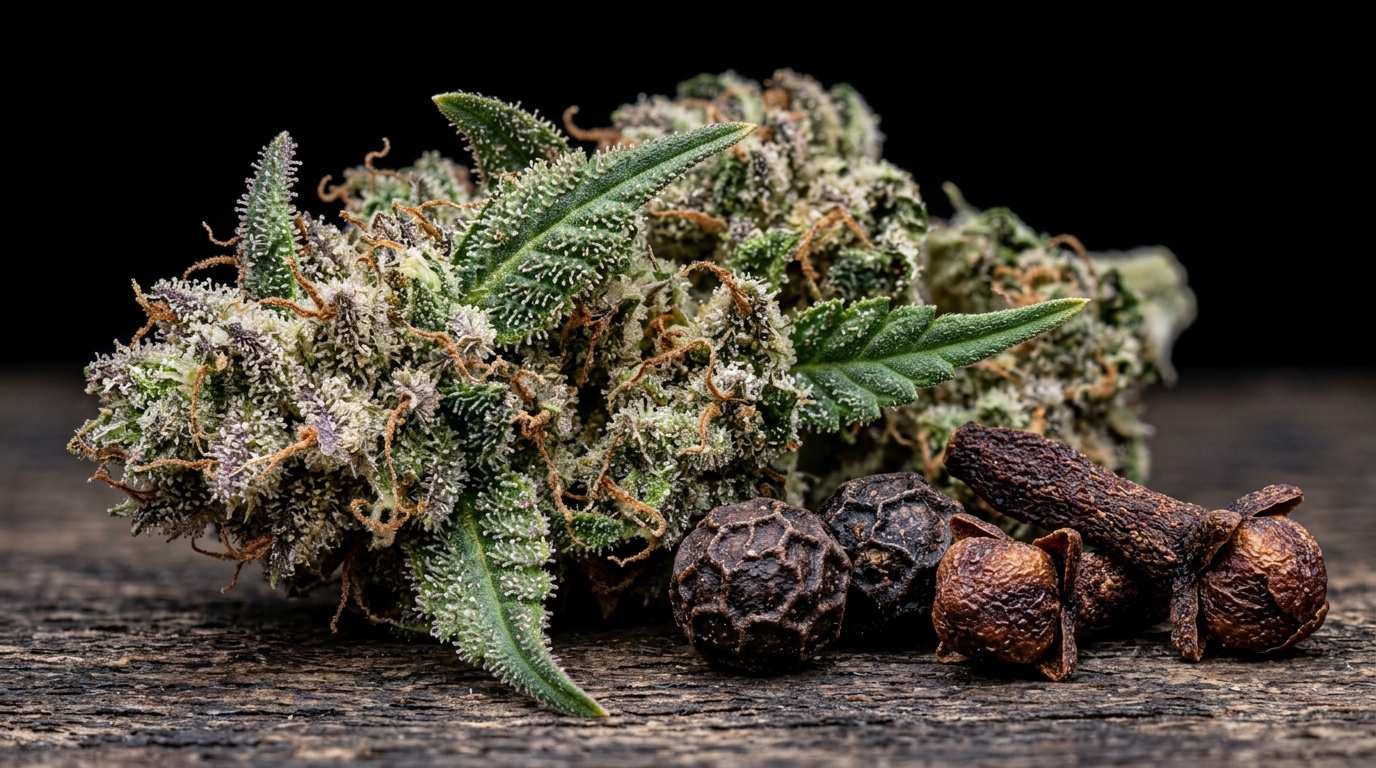
What Is Caryophyllene?
Beta-caryophyllene is a sesquiterpene with the molecular formula C₁₅H₂₄. It occurs naturally in over 200 plant species, and in cannabis it consistently ranks among the most concentrated terpenes detected in lab analyses, often appearing at levels between 0.2% and 1.5% of total flower weight depending on the cultivar. That peppery bite you feel when you crack open a fresh grinder? Caryophyllene.
In my research and terpene profiling work, I find it fascinating that caryophyllene occupies a genuinely unique position in the cannabis glossary. It sits at the exact intersection of terpene chemistry and cannabinoid pharmacology. No other terpene does that. The compound exists in two primary structural forms: the more biologically active trans-beta-caryophyllene and caryophyllene oxide, which is its oxidized derivative and the compound drug-detection dogs are actually trained to identify in cannabis.
You will find significant caryophyllene concentrations in strains like Girl Scout Cookies, OG Kush, Wedding Cake, and Gorilla Glue. These cultivars routinely test with caryophyllene as either the primary or secondary terpene in their profile, which directly informs their characteristic spiced, earthy character.
The CB2 Receptor Connection: Why Caryophyllene Is Scientifically Unique
Beta-caryophyllene is the only terpene confirmed to act as a selective agonist at CB2 cannabinoid receptors, concentrated in immune tissue, the peripheral nervous system, and the gastrointestinal tract. This distinction separates it from every other terpene in the cannabis plant and has driven significant research interest over the past decade.
A study published at PMC (NCBI) examining beta-caryophyllene as a CB2 selective cannabinoid confirmed its receptor-binding activity and explored downstream implications for inflammatory pathways. CB2 activation does not produce the psychoactive effects associated with CB1 receptor binding, which is why caryophyllene does not alter your high the way THC does. It works on a parallel track entirely.
Research suggests this CB2 activity may contribute to anti-inflammatory and analgesic effects. A separate investigation into the protective effects of BCP in chronic disease models found promising results across several inflammatory markers. These are preliminary findings, and I always stress that research suggests these mechanisms rather than confirming therapeutic outcomes for human clinical use.
The combination of caryophyllene with CBD has also drawn attention. Research examining cannabidiol and beta-caryophyllene in combination indicates potential synergistic activity, fitting neatly into the broader framework of the entourage effect.
Did you know? According to the Oregon Liquor and Cannabis Commission, licensed cannabis retailers in Oregon are required to provide terpene test data on product labels, meaning Oregon consumers can directly verify caryophyllene concentrations before purchasing. This transparency has made Oregon one of the more terpene-literate cannabis markets in the country.
Caryophyllene in Practice: Effects, Flavor, and Vaporization
When evaluating a strain’s terpene profile, caryophyllene typically contributes a grounding, body-focused quality to the overall experience. It does not produce euphoria on its own. Instead, it appears to modulate the broader cannabinoid-terpene interaction in ways that many consumers describe as calming or physically settling.
Some studies indicate caryophyllene may play a role in stress response. Research examining super-class cannabis terpenes including beta-caryophyllene explored behavioral effects and suggested potential anxiolytic properties in preclinical models. I want to be precise: these are animal studies and early-phase research. Promising, not conclusive.
In terms of flavor, caryophyllene delivers the spicy, peppery, clove-like notes that make strains like Wedding Cake, Gorilla Glue, and Gelato so recognizable to experienced consumers. It pairs frequently with Myrcene and Linalool in indica-leaning terpene profiles, creating that classic earthy-spiced foundation.
One practical note for home consumers: caryophyllene is relatively heat-stable compared to lighter monoterpenes. Its boiling point sits around 130°C (266°F), meaning it survives vaporization at moderate temperatures better than more volatile compounds. If you are using a dry herb vaporizer and want to preserve caryophyllene content, I recommend keeping your device in the 175°C to 185°C range.
Key Facts
✓ Beta-caryophyllene is a bicyclic sesquiterpene with molecular formula C₁₅H₂₄, found in cannabis, black pepper, cloves, and cinnamon
✓ It is the only terpene confirmed to bind selectively to CB2 cannabinoid receptors, classifying it as both a terpene and a dietary cannabinoid
✓ Caryophyllene does not bind CB1 receptors and does not produce psychoactive effects on its own
✓ Its boiling point is approximately 130°C (266°F), making it more heat-stable than many lighter cannabis terpenes
✓ Caryophyllene oxide is the oxidized form that drug-detection dogs are trained to identify in cannabis
✓ Research suggests potential anti-inflammatory and anxiolytic properties through CB2 receptor activation, though clinical evidence in humans remains limited
✓ High-caryophyllene strains include Girl Scout Cookies, OG Kush, Wedding Cake, Gorilla Glue, Biscotti, and Gelato
✓ It commonly appears alongside Myrcene and Linalool in indica-leaning terpene profiles
Frequently Asked Questions
What does caryophyllene do for your high?
Caryophyllene does not directly alter your psychoactive experience the way THC does, because it binds CB2 receptors rather than CB1 receptors. CB1 activation is what drives intoxication. Instead, caryophyllene contributes to the entourage effect by potentially modulating inflammation and stress responses through its CB2 activity. Many consumers report a more grounded, body-focused quality in high-caryophyllene strains, though this is likely the result of the full terpene and cannabinoid profile working together rather than caryophyllene in isolation.
Is caryophyllene indica or sativa?
Caryophyllene is not exclusive to either indica or sativa genetics. It appears in both, though it is particularly common in cultivars with OG Kush and GSC lineage, which tend to be indica-dominant or balanced hybrids. The terpene itself has no genetic allegiance to plant morphology. What matters is the specific cultivar’s chemistry, not a broad category label. I always recommend looking at actual lab test data for terpene percentages rather than relying on indica or sativa classifications.
What is caryophyllene oxide and is it different from beta-caryophyllene?
Yes, they are structurally distinct compounds. Beta-caryophyllene is the active terpene found in fresh cannabis, responsible for the peppery aroma and CB2 receptor binding. Caryophyllene oxide forms when beta-caryophyllene oxidizes, typically during storage, drying, or processing. It is the compound that trained detection dogs respond to in cannabis searches, and it does not share the same CB2 receptor activity as its precursor. Proper storage in airtight, UV-protected containers slows this oxidation process significantly.
Does caryophyllene make you hungry?
Research does not currently support caryophyllene as a significant driver of appetite stimulation. That effect is primarily associated with THC’s activity at CB1 receptors in the hypothalamus. Since caryophyllene targets CB2 receptors instead, it does not trigger the same hunger-signaling cascade. Myrcene is more commonly associated with the sedating qualities that sometimes accompany appetite increases in heavy indica strains. If you are experiencing strong hunger after consuming a caryophyllene-rich strain, the THC content is almost certainly the primary driver.
Ready to grow a strain with a rich, spicy caryophyllene terpene profile? Explore our selection of high-THC seeds featuring the GSC and OG Kush genetics that consistently produce caryophyllene-dominant flower.