Curing is the controlled aging process applied to harvested, dried cannabis buds. Growers place buds in airtight containers and burp them regularly over two to eight weeks, allowing residual moisture to redistribute, chlorophyll to break down, and terpene profiles to stabilize. The result is smoother smoke, richer flavor, and better-preserved cannabinoids compared to uncured flower.
Reviewed by Darrel Henderson, Cannabis Cultivation Specialist | Updated May 12, 2026
What Curing Actually Is (And Why It’s Not Just Drying)
Drying and curing are two separate stages, and mixing them up is one of the most common beginner mistakes I see. Drying removes the bulk of surface moisture from freshly harvested buds, typically over seven to fourteen days in a controlled environment. Curing is what happens after that. It’s a slower, more deliberate process where buds sit in sealed containers and the remaining internal moisture migrates outward, while enzymatic activity continues to break down residual sugars and chlorophyll trapped inside the plant tissue.
Think of it like aging a cheese or a wine. The raw product is technically done, but time and controlled conditions transform it into something far better. According to postharvest research published by PMC/NIH, post-harvest operations including drying and curing directly affect the cannabinoid and terpene content of the final product. Skip the cure, and you’re leaving quality on the table.
I ran a split batch of Gorilla Glue last fall, jarring half immediately after drying and curing the other half for six weeks. The difference in terps alone was obvious on the first whiff. The cured side had that deep, complex funk. The uncured half smelled sharp and a little grassy.
How Curing Affects Cannabinoids and Terpenes
Proper curing preserves and, in some cases, refines the chemical profile of harvested cannabis. Chlorophyll degradation during the cure directly impacts the harshness of the smoke. Residual sugars break down. Terpene volatility slows inside a sealed jar, keeping those aromatic compounds intact rather than letting them off-gas into open air.
Research published in PMC’s cultivar-specific drying study confirms that the approach you take post-harvest has a measurable effect on terpene retention, and that different cultivars respond differently to drying and curing conditions. That’s something I’ve felt intuitively for years. A high-myrcene strain like Blue Dream holds its terps better at slightly lower cure temperatures than a pinene-forward pheno like LA Confidential, which seems to appreciate a bit more airflow during the early burping phase.
Cannabinoid stability matters too. THCA converts slowly to THC over time, and improper curing conditions (too warm, too much light exposure) accelerate cannabinoid degradation. Keeping your cure dark and cool, around 60 to 65°F, protects what your plants worked hard to build.
Did you know? Colorado, where I grow, requires licensed cannabis operations to track moisture content through the post-harvest process. According to the Colorado Division of Professions and Occupations (Medical Marijuana Enforcement Division), commercial cannabis must meet specific moisture thresholds before sale, which is exactly why a proper cure matters at scale, not just in home grows.
How to Cure Cannabis: The Practical Process
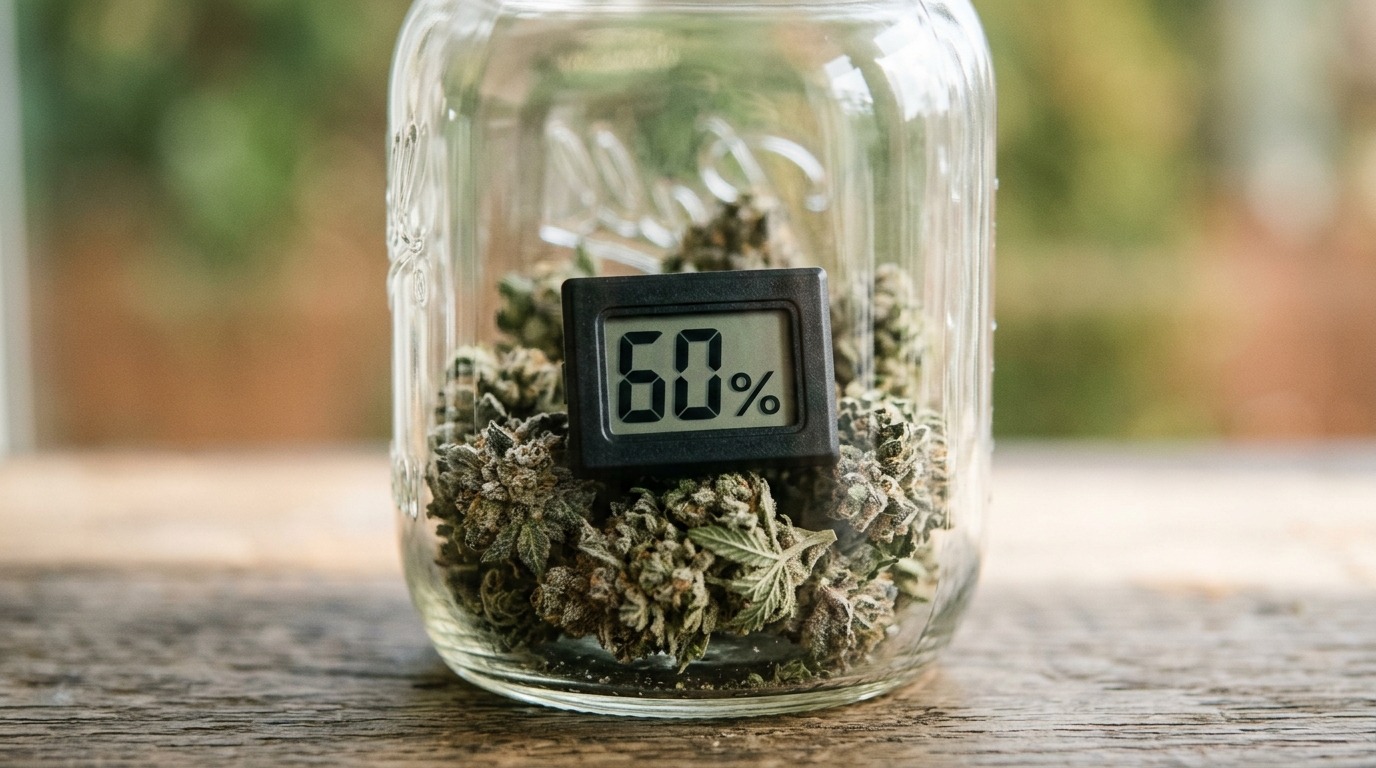
The standard cure uses wide-mouth glass mason jars, a hygrometer inside each jar, and a dark storage space with stable temperatures. Fill jars about 75% full to leave air space. Seal them and check the humidity reading after twelve hours.
Target 58 to 62% relative humidity inside the jar. If readings spike above 65%, leave the lid off for an hour or two. This is called “burping.” Do it daily for the first two weeks, then drop to every few days for weeks three and four. After four to eight weeks, most cultivars hit their peak. Some heavy, resinous phenos benefit from a full eight weeks or longer.
Boveda or Integra Boost humidity packs are a solid backup once you hit the maintenance phase of the cure. I don’t rely on them as a substitute for proper drying first, though. They can’t rescue buds that were jarred too wet. If your jar smells like ammonia when you open it, bacteria are at work and the buds were too moist going in. That batch is compromised.
For a deeper breakdown of the full harvest-to-cure timeline, including trichome reading and the dry room setup, check out our detailed guide.
Curing Time: How Long Is Long Enough?
Minimum viable cure is two weeks. Honestly, four weeks is where most home-grown flower starts to shine. Commercial operations sometimes push to eight weeks or more on premium batches, and the difference is real.
Faster isn’t better here. I’ve seen growers get impatient around week two because the buds feel dry and look great. But the internal chemistry is still working. Chlorophyll keeps breaking down. Terpene complexity keeps developing. Rushing it means harsher hits and a flatter flavor profile than the strain is actually capable of producing.
Some growers ask about freeze-drying as an alternative. It’s faster, no question. But the jury is still out on whether freeze-dried flower matches a traditional long cure for terpene complexity and smoke quality. I’ve sampled freeze-dried commercial product and it can be impressive, but for home growers, glass jars and patience still win in my experience.
Key Facts
✓ Curing begins after the initial drying phase is complete, typically when stems snap rather than bend
✓ Target jar humidity is 58 to 62% relative humidity throughout the cure
✓ Burp jars daily for the first two weeks, then every few days through week four
✓ Minimum effective cure is two weeks; four to eight weeks produces noticeably better results
✓ Ammonia smell inside a jar indicates bacteria from excess moisture at jarring time
✓ Curing degrades chlorophyll and residual sugars, directly reducing smoke harshness
✓ Dark, cool storage (60 to 65°F) slows cannabinoid degradation during the cure
✓ Different cultivars respond differently to curing conditions, especially terpene-heavy phenos
Frequently Asked Questions
What’s the difference between drying and curing cannabis?
Drying removes the majority of surface and structural moisture from freshly cut cannabis, usually over seven to fourteen days in a room with controlled temperature and humidity. Curing starts after drying is complete. It uses sealed containers to slow the remaining moisture migration, break down chlorophyll and sugars, and stabilize the terpene and cannabinoid profile. Drying is fast and functional. Curing is where the quality actually develops. You can smoke dried weed, but you’ll taste the difference a proper cure makes on the first hit.
How do I know when buds are dry enough to start curing?
The classic test is the stem snap. Grab a smaller branch and bend it. If it snaps cleanly, the surface moisture is gone and you’re ready to jar. If it bends and folds without breaking, give it more time in the dry room. Buds should feel dry to the touch but not crumbly or brittle. Popcorn buds and smaller pieces dry faster than dense colas, so check multiple sites on your plant before you make the call. I always check the thickest part of the main cola last, since that’s where moisture hides longest.
Can you cure cannabis for too long?
Yes, though it takes a while to get there. Properly sealed and stored flower can cure for several months without significant degradation. The sweet spot for most cultivars is four to eight weeks. Beyond three to four months in a jar, you may start losing terpene volatility and the flavor can flatten out. Cannabinoid degradation also accelerates if storage conditions slip, especially with heat or light exposure. For long-term storage past the cure phase, check out our [[Does Weed Expire]] entry for the full breakdown on keeping flower fresh over time.
What humidity level should I target when curing cannabis?
58 to 62% relative humidity inside the jar is the standard target most experienced growers use. Below 55%, buds dry out too fast and terpene development stalls. Above 65% for extended periods, you risk mold and bacterial growth. A small digital hygrometer inside each jar takes the guesswork out completely. I keep one in every jar for the first two weeks. It’s a small investment that saves batches. You can find more on the full environmental picture in our [[Soil vs Hydro]] entry, which covers how your growing medium affects the moisture content of harvested buds going into the cure.
Want to go deeper on the full harvest process? Our cannabis glossary covers every stage from seed to smoke, and our detailed harvest guide walks through trichome reading, dry room setup, and the full cure timeline in one place.
Ready to grow buds worth curing? Start with genetics that deliver the terpene complexity and trichome coverage that makes the curing process pay off.