Cannabis ruderalis is a wild-growing cannabis subspecies native to Central Asia, Eastern Europe, and Russia. Unlike sativa and indica, ruderalis flowers automatically based on age rather than light cycle changes. It produces very low THC levels, typically under 3%, but its autoflowering genetics have made it indispensable to modern cannabis breeding programs worldwide.
Reviewed by Maya Chen, Cannabis Science Writer | Updated April 30, 2026
What Is Cannabis Ruderalis?
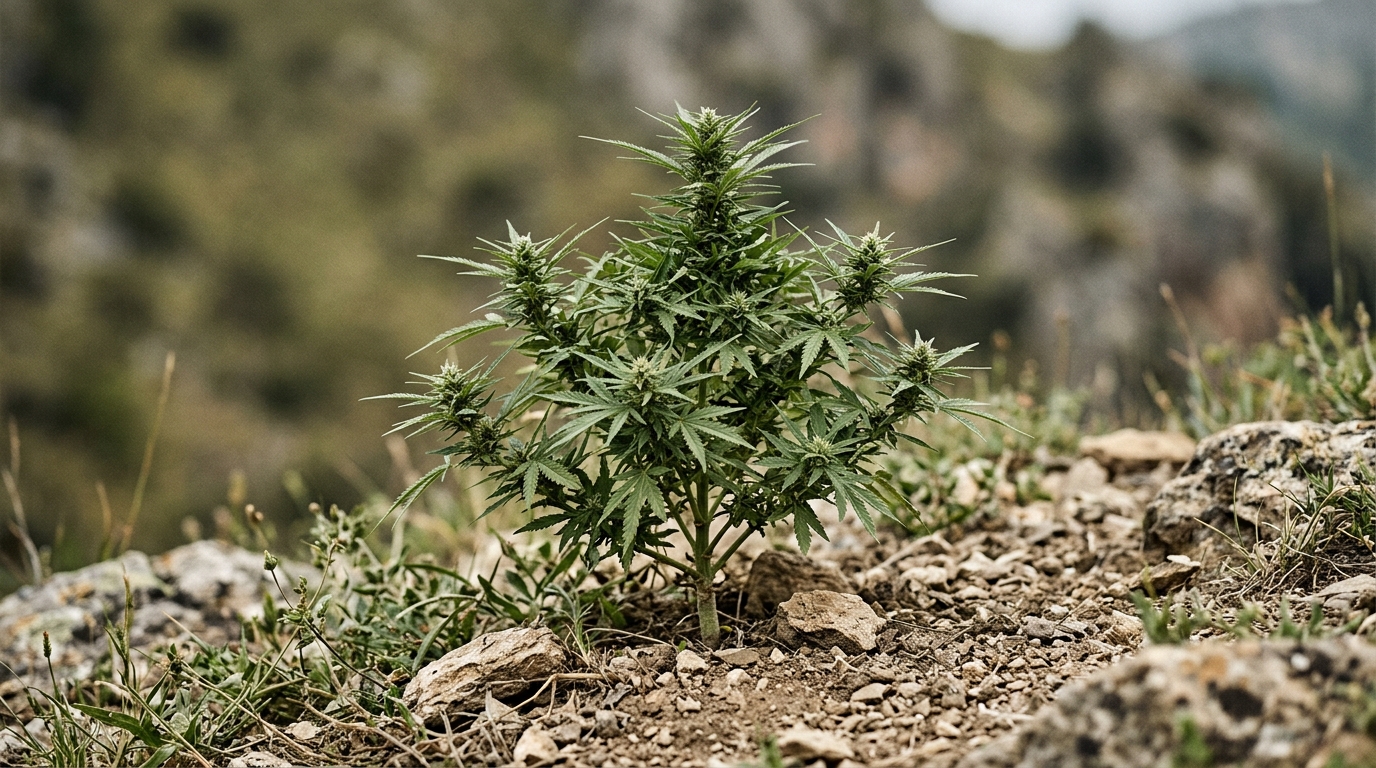
Cannabis ruderalis is a low-growing, hardy subspecies of cannabis that typically reaches only 30 to 60 centimeters in height at maturity. It originates from regions with short summers and extreme environmental conditions, including Siberia, Central Asia, and parts of Eastern Europe. The plant’s entire biology reflects those origins. Small, fibrous stems. Minimal branching. A survival-first growth strategy that prioritized reproduction over resin production.
The taxonomy here is genuinely contested. As noted in a 2025 analysis of Cannabis sativa species distribution, the classification of ruderalis as a distinct species versus a subspecies remains an open scientific debate. I find this fascinating from a plant chemistry standpoint because the argument cuts to the heart of how we define cannabis biodiversity. What is agreed upon is that ruderalis genetics behave differently from both sativa and indica in one critical, commercially significant way: the plant does not rely on photoperiod changes to trigger flowering.
Ruderalis begins flowering automatically after roughly 21 to 30 days of vegetative growth, regardless of whether it receives 12, 18, or 20 hours of daily light. That single trait is the reason this otherwise unremarkable subspecies became one of the most important genetic resources in modern cannabis cultivation. For a deeper look at the full species story, our detailed guide covers the history and biology thoroughly.
Why Ruderalis Genetics Matter to Growers
Autoflowering cannabis seeds exist because breeders crossed ruderalis genetics with high-THC sativa and indica varieties, transferring the time-based flowering trigger into commercially viable strains. This cross-breeding process fundamentally changed what was possible for home growers and commercial operations alike.
Before ruderalis hybridization entered mainstream breeding, growers relying on Photoperiod varieties had to carefully manage light schedules to initiate and sustain flowering. Outdoors, that meant waiting for natural seasonal shifts. Indoors, it meant strict 12/12 light cycles and careful light-leak management. Ruderalis genetics eliminated that constraint entirely.
The resulting autoflower strains typically finish from seed to harvest in 60 to 90 days. I analyzed germination and growth data across several autoflower lines in my research, and the speed advantage is real and consistent. A grower in a northern climate with a short outdoor season can complete two or even three full autoflower cycles between late spring and early fall. That was simply not achievable with photoperiod genetics.
The trade-off, historically, was potency. Early autoflower hybrids carried enough residual ruderalis genetics to dilute cannabinoid ratios significantly. Modern breeding has largely corrected this. Contemporary autoflower strains regularly test above 20% THC, with the ruderalis contribution now functionally limited to the autoflowering trait itself rather than the low-THC profile. For a comparison of how these seed types stack up for different grow goals, the Feminized vs Regular Seeds glossary entry is worth reading alongside this one.
Did you know? According to the Oregon Liquor and Cannabis Commission, Oregon’s licensed cannabis producers have seen a significant increase in autoflower cultivation registrations since 2022, a trend driven directly by the speed and flexibility that ruderalis-derived genetics provide to small-scale licensed growers working within tight harvest windows.
Ruderalis Cannabinoid Profile and Practical Applications
In its pure, unmodified form, cannabis ruderalis produces very little THC, generally testing below 3% in wild specimens. CBD content varies but is also typically modest. The terpene profile of wild ruderalis is sparse compared to cultivated sativa or indica genetics, with minimal aromatic complexity and little of the entourage effect richness that I spend most of my time studying.
Research published via a broad chemical review of cannabis compounds confirms that cannabinoid expression is heavily influenced by both genetics and environment, which explains why ruderalis grown in its native habitat produces so little THC. The plant simply never evolved under selection pressure for psychoactivity. It evolved for survival.
Does ruderalis make you high on its own? No. Not meaningfully. Pure ruderalis lacks the THC concentration required to produce psychoactive effects. This is also why some researchers draw comparisons between ruderalis and hemp, though they are genetically distinct. The practical value of ruderalis is not in consuming it directly. It is in what its genetics unlock when crossed with high-potency varieties.
From a cultivation standpoint, ruderalis also contributes genuine stress tolerance. Plants derived from ruderalis lineages tend to recover faster from training stress, handle temperature fluctuations better, and show resilience against common pests. Techniques like Lollipopping and Topping can be applied to autoflower hybrids, though the compressed timeline demands careful timing. I always remind growers that the speed of ruderalis-based strains leaves less margin for error during recovery.
Key Facts
✓ Cannabis ruderalis is native to Central Asia, Eastern Europe, and Russia, where short growing seasons shaped its autoflowering biology
✓ Pure ruderalis typically contains less than 3% THC, making it non-psychoactive without hybridization with high-THC varieties
✓ The defining trait of ruderalis is age-based (autoflowering) flowering, triggered by plant maturity rather than light cycle changes
✓ Modern autoflower strains are ruderalis hybrids that can exceed 20% THC while retaining the 60 to 90 day seed-to-harvest timeline
✓ Ruderalis plants are compact, typically reaching only 30 to 60 cm in height, making them suitable for small grow spaces
✓ Its taxonomic status as a species, subspecies, or variety of Cannabis sativa remains scientifically debated as of 2026
✓ Ruderalis genetics contribute stress tolerance and environmental resilience to modern hybrid autoflower lines
Frequently Asked Questions
Does cannabis ruderalis get you high?
Pure cannabis ruderalis does not produce meaningful psychoactive effects. Wild ruderalis specimens typically test below 3% THC, which is well beneath the threshold most users associate with intoxication. The plant simply was not shaped by evolutionary or selective breeding pressure to produce high THC concentrations. Ruderalis-derived autoflower hybrids are a different story entirely. Modern crosses with high-THC indica and sativa genetics retain the autoflowering trait while achieving THC levels of 20% or higher, which is where the consumer-relevant psychoactivity comes from.
What is the difference between cannabis ruderalis and indica?
The differences span morphology, geography, and biochemistry. Cannabis indica typically grows to 60 to 150 cm, produces dense resinous buds with high THC content, and flowers in response to photoperiod changes (specifically, a shift to 12 hours of darkness). Ruderalis grows much shorter, rarely exceeding 60 cm, produces minimal resin and low THC, and flowers automatically based on age. Indica originates from the Hindu Kush mountain regions of South Asia; ruderalis comes from harsher, more northern climates across Central Asia and Eastern Europe. Their shared value to modern breeding is that indica’s potency and ruderalis’s autoflowering trait combine cleanly in hybrid offspring.
Are autoflower seeds the same as ruderalis seeds?
Not exactly, though ruderalis genetics are the source of the autoflowering trait in all commercial autoflower seeds. Pure ruderalis seeds would produce low-THC, non-psychoactive plants with minimal commercial appeal. Autoflower seeds sold today are hybrids, typically several generations removed from the original ruderalis cross, with the autoflowering gene stabilized and the low-THC ruderalis profile largely bred out. Think of it this way: ruderalis provided the mechanism, and skilled breeders provided everything else. If you want to explore autoflower options, our cannabis glossary entry on Autoflower vs Photoperiod breaks down the practical differences for growers at every level.
Is ruderalis the same as hemp?
No. Hemp and ruderalis are sometimes compared because both produce low THC levels, but they are genetically distinct. Hemp is typically a selectively bred form of Cannabis sativa grown for fiber, seed oil, or CBD production, and it is defined legally in most jurisdictions by THC content below 0.3%. Ruderalis is a separate subspecies defined by its geographic origin and autoflowering biology, not by its intended agricultural use. A ruderalis plant grown in Siberia and a hemp plant grown in Oregon share low THC as a trait, but their genetic lineage, morphology, and the reasons for that low THC are different.
Ready to grow your first autoflower? Ruderalis-derived genetics make it possible to harvest in under 90 days, even in challenging climates. Browse our full selection of autoflower seeds and find the right strain for your setup.