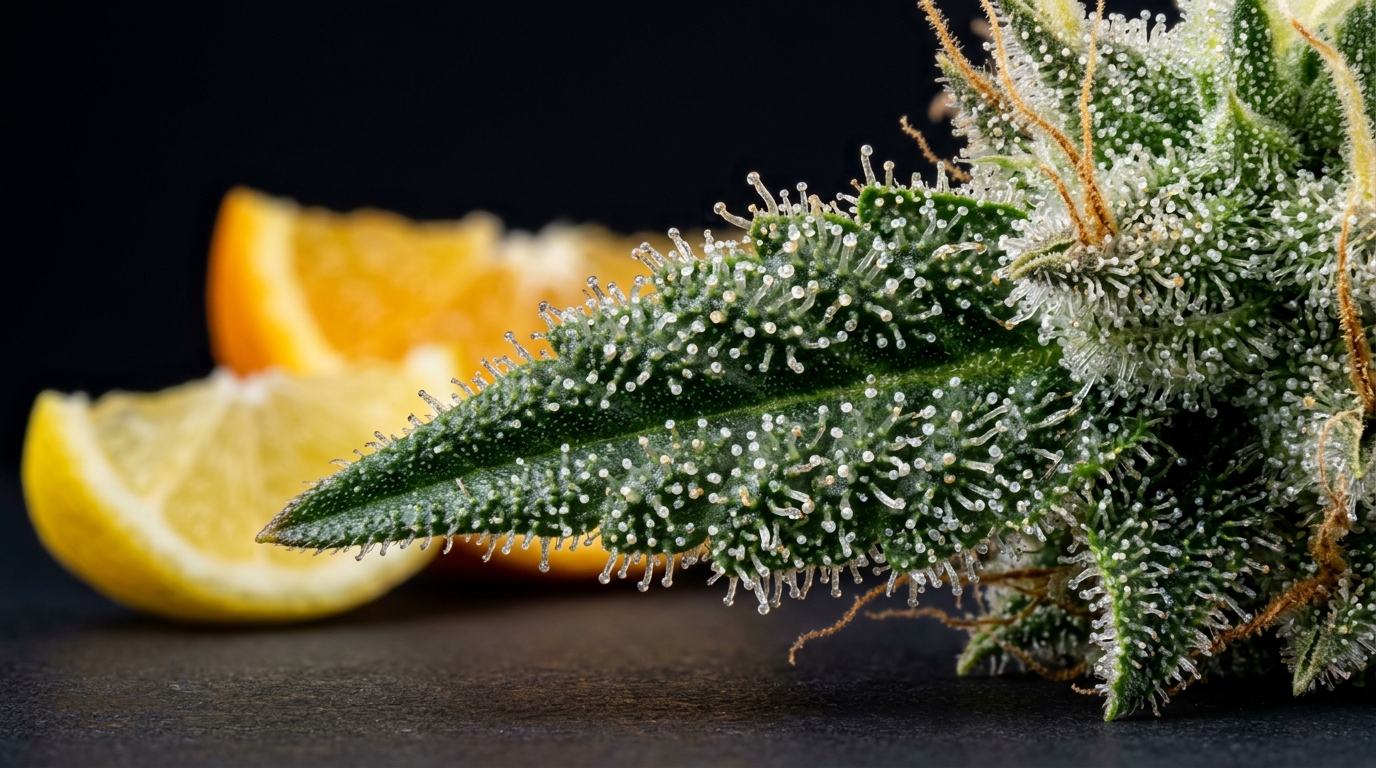
Limonene is a monoterpene produced in the resin glands of cannabis flowers, responsible for bright citrus aromas ranging from lemon to orange and grapefruit. Found abundantly in citrus fruit rinds and many cannabis strains, limonene is one of the most studied terpenes in the plant kingdom, with research pointing to potential mood-elevating and stress-reducing properties when consumed.
Reviewed by Maya Chen, Cannabis Science Writer | Updated May 23, 2026
What Is Limonene?
Limonene is a cyclic monoterpene with the molecular formula C₁₀H₁₆, synthesized inside the secretory cells of Trichomes and found naturally in the peel of lemons, oranges, grapefruits, and limes. In cannabis, it contributes directly to a strain’s overall terpene profile and is consistently among the top five most abundant terpenes in sativa-leaning cultivars.
Concentrations in cannabis flower typically range from 0.1% to over 1.5% by dry weight, depending on genetics, growing conditions, and how carefully the Curing process was managed. That range matters enormously. A strain sitting at 1.2% limonene smells categorically different from one at 0.2%, and the experiential difference is just as pronounced.
Two structural forms exist: d-limonene (the dominant form in most citrus and cannabis) and l-limonene, which carries a faint piney note. Nearly all cannabis-derived limonene is the d-form, giving strains like Lemon Cherry Gelato, Mimosa, MAC, and Do-Si-Dos their signature bright, zesty character. Strong limonene signatures also anchor the energetic profiles of Amnesia Haze and Purple Haze.
How Limonene Works: The Science Behind the Citrus
Limonene does not act in isolation. Its effects are shaped by interaction with cannabinoids like THC and CBD through the entourage effect, modulating receptor activity and influencing how the full chemical profile is experienced.
A 2020 review published in Frontiers in Neuroscience examined how terpenes coupled with cannabinoids produced effects that neither compound achieved alone, pointing to synergistic activity at multiple receptor sites. Limonene specifically appears to influence serotonin and dopamine signaling pathways, which aligns with the mood-lifting quality many consumers report from citrus-dominant strains.
Research published on PubMed (2024) found that vaporized d-limonene selectively reduced anxiety-like behavior in preclinical models without impairing motor function or producing sedation. That selectivity is significant. It suggests limonene may help take the edge off THC-induced anxiety without blunting the overall experience, which is particularly relevant for consumers who love high-THC cultivars but occasionally find the intensity uncomfortable.
Research suggests these effects may translate to cannabis consumption contexts, though direct clinical trials in humans remain limited. Always consult a healthcare provider before using cannabis therapeutically.
Did you know? According to the Oregon Liquor and Cannabis Commission, licensed cannabis retailers in Oregon are required to provide lab-tested terpene data on product labels, making Oregon one of the most transparent markets in the US for consumers who want to shop specifically by terpene profile, including limonene content.
Limonene in Cannabis Strains: What to Look For
Limonene-dominant strains span both sativa-leaning and indica-leaning genetics, which challenges the outdated idea that any single terpene belongs exclusively to one cannabis category. The terpene profile, not plant morphology, drives much of the experiential character.
Strains with limonene as the primary terpene tend to share a recognizable quality: brightness. The experience often feels cleaner and more mentally engaged compared to Myrcene-dominant cultivars, which lean sedative and heavy. Cannabinoid ratios still dominate the overall effect, though. A limonene-rich strain at 28% THC will hit very differently than one at 15%, regardless of how much citrus you smell in the jar.
Strains worth exploring for limonene content include Sour Diesel, Girl Scout Cookies, Wedding Cake, Runtz, and Pineapple Express. When shopping, look at the actual lab certificate rather than relying on strain names. Any flower testing above 0.5% limonene delivers a noticeable citrus character; above 1.0%, the aroma becomes assertive and potential mood effects are more pronounced.
Practical Applications for Consumers and Growers
Understanding limonene has real, practical value whether you are buying flower, growing your own, or formulating products. It shapes purchasing decisions, cultivation choices, and even how you store your cannabis.
For consumers, the most actionable insight is simple: seek out strains where limonene appears first or second on the terpene panel if you want an uplifting, socially engaging experience. A strain showing 0.8% limonene, 0.4% Caryophyllene, and 22% THC tells a very specific story about what the experience might feel like.
For growers, limonene production responds to environmental factors. Moderate heat stress during late flowering, strong light intensity, and slightly lower humidity in the final weeks can all push terpene synthesis upward. Post-harvest handling matters just as much. Limonene is volatile and evaporates readily at room temperature. Proper Curing in sealed glass jars, stored away from heat and light, preserves terpene content far better than rushed drying or plastic bag storage. The difference between well-cured and poorly-cured limonene-rich flower is not subtle.
For a broader look at terpene science, explore our cannabis glossary alongside the Terpenes entry.
Key Facts
✓ Limonene is a cyclic monoterpene (C₁₀H₁₆) produced in cannabis trichomes, with concentrations typically ranging from 0.1% to 1.5%+ in tested flower
✓ D-limonene is the dominant structural form in both cannabis and citrus fruit rinds, responsible for the characteristic lemon and orange aroma
✓ A 2024 PubMed study found vaporized d-limonene selectively reduced anxiety-like behavior without motor impairment in preclinical models
✓ Limonene works synergistically with cannabinoids via the entourage effect, potentially modulating serotonin and dopamine pathways
✓ High-limonene strains include Sour Diesel, Lemon Cherry Gelato, Mimosa, MAC, Do-Si-Dos, Amnesia Haze, and Purple Haze
✓ Limonene is volatile and degrades with heat, light, and improper storage; sealed glass jar curing preserves it best
✓ Limonene appears prominently across both sativa-leaning and indica-leaning cultivars, not one category exclusively
Frequently Asked Questions
What does limonene do for your high?
Research suggests limonene may contribute to a brighter, more uplifting experience by influencing serotonin and dopamine signaling pathways. Some studies indicate it can selectively reduce THC-induced anxiety without sedation, making limonene-rich strains popular among consumers who want energetic or social effects. The actual impact depends heavily on total cannabinoid ratios and the full terpene profile working together through the entourage effect. Limonene alone does not produce intoxication.
Is limonene a sativa or indica terpene?
Neither, strictly speaking. Limonene appears in significant concentrations across both sativa-leaning and indica-leaning cultivars. Sour Diesel and Amnesia Haze carry it prominently, and so does the indica-leaning Do-Si-Dos. Its presence correlates more with specific genetic lineages and growing conditions than with broad morphology categories. Terpene profiles are far more reliable predictors of effect than sativa or indica labels.
How do I know if a cannabis strain is high in limonene?
The most reliable method is reading the lab certificate of analysis (COA) that accompanies legally sold cannabis in regulated markets. Look for limonene listed on the terpene panel above 0.5% for noticeable aroma and above 1.0% for a strongly citrus-forward profile. Aroma is a secondary indicator: bright lemon, orange, or grapefruit notes in the flower are a strong signal. Marketing terms like “citrus” or “lemon” in strain names are suggestive but not definitive without lab data to confirm them.
Ready to grow a limonene-rich strain at home? Browse our selection of high-terpene genetics bred for vibrant citrus profiles and exceptional aromatic expression.