Cultivar is a contraction of “cultivated variety,” referring to a cannabis plant selectively bred to express specific, stable traits including aroma, appearance, cannabinoid ratios, and terpene profile. Unlike wild varieties, cultivars are defined by human selection. The term is the scientifically preferred alternative to “strain,” which technically belongs to microbiology, not plant science.
Reviewed by Maya Chen, Cannabis Science Writer | Updated May 10, 2026
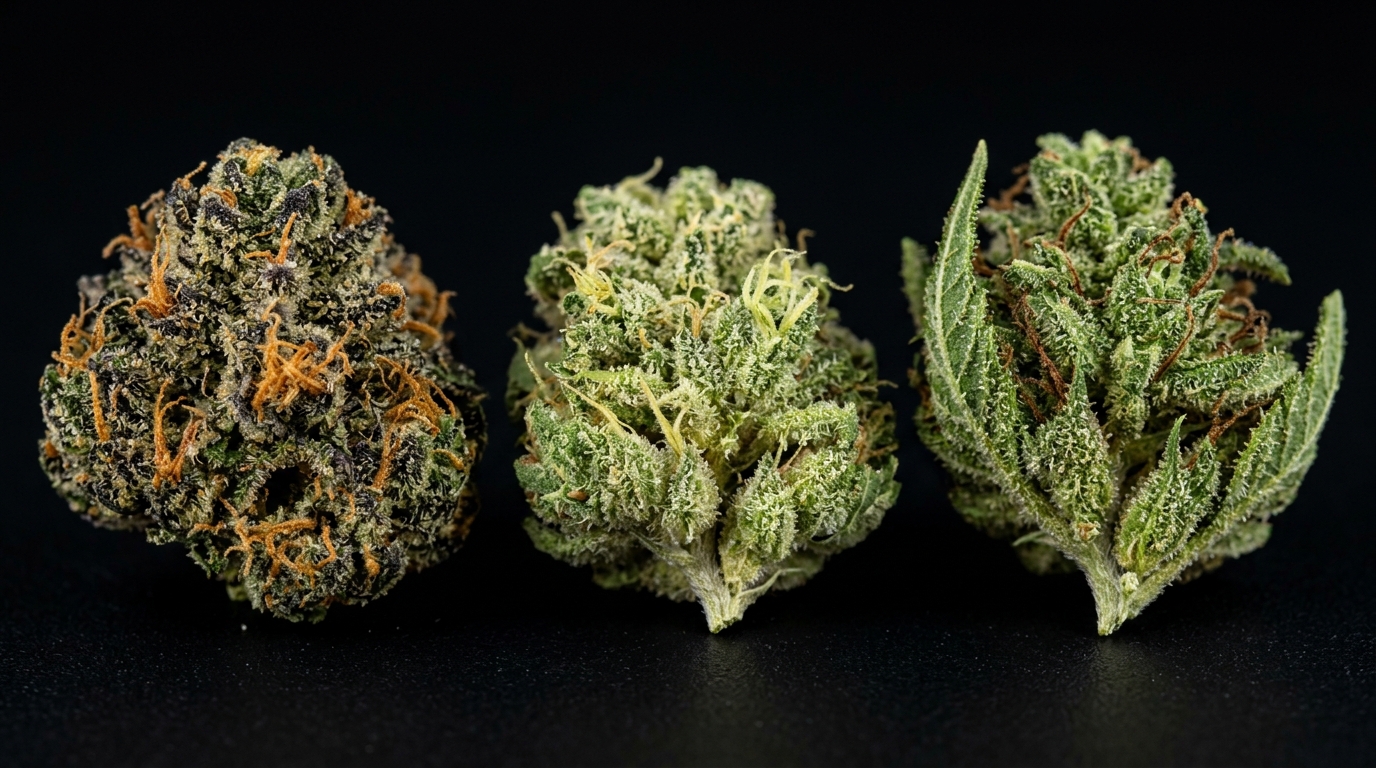
What Is a Cultivar in Cannabis?
The word “cultivar” fuses “cultivated” and “variety,” a naming convention formalized in horticultural science long before cannabis research caught up. Botanists have applied this term across agriculture for roses, apples, and wheat for decades. When I analyze a plant like Blue Dream or OG Kush, I’m looking at a cultivar, not a strain in any microbiological sense.
“Strain” is borrowed from microbiology, where it accurately describes genetic variants of bacteria or viruses. Plants don’t have strains. They have cultivars, varieties, and subspecies. Peer-reviewed literature has shifted noticeably toward “cultivar” since around 2020, and I expect that shift to reach commercial labeling within this decade.
A cultivar is defined by three core characteristics. It must be distinct, differing from other cultivars in at least one clearly identifiable trait. It must be uniform, meaning plants grown from that cultivar’s seeds or cuttings express consistent traits. It must be stable, meaning those traits persist reliably through propagation. A plant failing any of these criteria is a phenotype, a population, or a work in progress, not a true cultivar.
Research published at PMC (NIH) examining cultivar-dependent phenotypic and chemotypic responses confirmed that cannabis cultivars show dramatically different chemical outputs even under identical growing conditions. Genetics, not environment alone, drives the terpene profile and cannabinoid ratios you experience.
Cultivar vs Strain: Why the Difference Matters
Sloppy terminology creates real consequences in clinical settings, seed catalogs, and dispensary menus. This isn’t academic pedantry. It affects how cannabis is regulated, researched, and sold.
In my research, I’ve found the terminology gap causes a specific problem: when two dispensaries sell “Blue Dream,” there is no legal or scientific guarantee they’re selling the same cultivar. “Strain” carries no standardized definition in cannabis commerce. Cultivar, by contrast, implies a documented, reproducible genetic profile, which matters considerably when patients select products for consistent therapeutic outcomes.
Research on extractions from medical cannabis cultivars makes this concrete: terpene and cannabinoid concentrations varied substantially between named cultivars tested under controlled extraction conditions. Two products sharing the same street name but different genetic lineages can produce measurably different entourage effect profiles. For someone managing pain, sleep, or anxiety, that’s not a minor detail.
Did you know? According to the Oregon Liquor and Cannabis Commission, licensed producers must track and label cannabis products by tested cannabinoid content rather than cultivar name alone, precisely because names lack standardized genetic definitions. This regulatory approach reflects growing awareness that “strain” names are not reliable proxies for chemical composition.
How Cultivar Traits Are Expressed and Measured
Every cannabis cultivar expresses its genetic identity through morphological traits and chemical outputs. Morphology covers plant height, leaf shape, internode spacing, bud density, and color. Chemical expression covers the cannabinoid ratios and terpene profile that define the experience a cultivar delivers.
I pay close attention to terpene data when evaluating cultivars because the terpene profile is often more predictive of effect than THC percentage alone. Jack Herer is dominated by terpinolene, correlating with an uplifting, energetic experience. Granddaddy Purple leans heavily on myrcene, which research associates with sedative qualities. These are the chemical signatures of distinct cultivars, not coincidences.
A study examining spatio-temporal and cultivar-dependent terpene variations, available at PMC, found that the same cultivar grown in different environments produced measurably different terpene concentrations. Environment modulates expression, but the underlying genetic potential remains fixed. The cultivar sets the ceiling and floor for each compound.
This is why I always recommend that growers and consumers look beyond the name. Ask for terpene data. Ask about the genetic lineage. Ask whether seeds are from a stabilized F1 cross or a later generation. Those questions only become meaningful when you’re thinking in terms of cultivars.
Cultivars, Landrace Genetics, and the Breeding Pipeline
All modern cannabis cultivars trace their ancestry back to Landrace populations from regions like Afghanistan, Colombia, Thailand, and Jamaica. Landrace plants are technically varieties, not cultivars, because human selection did not create them. They are the raw genetic material from which cultivar development begins.
When breeders cross two landrace-derived lines and select offspring for specific traits across multiple generations, they are building a cultivar. The process typically takes four to six generations of inbreeding or backcrossing to achieve the uniformity and stability that qualifies a plant as a true cultivar. Some commercial cultivars never fully stabilize, which explains why phenotype hunting remains common among serious growers.
True F1 hybrids tend to be more uniform due to hybrid vigor. Later open-pollinated generations split more. If a seed company cannot tell you the genetic generation of their seeds, that’s a meaningful gap in their documentation. You can explore this further in our cannabis glossary, particularly in entries on Autoflower vs Photoperiod and Feminized vs Regular Seeds.
Key Facts
✓ “Cultivar” is a contraction of “cultivated variety” and is the botanically correct term for what the cannabis industry commonly calls a “strain”
✓ A true cultivar must be distinct, uniform, and stable across propagation cycles
✓ Terpene profiles and cannabinoid ratios vary significantly between cultivars even under identical growing conditions, per peer-reviewed research
✓ The same cultivar name used by different producers does not guarantee the same genetic profile or chemical composition
✓ All modern cannabis cultivars trace their lineage back to landrace populations from specific geographic regions
✓ Scientific literature has increasingly adopted “cultivar” over “strain” since approximately 2020, reflecting a maturation of cannabis research standards
Frequently Asked Questions
Is cultivar the same as strain?
Not technically. “Strain” is a microbiological term that accurately describes genetic variants of bacteria and viruses. Plants don’t have strains in the scientific sense. “Cultivar,” short for cultivated variety, is the botanically correct term for a cannabis plant selectively bred to express stable, distinct traits. In everyday dispensary language the two are used interchangeably. In scientific and regulatory contexts, cultivar is the preferred term, and I expect it to become the commercial standard as the industry matures.
What are the disadvantages of cultivars?
The main disadvantage is genetic narrowing. When breeders select intensely for specific traits, such as extreme THC percentages or a particular terpene profile, they can inadvertently reduce genetic diversity within that cultivar. Less diversity means less resilience to pests, pathogens, and environmental stress. There’s also a market problem: the same cultivar name can represent genuinely different genetics depending on the breeder, making it hard for consumers to know what they’re purchasing without lab data.
How do I know if a seed is from a true, stable cultivar?
Ask for generation information. Seeds labeled F1 from two distinct parent lines tend to be highly uniform because of hybrid vigor. Seeds from F2 or later open-pollinated generations will show more variation. Reputable breeders document their crossing and selection history. I also recommend checking whether the cultivar has been third-party tested across multiple grow cycles, since consistency across environments is one of the defining characteristics of a stable cultivar.
Why do two dispensaries sell the same cultivar name with different effects?
Because cultivar names in cannabis are not legally protected or genetically standardized. Any producer can name a product “Sour Diesel” regardless of whether their plant shares genetics with the original. Even when genetics match, growing environment, harvest timing, and post-harvest handling all modulate the final terpene profile and cannabinoid ratios. Research consistently shows that the same cultivar produces different chemical outputs depending on when and where it’s grown. Lab-tested terpene data matters far more than the name on the label.
Ready to grow a cultivar with documented genetics and stable, consistent traits? Browse our selection of feminized seeds from verified breeders and find the right genetic foundation for your next grow.