Genotype is the complete genetic blueprint of a cannabis plant, encoded in its DNA. It defines the full range of traits a plant could express, from cannabinoid potential and terpene production to structure and flowering time. The genotype sets the boundaries; the environment determines which traits actually appear.
Reviewed by Maya Chen, Cannabis Science Writer | Updated May 18, 2026
Every cannabis seed carries a genotype inherited from its parent plants. That genotype is fixed at fertilization and cannot be changed by anything you do in the grow room. What you can influence is how much of that genetic potential actually gets expressed, which is where environment, nutrition, and cultivation technique come in.
What Is a Cannabis Genotype?
A cannabis plant’s genotype is the totality of its genetic information, stored in chromosomal DNA and passed down from parent to offspring. Cannabis is a diploid organism with 20 chromosomes (10 pairs). The genotype does not change whether a plant grows under 1,000-watt HPS lights in a Portland warehouse or outdoors in a Humboldt County field.
I think of the genotype as a recipe book. The book contains every possible dish the plant could make, and temperature, light, water, and soil quality determine which pages get opened. A plant with the genetic code for 28% THC production will never hit that ceiling in poor conditions, but it also cannot exceed that ceiling no matter how perfect the environment is.
Research published by PMC in 2025 examining high-THC medicinal cannabis confirmed that genotype accounts for a significant and measurable proportion of variance in cannabinoid profiles across cultivated populations. Genetics is not just one factor among many. It is the primary constraint on what a plant can chemically produce.
This is why two seeds sold under the same strain name can produce meaningfully different plants. If those seeds came from open-pollinated stock rather than stable inbred lines, the genotypes will vary, and so will the outcomes.
Genotype vs. Phenotype: The Distinction That Matters Most
Genotype and phenotype are the two most important terms in cannabis breeding, and confusing them is one of the most common mistakes I see from newer growers. The genotype is the genetic code. The phenotype is the observable result of that code interacting with a specific environment.
Take OG Kush as a practical example. Multiple phenotypes exist, each expressing slightly different characteristics in structure, resin density, terpene ratios, and flowering time. Those phenotypes all trace back to the same foundational genotype, but variations in growing conditions or intentional selection pressure have produced distinct expressions. Breeders who “pheno hunt” are essentially running the same genotype through multiple environmental conditions to identify which expression best fits their goals.
The relationship is sometimes written as: Genotype + Environment = Phenotype. A plant with a genotype that codes for dense trichome production may express that trait fully under ideal VPD and light intensity, or only partially under stress. The genotype stays constant. The phenotype shifts.
Did you know? According to the Oregon Liquor and Cannabis Commission, licensed cannabis producers in Oregon must track and report cultivar name and lot information for every harvest, a regulatory structure that depends entirely on genotype-level consistency between seed batches and clonal propagation to carry any meaning.
Why Genotype Matters for Growers and Breeders
Understanding a plant’s genotype has direct, practical consequences for every stage of cultivation, from seed selection through harvest. Stable genotypes produce predictable phenotypes. Unstable genotypes produce variation, which can be either a problem or an opportunity depending on your goals.
For home growers, genotype stability means consistency. When you buy feminized seeds from a reputable breeder, you are buying seeds selected and stabilized over multiple generations so that the genotype reliably expresses the traits advertised. Germination rates, flowering time, cannabinoid ratios, and terpene profile are all downstream of the genotype.
For breeders, the genotype is everything. Selective breeding works by identifying individuals whose genotypes carry desirable alleles and using those plants as parents. A 2025 genome-wide association study on cannabis populations found that specific genomic regions are strongly associated with cannabinoid and terpene production traits. Breeders can now use genetic markers to select parent plants before they ever flower, which is a significant advancement over growing out hundreds of plants and evaluating them by eye and nose alone.
Genotype also explains why Landrace strains are so valuable to breeding programs. Landrace genotypes carry genetic diversity selected by thousands of years of natural and human pressure in specific geographic environments. That diversity is the raw material for developing new Cultivar lines. Once a genotype is lost, it cannot be recreated.
In my research on terpene chemistry, genotype is the single strongest predictor of a plant’s terpene profile. You can explore how those compounds interact with cannabinoids in the cannabis glossary entry on Terpenes. The entourage effect depends entirely on what the genotype makes possible in the first place.
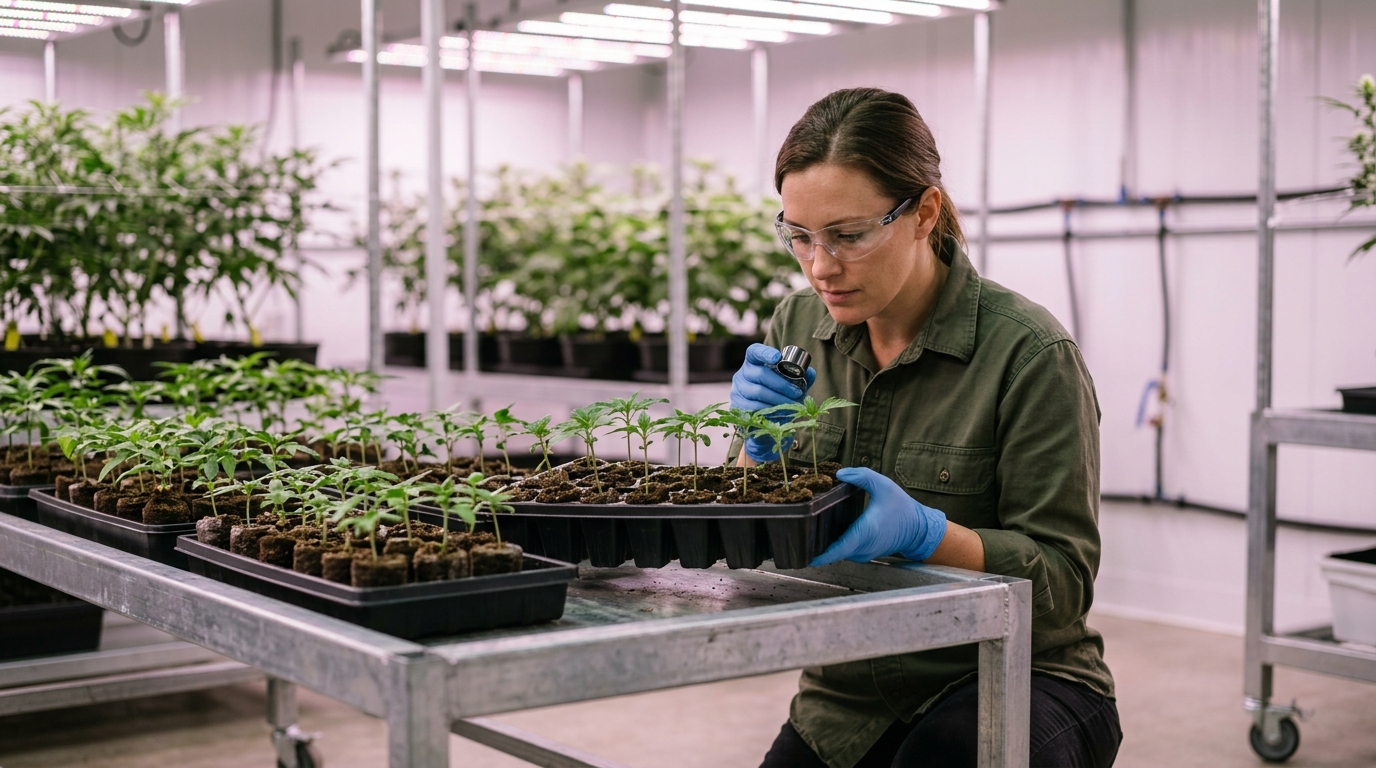
Selecting Seeds Based on Genetic Stability
When I evaluate seed genetics for growers, the first question I ask is whether the breeder has stabilized the genotype across generations. An F1 hybrid typically shows strong trait expression due to hybrid vigor, but the genotype is heterozygous, meaning offspring will vary. An IBL (inbred line) strain has been selfed or backcrossed repeatedly to fix desirable alleles into a more homozygous genotype that breeds true.
Strains like Northern Lights and White Widow are classic examples of highly stabilized genotypes. Grow them from seed and you will get plants that are remarkably consistent in structure, resin production, and cannabinoid ratios. Compare that to a first-generation cross between two elite cultivars, where genotypic variation between seeds can be substantial.
Autoflowering genetics also come down to genotype. The autoflowering trait is controlled by a recessive allele at a specific locus, inherited from Ruderalis ancestry. A seed is only a true autoflower if it carries two copies of that recessive allele, one from each parent. Genotype testing can confirm this before you ever put a seed in soil.
Key Facts
✓ A cannabis plant’s genotype is fixed at fertilization and cannot be altered by environmental conditions.
✓ Genotype sets the maximum potential for THC, CBD, and terpene production; environment determines how much of that potential is expressed.
✓ The formula Genotype + Environment = Phenotype describes the relationship between genetic code and observable traits.
✓ A 2025 genome-wide association study identified specific genomic regions linked to cannabinoid and terpene production in cannabis.
✓ Stabilized (homozygous) genotypes produce more consistent phenotypes across seed batches than heterozygous F1 hybrids.
✓ The autoflowering trait is controlled by a recessive allele inherited from Cannabis ruderalis, confirmed at the genotype level.
✓ Landrace strains preserve ancient genotypic diversity that serves as raw material for modern breeding programs.
Frequently Asked Questions
What is a genotype in cannabis?
A cannabis genotype is the complete DNA sequence of a plant, inherited from its parents at fertilization. It encodes every potential trait the plant could express, including cannabinoid synthesis pathways, terpene production enzymes, growth structure, and flowering triggers. The genotype is fixed and does not change during the plant’s life. What changes is the phenotype, the actual expression of those traits, shaped by growing conditions, light, nutrition, and other environmental inputs.
What is the difference between genotype and phenotype in cannabis?
The genotype is the genetic blueprint. The phenotype is what you actually see, smell, and measure. Two plants with identical genotypes grown under different conditions will produce different phenotypes. When breeders “pheno hunt,” they are growing multiple seeds from the same genetic line and selecting the individual whose phenotype best matches their target, even though the underlying genotypes are similar. The genotype defines the range of possible outcomes; the phenotype is the specific outcome that occurred.
Why does genotype matter when buying cannabis seeds?
Genotype stability directly affects how predictable your grow will be. Seeds from a stabilized, well-documented genetic line will produce plants with consistent flowering times, cannabinoid ratios, and terpene profiles. Seeds from an unstable or poorly documented cross can produce wide variation between plants, making planning your grow, timing your harvest, and predicting your yield much harder. Checking whether a strain is an F1 hybrid, an IBL, or a backcross tells you a great deal about how uniform the genotype is across seeds in that pack.
Can the same genotype produce different THC levels?
Yes. The genotype establishes maximum THC production potential by encoding the enzymes in the cannabinoid biosynthesis pathway. How close a plant comes to that genetic ceiling depends on environmental factors including light intensity, temperature, humidity, nutrient availability, and harvest timing. A plant with a genotype capable of 28% THC might only reach 20% under suboptimal conditions. No amount of perfect cultivation will push a plant past its genotypic ceiling, which is why starting with strong genetics matters as much as, and often more than, optimizing your grow environment.
Ready to grow from genetics you can trust? Start with seeds from stabilized, well-documented lines and give your plants the genetic foundation they need to reach their full potential.