The entourage effect is the hypothesis that cannabinoids, terpenes, and flavonoids in cannabis work together synergistically to produce effects greater than any single compound in isolation. Rather than THC or CBD acting alone, the full spectrum of plant compounds modulates each other’s activity, potentially shaping the intensity, character, and duration of the overall experience.
Reviewed by Maya Chen, Cannabis Science Writer | Updated May 29, 2026
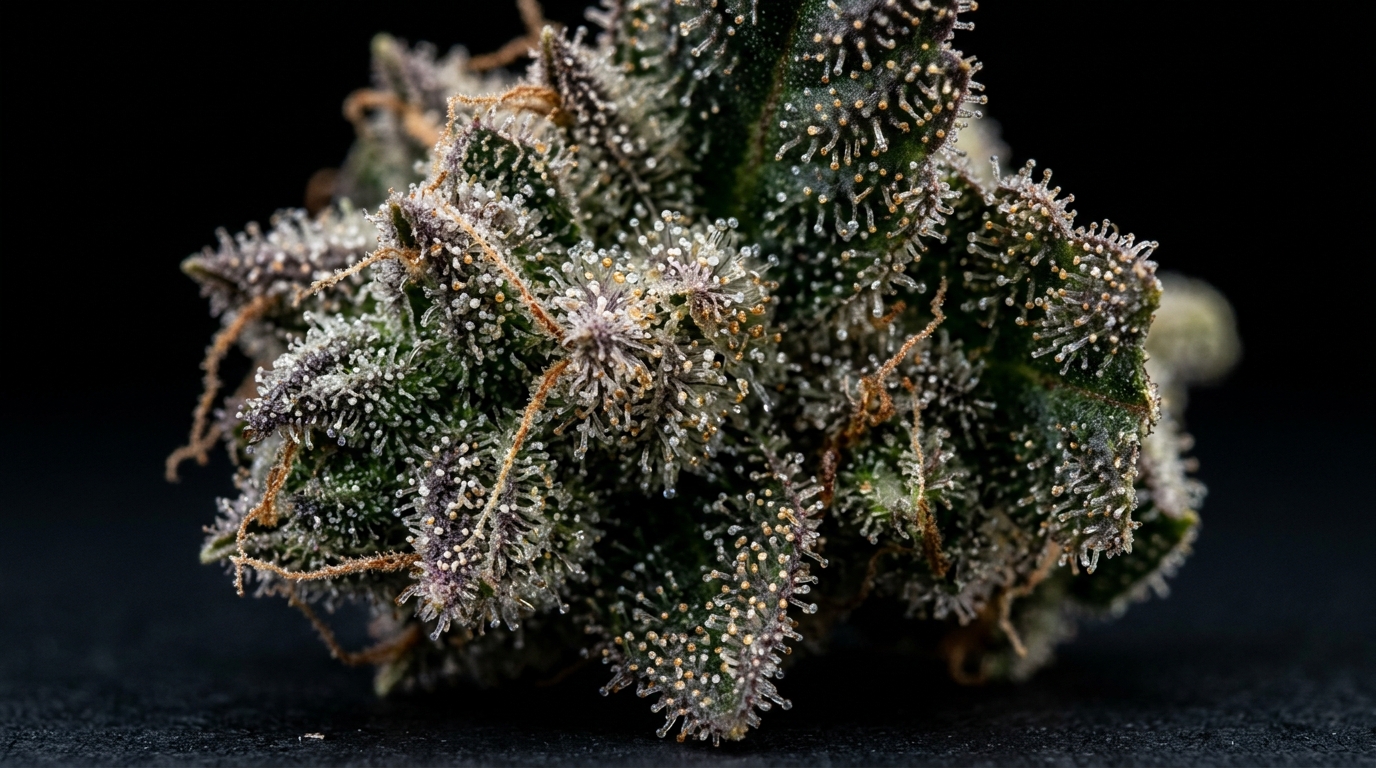
What Is the Entourage Effect?
The term was first introduced by researchers Raphael Mechoulam and Shimon Ben-Shabat in 1998, describing how inactive endocannabinoid metabolites enhanced the activity of primary endocannabinoids at receptor sites. Ethan Russo later extended this framework to the full phytochemical profile of cannabis, arguing in a landmark paper published in the British Journal of Pharmacology that terpenes and cannabinoids interact at shared receptor targets to produce synergistic effects.
THC does not act in a vacuum. When myrcene, caryophyllene, limonene, and dozens of minor cannabinoids like CBG and CBN are present alongside THC and CBD, each compound influences how the others bind to receptors, cross the blood-brain barrier, and metabolize in the body. I analyzed this interaction framework extensively in my graduate research, and the receptor-level data is genuinely compelling, even if the clinical picture remains incomplete.
Being precise about what the science actually says matters here. The entourage effect remains classified as a hypothesis by most researchers. A 2023 review published in Frontiers in Pharmacology found that while preclinical evidence supports synergistic interactions, robust human clinical trial data is still limited. That does not make the concept wrong. It means the science is catching up to decades of anecdotal and observational evidence.
Did you know? According to the Oregon Liquor and Cannabis Commission, licensed cannabis products sold in Oregon are required to carry terpene and cannabinoid testing data on their labels, making Oregon one of the most transparent markets in the country for consumers trying to evaluate full-spectrum versus isolate products.
Why the Entourage Effect Matters for Cannabis Consumers
Understanding the entourage effect changes how a consumer reads a product label, selects a strain, and interprets their own experience. A product listing only THC percentage tells an incomplete story about what that product will actually feel like.
The practical implication is the distinction between full-spectrum, broad-spectrum, and isolate products. Full-spectrum extracts preserve the complete chemical profile of the plant, including trace amounts of all cannabinoids and the full terpene complement. Isolate products contain a single purified compound, typically THC or CBD, stripped of everything else. Research published in Cannabis and Cannabinoid Research (2025) found that patients using full-spectrum preparations reported more consistent and satisfying outcomes compared to isolate equivalents, even when the primary cannabinoid dose was held constant.
Terpenes are the most underappreciated variable here. Myrcene, found at high concentrations in strains like Grape Ape, is associated with sedating qualities and may enhance cannabinoid permeability across the blood-brain barrier. Limonene appears to modulate serotonin receptor activity. Caryophyllene binds directly to CB2 receptors, making it the only terpene currently classified as a dietary cannabinoid. Linalool has demonstrated anxiolytic properties in preclinical models. Each of these compounds, present at concentrations between 0.1% and 3% in most cultivars, contributes to what consumers experience as the “character” of a particular strain.
Full-Spectrum vs. Isolate: A Practical Comparison
Choosing between full-spectrum and isolate products is one of the most common decisions cannabis consumers face, and the entourage effect hypothesis sits at the center of that choice.
| Product Type | Compounds Present | Entourage Effect Potential | Best For |
|---|---|---|---|
| Full-Spectrum | All cannabinoids, terpenes, flavonoids | High | Whole-plant experience, complex effects |
| Broad-Spectrum | Multiple cannabinoids, terpenes; THC removed | Moderate | THC-sensitive consumers wanting synergy |
| Isolate | Single cannabinoid only | None | Precise dosing, clinical applications |
In my research, I consistently find that consumers who switch from isolate CBD products to full-spectrum equivalents report qualitatively different experiences, even when the CBD milligram dose is identical. A 2020 review in Pharmaceuticals described a “bell-curve” dose-response for CBD isolate that flattens at higher doses, while full-spectrum products maintained a more linear dose-response relationship. That is a significant practical difference for anyone calibrating their intake.
How to Use This Knowledge When Choosing Cannabis
Applying entourage effect principles practically means looking past THC percentage and reading terpene data on lab-tested products. Most licensed dispensaries in states like Oregon and California now provide full Certificates of Analysis showing terpene concentrations alongside cannabinoid ratios.
I recommend looking for at least three to five terpenes present at 0.1% or above for a meaningful terpene profile. A product showing only one dominant terpene at 2% with nothing else registering is likely to deliver a narrower experiential range than one showing a distributed profile across myrcene, caryophyllene, limonene, and linalool at 0.3% to 1.5% each. That distribution is where the synergy actually lives.
Microdosing is another context where the entourage effect becomes especially relevant. Some studies indicate that very low doses of full-spectrum preparations can produce meaningful effects where isolates at the same dose register nothing at all, suggesting the synergistic threshold is lower than the threshold for any single compound acting alone. Understanding Terpenes and Trichomes as distinct but related concepts will sharpen your ability to evaluate what you are working with. You can also explore our cannabis glossary for definitions of related chemistry terms.
Key Facts
✓ The entourage effect hypothesis was first described by Raphael Mechoulam and Shimon Ben-Shabat in 1998.
✓ Terpenes like myrcene, caryophyllene, limonene, and linalool are primary contributors to synergistic cannabis effects.
✓ Full-spectrum products preserve the complete phytochemical profile; isolates contain only one purified compound.
✓ Caryophyllene is the only known terpene that binds directly to cannabinoid receptors (CB2).
✓ Research suggests full-spectrum CBD preparations show a more linear dose-response than CBD isolate at equivalent doses.
✓ The entourage effect remains a hypothesis; clinical human trial data is still accumulating as of 2026.
✓ Terpene concentrations of 0.1% and above are generally considered meaningful in terms of pharmacological contribution.
Frequently Asked Questions
Is the entourage effect scientifically proven?
Not definitively. The entourage effect is currently classified as a well-supported hypothesis rather than an established fact. Preclinical research and observational data are strong, but human clinical trials specifically designed to isolate synergistic interactions are still limited in number and scope. A 2023 review in Frontiers in Pharmacology concluded that the evidence is promising but that rigorous randomized controlled trials are needed before definitive clinical claims can be made. Research suggests the effect is real; the scientific community is still quantifying exactly how real.
Does the entourage effect apply to edibles and concentrates, or only flower?
It applies to any product that preserves the full spectrum of plant compounds. Full-spectrum edibles, live resin concentrates, and full-spectrum tinctures all retain the terpene and minor cannabinoid content necessary for synergistic interactions. Distillate-based products refined to near-pure THC or CBD, and isolate gummies, do not. The key variable is whether the extraction and processing method preserves or strips terpenes. Live Resin is one of the best concentrate formats for entourage effect potential because it is extracted from fresh-frozen plant material before terpene degradation occurs.
Can I increase the entourage effect by choosing specific strains?
Yes. Strain selection is one of the most direct ways to influence your terpene profile and therefore your entourage effect potential. Strains with rich, diverse terpene profiles and meaningful minor cannabinoid content give you more synergistic variables to work with. In my analysis, strains like Gorilla Glue, OG Kush, and Blue Dream consistently show the kind of distributed multi-terpene profiles associated with complex, layered effects. Looking for lab-tested products showing five or more terpenes above 0.1% is a practical starting point.
What is the difference between the entourage effect and synergy?
Synergy is the broader pharmacological concept: two or more compounds producing a combined effect greater than their individual contributions added together. The entourage effect is a cannabis-specific application of that concept, describing how the full phytochemical matrix of the plant produces outcomes that isolated cannabinoids cannot replicate alone. All entourage effects are synergistic, but not all synergy qualifies as the entourage effect in the technical sense Mechoulam originally described.
Want to experience the entourage effect from the ground up? Growing your own cannabis from high-quality genetics gives you full control over terpene profiles, cannabinoid ratios, and harvest timing. Explore our selection of full-spectrum genetics bred for complex, terpene-rich profiles.