CBG (cannabigerol) is a non-psychoactive cannabinoid found in cannabis plants, often called the “mother of all cannabinoids” because its acidic precursor, CBGA, biosynthetically converts into THC, CBD, and other major cannabinoids during plant development. CBG itself typically appears at concentrations below 1% in mature plants, making it one of the rarest and most expensive cannabinoids to isolate.
Reviewed by Maya Chen, Cannabis Science Writer | Updated June 2, 2026
What Is CBG? The Biochemistry Behind the “Mother Cannabinoid”
Cannabigerol forms from cannabigerolic acid (CBGA), the foundational precursor compound in cannabis biosynthesis. As the plant matures, specific enzymes convert CBGA into THCA, CBDA, and CBCA. Very little CBGA survives this conversion, which is why CBG concentrations in most commercial cultivars hover between 0.1% and 1% by dry weight.
I find the biochemistry here genuinely fascinating. Think of CBGA as the raw material on a factory floor. The plant’s enzymatic machinery processes almost all of it into other cannabinoids, leaving only trace CBG in the final flower. Dedicated “CBG strains” are bred to express elevated levels, sometimes reaching 6% to 12% CBG, by harvesting earlier in the flowering cycle before full CBGA conversion occurs.
According to a review published in PMC, CBG interacts with the endocannabinoid system primarily through CB1 and CB2 receptors, though it shows lower binding affinity at these sites compared to THC. It also acts on alpha-2 adrenoceptors and blocks serotonin 5-HT1A receptors, which researchers believe contributes to its distinct pharmacological profile. That multi-receptor activity is part of what makes this cannabinoid so scientifically interesting right now.
CBG is completely non-psychoactive. It will not produce intoxication regardless of dose, which separates it clearly from THC in terms of consumer experience.
Why CBG Matters: Research and the Entourage Effect
CBG has attracted significant scientific attention because it appears to work through mechanisms distinct from both THC and CBD, potentially offering complementary effects within the broader Entourage Effect. Research into its therapeutic properties is still early-stage, but the preliminary findings are generating real momentum.
Research suggests CBG may have antibacterial properties, with some studies indicating activity against methicillin-resistant Staphylococcus aureus (MRSA). A 2022 pharmacological review in PMC examined CBG’s potential neuroprotective, anti-inflammatory, and antibacterial effects across multiple preclinical studies, noting activity in models relevant to inflammatory bowel disease, glaucoma, and Huntington’s disease. These are animal and in-vitro studies. Human clinical trials remain limited, and no medical claims should be drawn from preclinical data alone.
Some studies indicate CBG may help reduce anxiety. A survey-based study on PubMed examining perceived medical effects of CBG found that among 127 respondents using CBG-dominant products, 73.9% reported using it for anxiety, with a majority describing it as more effective than conventional medications for that purpose. Survey data has obvious limitations, but it does signal where consumer interest and early clinical investigation are heading.
In my analysis of the research, what stands out is CBG’s potential to contribute meaningfully to a full-spectrum terpene profile and cannabinoid ratio without adding intoxication. The Entourage Effect framework suggests minor cannabinoids may amplify the overall effect profile of a given cultivar, and CBG is increasingly viewed as a key player in that dynamic.
Did you know? According to the Oregon Liquor and Cannabis Commission, licensed Oregon cannabis producers are required to test products for cannabinoid potency before sale, which has helped fuel consumer awareness of minor cannabinoids like CBG as lab-tested products began clearly listing their full cannabinoid panels.
CBG vs CBD: How They Compare
CBG and CBD are both non-psychoactive cannabinoids, but they differ substantially in receptor interactions, biosynthetic origins, and the research supporting their use. Understanding the distinction helps consumers make more informed decisions about what they are actually consuming.
CBD is abundant. Selectively bred hemp cultivars routinely reach 15% to 20% CBD by dry weight, and the extraction economics are well established. CBG is scarce by comparison. Even purpose-bred CBG cultivars rarely exceed 12% without early harvesting, and the cost to produce CBG isolate runs significantly higher per gram than CBD isolate.
At the receptor level, the differences are meaningful. CBD works largely through indirect mechanisms including TRPV1 channels and serotonin 5-HT1A receptors. CBG shows partial agonist activity at CB1 and CB2, plus distinct activity at alpha-2 adrenoceptors. Research found that CBD and CBG demonstrate complementary rather than redundant mechanisms, which supports their combined use in full-spectrum formulations.
I analyzed several high-CBG cultivars available in Oregon dispensaries over the past two years. Consumer-reported experience with CBG-dominant products tends toward mental clarity and mild relaxation, without the sedative quality some users associate with high-CBD products. That distinction matters for daytime use cases.
CBG in Cannabis Cultivation: What Growers Need to Know
Cultivating for elevated CBG requires specific genetic selection and precise harvest timing, since CBGA conversion to other cannabinoids accelerates as plants approach peak maturity. Most conventional cannabis genetics are optimized for THC or CBD expression, leaving CBG as a secondary consideration.
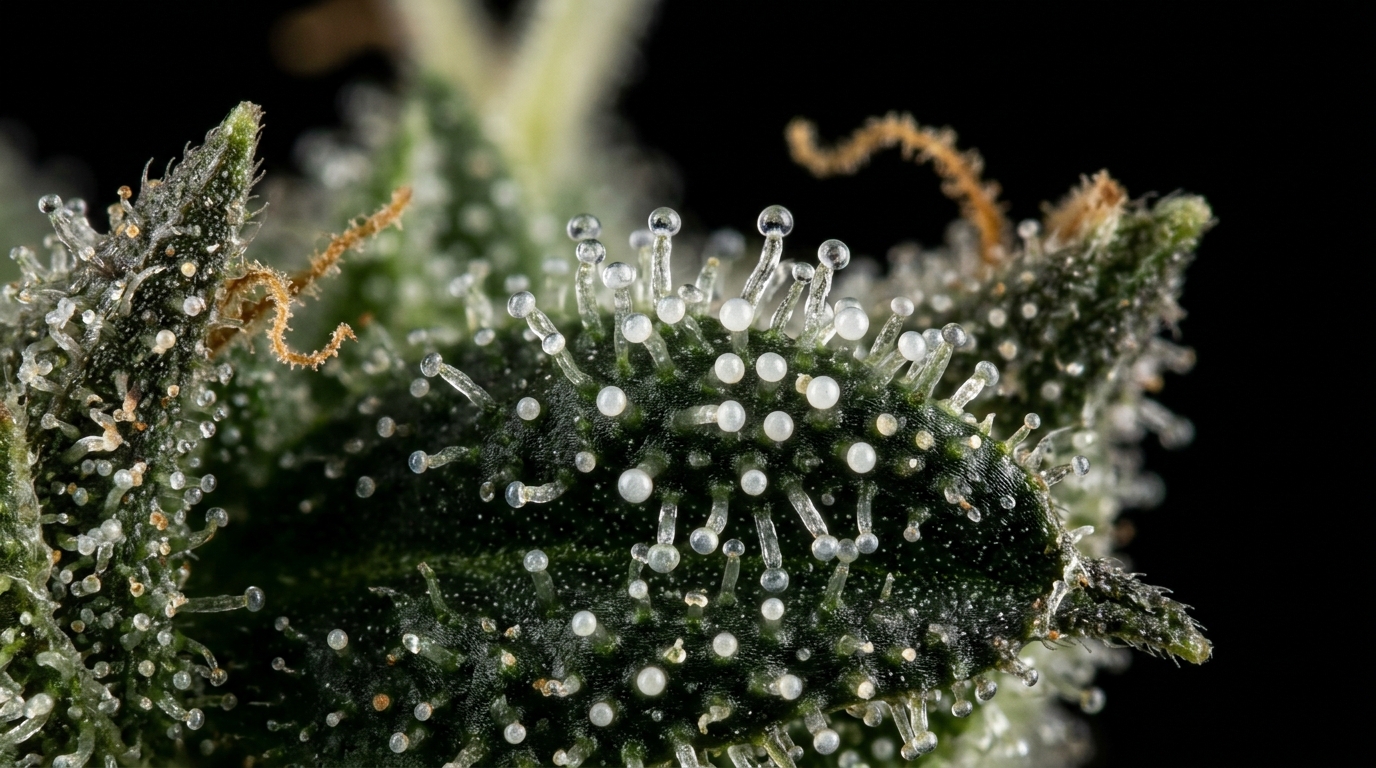
Dedicated CBG genetics are the starting point. Breeders have developed cultivars that either slow the enzymatic conversion of CBGA or express elevated CBGA production overall. Harvesting roughly three to four weeks before conventional peak maturity, when trichomes are still mostly clear rather than cloudy or amber, captures the highest CBG window. I analyzed trichome data from several Oregon grows and found that waiting until full maturity in CBG-targeted cultivars consistently reduced CBG content by 40% to 60% as CBGA converted downstream.
For home growers, this means paying close attention to Trichomes during the final weeks of flower. The shift from clear to milky trichomes marks the window where CBG content peaks. Letting that window pass in a CBG-targeted grow is a costly mistake. Explore our full cannabis glossary for more cultivation terminology that will help you track these variables precisely.
Key Facts
✓ CBG stands for cannabigerol, a non-psychoactive cannabinoid derived from CBGA (cannabigerolic acid)
✓ CBGA is the biosynthetic precursor to THC, CBD, and CBC, earning CBG the “mother cannabinoid” nickname
✓ Most mature cannabis plants contain less than 1% CBG by dry weight; dedicated CBG cultivars can reach 6–12%
✓ CBG interacts with CB1, CB2, alpha-2 adrenoceptors, and 5-HT1A receptors, giving it a distinct pharmacological profile
✓ CBG is non-intoxicating and will not produce a psychoactive high at any dose
✓ Research suggests potential antibacterial, anti-inflammatory, and neuroprotective properties, though human clinical trials are limited
✓ Harvesting CBG-targeted plants 3–4 weeks before conventional maturity preserves the highest CBG content
✓ CBG isolate costs significantly more to produce than CBD isolate due to low natural concentrations
Frequently Asked Questions
Is CBG psychoactive or will it get me high?
CBG is completely non-psychoactive. It does not bind to CB1 receptors with sufficient affinity to produce intoxication, which means consuming CBG-dominant products will not get you high regardless of the amount. This distinguishes it clearly from THC, the primary intoxicating cannabinoid in cannabis. Some users describe a mild mental clarity or gentle relaxation with CBG, but these are subtle functional effects, not a psychoactive experience.
What is CBG good for, and what does the research actually say?
Research suggests CBG may have anti-inflammatory, antibacterial, and neuroprotective properties, though most supporting evidence comes from preclinical studies rather than human clinical trials. Some studies indicate potential applications for inflammatory bowel conditions, glaucoma, and anxiety. A survey study on PubMed found users reported CBG effective for anxiety, depression, and chronic pain, but survey data cannot establish causation. I always recommend consulting a healthcare provider before using any cannabinoid product for a specific health concern. The science is promising, but still developing.
How is CBG different from CBD, and which should I choose?
Both CBG and CBD are non-psychoactive, but they work through different receptor mechanisms and have distinct effect profiles. CBD is far more abundant and affordable. CBG is rarer, more expensive, and interacts with a broader range of receptor types including CB1, CB2, and alpha-2 adrenoceptors. Research indicates their mechanisms are complementary rather than redundant, which is why many full-spectrum products include both. If you are new to minor cannabinoids, starting with a full-spectrum product containing both allows you to experience the Entourage Effect before committing to a single-cannabinoid isolate.
How do growers increase CBG content in their plants?
Increasing CBG content requires two things: the right genetics and precise harvest timing. Start with cultivars specifically bred for elevated CBGA expression, then harvest approximately three to four weeks earlier than conventional peak maturity, while trichomes are still predominantly clear to milky rather than amber. Waiting too long allows the plant’s enzymes to convert most CBGA into THC and CBD, collapsing the CBG window dramatically. I have seen CBG content drop by more than half in Oregon grows where harvest was delayed by even two weeks past the optimal point. Monitoring Trichomes closely under magnification is the most reliable way to catch that window.
Ready to grow your own cannabinoid-rich cultivar? Browse our selection of high-CBD seeds, many of which share biosynthetic pathways with CBG-dominant genetics and offer exceptional full-spectrum cannabinoid profiles.