If you’ve got a spare closet, a corner of a bedroom, or a small apartment in a legal state and you want to grow your own cannabis without turning your living space into a full-blown grow op, a grow box or grow cabinet might be exactly what you’ve been looking for. I’ve been growing for over 12 years, and I’ll tell you straight up — the technology in these self-contained systems has come a long way. What used to be overpriced, underpowered novelty gear has evolved into genuinely capable, fully automated growing environments that can take a first-timer from seed to harvest with minimal guesswork. This guide breaks down everything you need to know: which systems are worth the money, how they actually perform, what the real yield expectations look like, and whether building your own might make more sense for your situation.
This is a deep-dive companion piece to our complete home growing guide — if you’re brand new to the craft, that’s a great place to start before diving into the hardware decisions here.
- What Is a Grow Box, Really? (And Why It’s Not Just a Tent in a Box)
- The Grow Box Landscape in 2026: Who’s Making What
- Automation Levels: What “Fully Automated” Actually Means
- Grow Box vs. Grow Tent: The Honest Decision Matrix
- Environment Specs: What Your Grow Box Needs to Maintain
- Odor Control: The Real-World Performance of Carbon Filters in Grow Boxes
- Strain Selection for Grow Boxes: Thinking Small and Smart
- The DIY Grow Box: Building Your Own Stealth Cabinet
- Realistic Yield Expectations and Harvest Timelines
- Legal Considerations: Stealth Growing in Different Jurisdictions
- Operating Costs: What It Actually Costs to Run a Grow Box
- Common Grow Box Problems and How to Fix Them
- FAQ: Grow Boxes and Stealth Growing
What Is a Grow Box, Really? (And Why It’s Not Just a Tent in a Box)
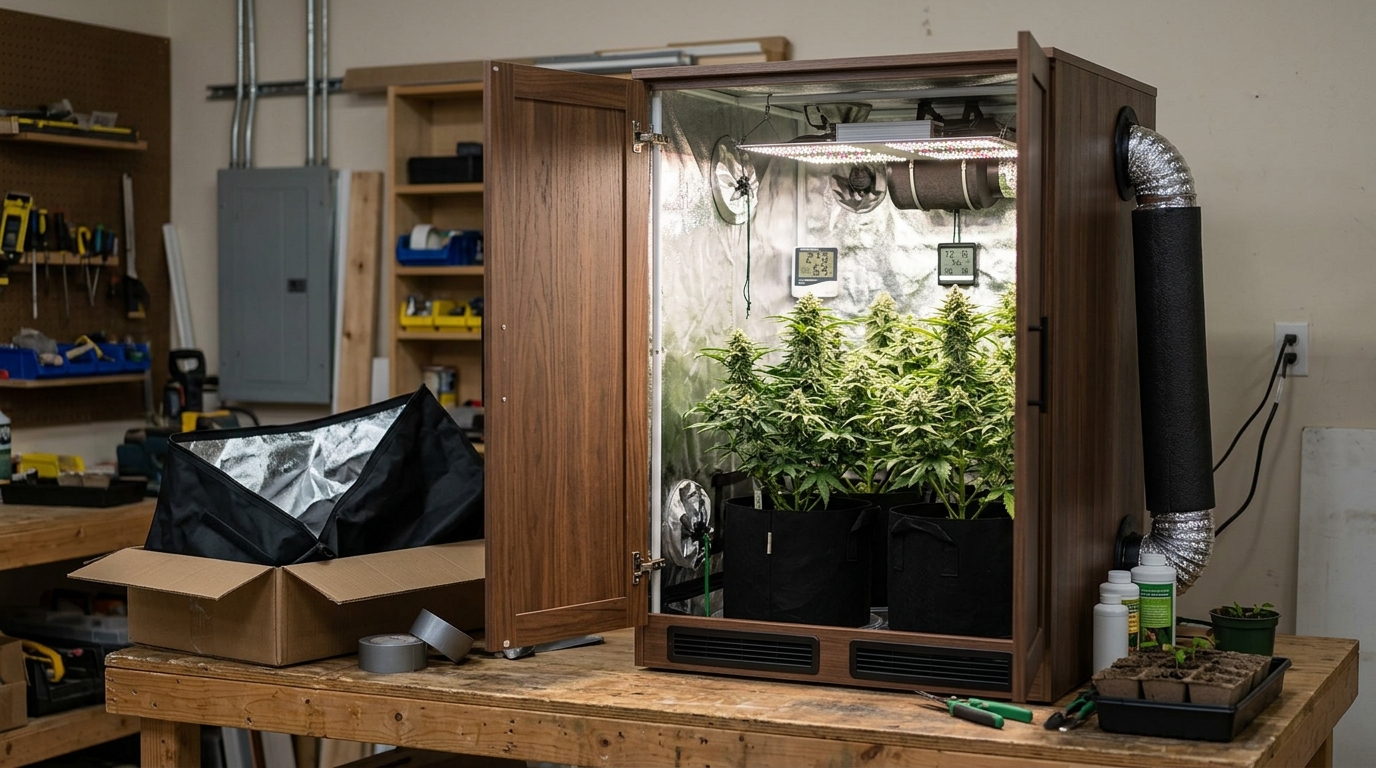
A grow box is a self-contained, enclosed growing environment — typically a cabinet, box, or armoire-style unit — that integrates lighting, ventilation, odor control, and often irrigation into a single plug-and-play package. The key distinction from a grow tent is that a grow box arrives as a finished unit. You’re not assembling poles and hanging lights yourself. You plug it in, add your growing medium and seeds, and the system does most of the heavy lifting.
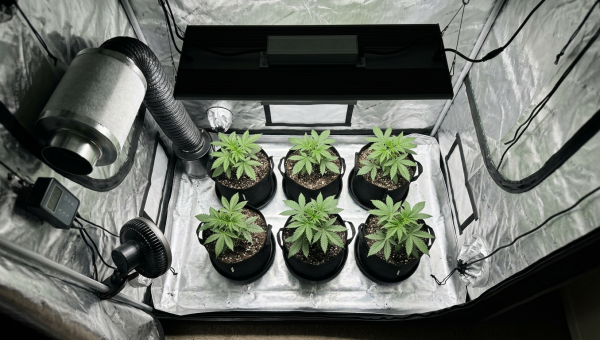
Grow tents, on the other hand, are reflective fabric enclosures that require you to source and install your own lights, fans, carbon filters, and timers separately. Both approaches work — and work well — but they’re built for different growers. Grow boxes prioritize convenience, stealth, and a low barrier to entry. Grow tents prioritize flexibility, scalability, and cost efficiency at larger sizes. Understanding that distinction is the foundation of every purchase decision in this guide.
The stealth factor is real, too. A quality grow box is designed to look like a piece of furniture or a nondescript cabinet. Combined with a carbon filter scrubbing the exhaust air, these units can operate in a shared living space without announcing themselves. That matters enormously for growers in states where home cultivation is legal but privacy is still a priority — think Colorado, California, Michigan, or any of the 20-plus states that now permit personal grows.
The Grow Box Landscape in 2026: Who’s Making What
The market has consolidated around a handful of serious players, each targeting a slightly different grower profile. Here’s how the major options break down based on what’s currently available and what the growing community is actually talking about.
SuperCloset sits at the premium end of the market. Their lineup — including the Trinity 3.0 LED and the Deluxe 3.0 HPS — are fully automated with smart app control and include free lifetime grow support. According to SuperCloset’s own product documentation, these units are quiet, air-tight, light-tight, and feature their proprietary InfraCool technology to manage heat buildup. If you want a set-it-and-forget-it system with the most automation and the best support structure, SuperCloset is the benchmark. You’ll pay for it, but you’re buying peace of mind along with the hardware.
Hey Abby has carved out a strong niche in the compact hydroponic grow box space. Their flagship unit occupies less than 2 square feet of floor space — genuinely apartment-friendly — and is built around a hydroponic growing system designed for beginners. The Hey Abby system has gotten significant traction in the Reddit microgrowery community, particularly among growers in urban environments who need maximum discretion in a minimal footprint.
Stealth Box USA takes a soil-first approach with their 4-plant system. It arrives fully assembled and plug-and-play — you add soil, seeds, and water, and you’re growing. The 2–7 ounce yield range per harvest is honest and realistic, accounting for the variation you’ll see between a first-time grower running a beginner-friendly autoflower versus an experienced hand dialing in a photoperiod strain.
Vivosun has entered the smart grow box space with their VGrow system, which the r/microgrowery community has been actively discussing. The Vivosun 2.5′ x 4.5′ model gets particular mention for growers who want a bit more canopy space without jumping to a full tent setup. Vivosun has historically been strong in the tent and equipment space, so their move into integrated grow boxes brings solid build quality at a more accessible price point.
According to Leafly, the Armoire Grow Box stands out as an elegant, compact, and fully automated option for growers who want their setup to blend into a living space without looking like grow equipment at all. The furniture aesthetic is a genuine selling point in shared apartments or homes where discretion matters.
For growers who want to explore the hydroponic side of things in more depth before committing to a system, our complete hydroponic growing guide covers the fundamentals in detail.
Automation Levels: What “Fully Automated” Actually Means
This is where marketing language gets slippery, and I want to be straight with you. “Fully automated” means different things depending on the brand. Before you spend money, understand what level of automation you’re actually getting.
At the most basic level, automation means a timer on the lights. That’s it. The lights turn on and off on a schedule, and you do everything else manually — watering, nutrient dosing, environmental monitoring. This is “automated” in the loosest sense and describes a lot of entry-level grow boxes.
Mid-level automation adds environmental controls: fans that respond to temperature sensors, humidity monitoring with alerts, and sometimes automated irrigation on a timer (not sensor-based). This is where most of the $500–$800 market sits and where something like a basic Vivosun VGrow lands.
True full automation — the kind SuperCloset markets with their smart app control — integrates all of these systems and allows you to monitor and adjust them remotely via smartphone. You get real-time environmental data, automated lighting schedules that can be adjusted for different growth stages, and in some cases automated nutrient dosing. This is the premium tier, and it’s what growers on Reddit are hunting for when they ask about fully automated 2×4 systems. The good news: budget-conscious growers can find fully automated 2×4 systems around the $1,000 price point in 2026, which represents a significant drop from where this tech was just a few years ago.
For growers who want to understand the environmental science behind why automation matters, our VPD guide explains exactly why maintaining precise vapor pressure deficit is so critical — and why automated systems that manage temperature and humidity together are worth the premium over systems that only control one or the other.
Grow Box vs. Grow Tent: The Honest Decision Matrix
I get this question constantly, and the honest answer is that neither is universally better — they’re optimized for different situations. Both grow boxes and grow tents work effectively but are built for different grower types, spaces, and priorities. Here’s how I break it down in practice.
| Factor | Grow Box | Grow Tent | DIY Cabinet |
|---|---|---|---|
| Setup Time | Minutes (plug-and-play) | 2–4 hours (assembly + equipment) | Days to weeks |
| Upfront Cost | $400–$2,500+ | $200–$800 (tent + equipment) | $100–$500 |
| Stealth Factor | High (furniture aesthetic) | Medium (obvious equipment) | High (custom build) |
| Scalability | Low (fixed size) | High (swap tent size) | Medium (rebuild required) |
| Odor Control | Built-in carbon filter | Requires separate filter | DIY filter required |
| Automation | Built-in (varies by model) | Requires separate controllers | Fully custom |
| Yield Potential | 2–7 oz (small units) | 4–16+ oz (2×4 tent) | Varies widely |
| Best For | Beginners, urban growers | Experienced growers, larger grows | Builders, budget maximizers |
If you’re a first-time grower in a legal state with limited space — say, an apartment in Denver or a condo in Seattle — a grow box makes a ton of sense. The plug-and-play nature eliminates the most common beginner failure points: improper light setup, inadequate ventilation, and poor odor control. You’re buying a system that someone else has already dialed in.
If you’ve got a dedicated grow space — a basement, a spare bedroom, a garage — and you want to maximize yield per dollar spent, a tent setup with separately sourced components will almost always outperform a comparably priced grow box on raw output. The flexibility to upgrade individual components (swap a light, add a second fan, upgrade your carbon filter) is a real advantage as your skills develop.
The DIY cabinet route is for growers who like building things as much as they like growing — and I’ll be honest, that’s where my carpenter background kicks in. A well-built DIY cabinet can match or exceed a commercial grow box in performance at a fraction of the cost, but it requires real time investment and troubleshooting patience.
Environment Specs: What Your Grow Box Needs to Maintain
Whether you’re running a commercial grow box or a DIY cabinet, the environmental targets don’t change. Cannabis doesn’t care what brand the walls are — it responds to temperature, humidity, CO2, light spectrum, and VPD the same way regardless of the enclosure. Here are the numbers you need to hit.
The biggest challenge with grow boxes — especially smaller units — is heat management. LEDs have improved dramatically, but even modern diodes generate heat, and in a sealed cabinet that heat accumulates fast. This is why SuperCloset’s InfraCool technology is a genuine differentiator rather than just marketing fluff. Any time you’re working in an enclosure under 20 cubic feet of air volume, heat is your primary enemy. Watch your canopy temperatures closely, especially during the first few runs, and don’t trust the ambient temperature reading alone — get an infrared thermometer and check your actual canopy surface temp.
Humidity management in small enclosures is the other big variable. In late flower, you really want to push that RH down toward 40% or below to protect your trichome coverage and prevent botrytis. Automated systems with integrated humidity control earn their keep in this final stretch. If you’re running a more basic setup, a small standalone dehumidifier or even a bag of Boveda packs near your exhaust can help dial it in.
Odor Control: The Real-World Performance of Carbon Filters in Grow Boxes
Odor is the number one stealth concern for apartment and condo growers, and it comes up constantly in Reddit threads about grow boxes. The good news: carbon filters in modern grow boxes effectively control odor when properly sized and maintained. The qualifier there matters — “properly sized and maintained.”
A carbon filter that’s undersized for your air volume, or one that’s been running for 18 months without a refresh, will not keep up with a flowering canopy. Every carbon filter has a finite lifespan — typically 12–18 months of active use — and the activated carbon loses its adsorptive capacity over time. Budget for filter replacement as part of your ongoing operating costs.
The Hey Abby system, which gets a lot of attention for apartment growing, uses an integrated carbon scrubber in its exhaust path. Users in the r/Hydroponics community report good results with odor control during vegetative growth, with the caveat that late-flowering plants pushing heavy terps will test any compact filter. Running your exhaust through a secondary carbon sock or adding a small inline booster fan to increase air exchange rate can make a meaningful difference in those final weeks.
I ran a particularly terp-forward pheno of Lemon Cherry Gelato in a cabinet setup last fall, and that strain’s citrus-fuel combination is genuinely aggressive. Even with a fresh carbon filter, I added a secondary ONA gel block near the exhaust port as insurance. For strains known for punchy terp profiles — anything in the citrus or fuel family — I’d recommend the same approach regardless of what grow box you’re using.
Strain Selection for Grow Boxes: Thinking Small and Smart
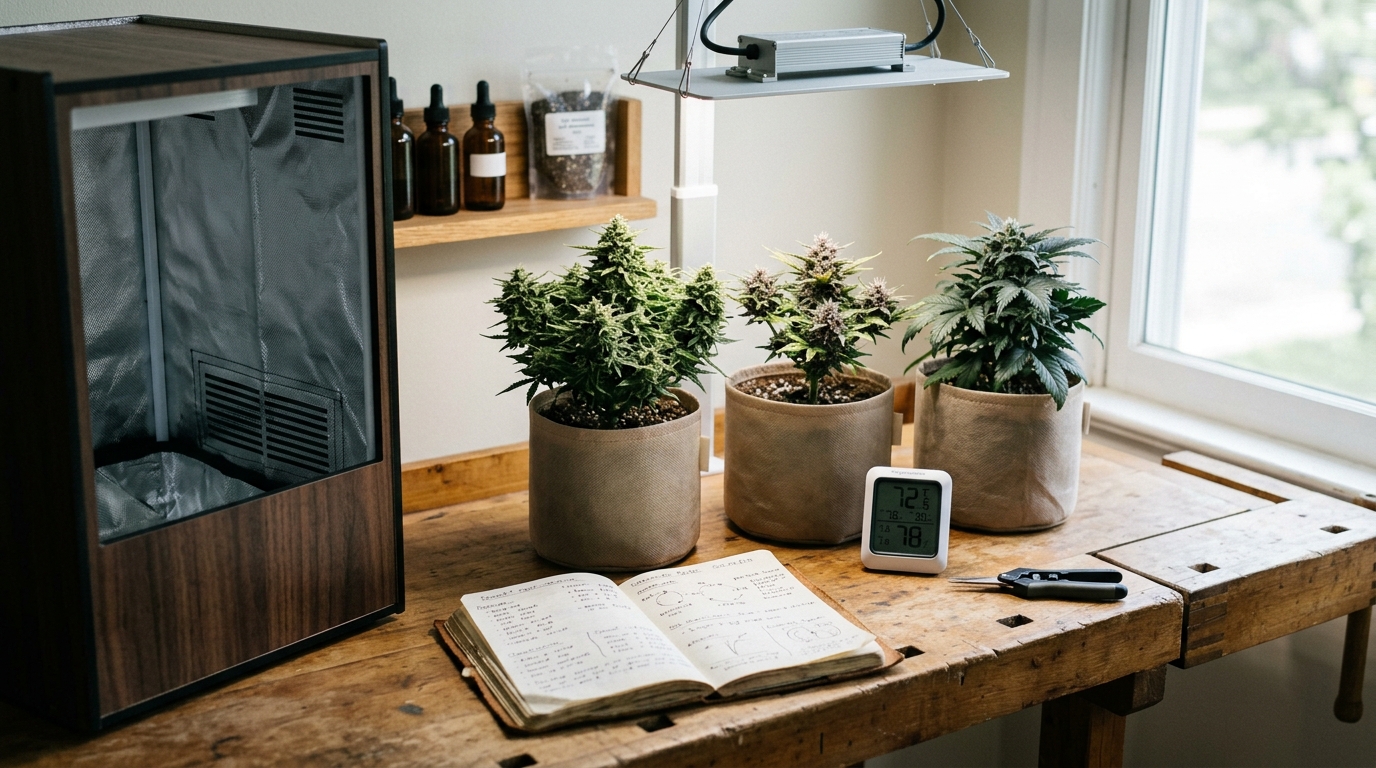
This is where a lot of grow box users make their first big mistake — they buy a compact grow box and then try to run a 6-foot sativa in it. Strain selection for small enclosures is genuinely important, and it’s worth spending some time on before you drop seeds.
Autoflowering strains are the natural fit for grow boxes. They stay compact, they don’t require a light schedule change to trigger flowering, and their shorter life cycle (typically 70–90 days seed to harvest) means you’re turning over harvests faster in a small space. Our seed type comparison guide covers the trade-offs in detail, but for grow box applications, autoflowers are almost always the right call unless you have specific reasons to go photoperiod.
Among photoperiod options, indica-dominant strains and indica-leaning hybrids are your friends. Northern Lights is the classic recommendation for confined spaces — it stays short, it’s forgiving of environmental fluctuations, and it produces dense, resinous buds that reward the small-space grower. Granddaddy Purple is another strong choice if you want something with more visual drama and a cozy, relaxing effect profile. Girl Scout Cookies has become a go-to for grow box growers who want a more complex terpene profile without sacrificing manageability.
If you want to push yields in a small space, canopy management techniques like low-stress training (LST) and screen of green (SCROG) can significantly improve your light penetration and bud site development even in a compact cabinet. Our super cropping guide covers advanced techniques for maximizing output when vertical space is limited.
Travis Cole has done some excellent work on outdoor autoflower grows that translates surprisingly well to the grow box context — specifically around managing compact genetics and maximizing light exposure per plant. Worth reading if you’re serious about getting the most out of a small footprint.
The DIY Grow Box: Building Your Own Stealth Cabinet
My carpentry background makes this section personal for me. A well-built DIY grow box can genuinely rival commercial units at a fraction of the price, and the satisfaction of growing in something you built yourself is real. Here’s how I approach a DIY cabinet build for a first-time builder.
Start with the enclosure. A repurposed wardrobe, an IKEA PAX unit, or a purpose-built plywood cabinet all work. The critical requirements are: light-tight seams (use foam weatherstripping and black silicone caulk), a flat white or Mylar interior for light reflection, and enough structural integrity to support a light fixture and inline fan without vibration issues.
For lighting in a DIY box, modern quantum board LEDs are the clear choice. They run cooler than HPS, they’re more energy-efficient, and the spectrum quality has improved to the point where I’d put a quality quantum board up against any proprietary LED system in a commercial grow box. Size your light to your footprint — a 100W board is appropriate for a 2×2 space, a 200–240W board for a 2×4.
Ventilation is where DIY builders most often undersize. A good rule of thumb: your inline fan should be able to exchange the total air volume of your cabinet every 1–3 minutes. For a 2x2x4 cabinet (16 cubic feet), you want at minimum a 4-inch inline fan rated at 190+ CFM. Pair it with an appropriately sized carbon filter — match the filter’s CFM rating to your fan — and you’ll have effective odor control.
For irrigation in a DIY setup, a simple drip timer system or a hand-watering schedule works fine for soil grows. If you want to go hydroponic in your DIY cabinet, our hydroponic growing guide is essential reading before you start plumbing anything.
Total cost for a solid DIY 2×2 cabinet with quality components: typically $200–$400, depending on whether you’re sourcing a used enclosure or building from scratch. That compares favorably to commercial grow boxes in the same size range, which typically run $400–$800. The trade-off is your time and the learning curve of troubleshooting your own build.
Realistic Yield Expectations and Harvest Timelines
Let me be straight about yields because this is an area where marketing language gets optimistic fast. The 2–7 ounce range that Stealth Box USA quotes for their 4-plant system is an honest bracket — that’s a real range that reflects the difference between a first-time grower with an average pheno versus an experienced grower who’s dialed in their environment and running a high-yielding genetic.
For a beginner running an autoflower in a Hey Abby or similar compact hydroponic system, a realistic first harvest expectation is 1–2 ounces. Don’t let that disappoint you — that’s a solid result for a first run in a small hydroponic system, and your second and third harvests will improve significantly as you learn your system’s quirks. By run three or four, growers who’ve put in the time to understand their environment are regularly hitting the upper end of their system’s rated yield range.
Knowing exactly when to pull your harvest is one of the most impactful skills you can develop. Our harvest timing guide covers trichome reading in detail — and in a small grow box where you’re investing real money per plant, getting the harvest window right makes a meaningful difference in your final product quality.
Maya Chen has written some excellent science-backed content on trichome development and cannabinoid accumulation timing that I always point newer growers toward when they’re trying to understand what they’re actually looking at under a loupe.
Legal Considerations: Stealth Growing in Different Jurisdictions
A grow box’s stealth features don’t change the legal landscape — they just make compliant growing more private and convenient. Before you invest in any grow system, know your local laws cold.
As of 2026, recreational home cultivation is legal in states including Colorado, California, Oregon, Washington, Michigan, Illinois, Nevada, Vermont, Maine, Massachusetts, New Mexico, Montana, Arizona, and several others, with varying plant count limits typically ranging from 3 to 6 plants per adult. Medical cultivation rights exist in additional states with a valid medical card. Federal law still classifies cannabis as a Schedule I controlled substance, which means interstate transport and federal property are still off-limits regardless of state law.
The stealth features of a grow box — furniture aesthetics, carbon filter odor control, light-tight construction — are valuable for privacy and discretion, not for evading legal consequences. If you’re in a state or country where cultivation isn’t permitted, no grow box makes it legal. Our cannabis seeds buying guide covers the legal landscape for seed acquisition in detail and is worth reading alongside this article.
For renters specifically: even in legal states, your lease may prohibit cultivation. Check your lease terms and consider whether the moisture and potential odor of a grow operation — even a well-managed one — creates liability for your tenancy. A quality grow box with effective odor control significantly reduces that risk profile compared to an open tent setup.
Operating Costs: What It Actually Costs to Run a Grow Box
The sticker price of a grow box is just the beginning. Ongoing operating costs matter, especially if you’re running multiple cycles per year. Here’s how to think about total cost of ownership.
Electricity is your primary ongoing cost. A compact grow box running a 100W LED for 18 hours per day during veg and 12 hours during flower, plus fans running continuously, will consume roughly 3–5 kWh per day depending on the system. At the US average residential rate of approximately $0.16/kWh (2026 EIA data), that’s roughly $0.50–$0.80 per day, or $45–$70 per 90-day autoflower cycle. Larger systems with 200–300W lighting will scale proportionally.
Carbon filter replacement every 12–18 months: $30–$80 depending on size. Growing medium (soil or hydroponic nutrients) per cycle: $20–$60 depending on approach. Seeds: $10–$50 per cycle depending on source and genetics. Total operating cost per 90-day autoflower cycle in a compact grow box: roughly $75–$200, not counting the initial hardware investment.
When you factor in the cost per gram of home-grown cannabis versus retail prices in legal states (which average $8–$15/gram for quality flower in 2026), even a modest 1.5-ounce harvest (42 grams) at retail replacement value of $336–$630 represents a solid return on a $75–$200 operating cost. The hardware pays for itself within a few cycles for most growers.
Common Grow Box Problems and How to Fix Them
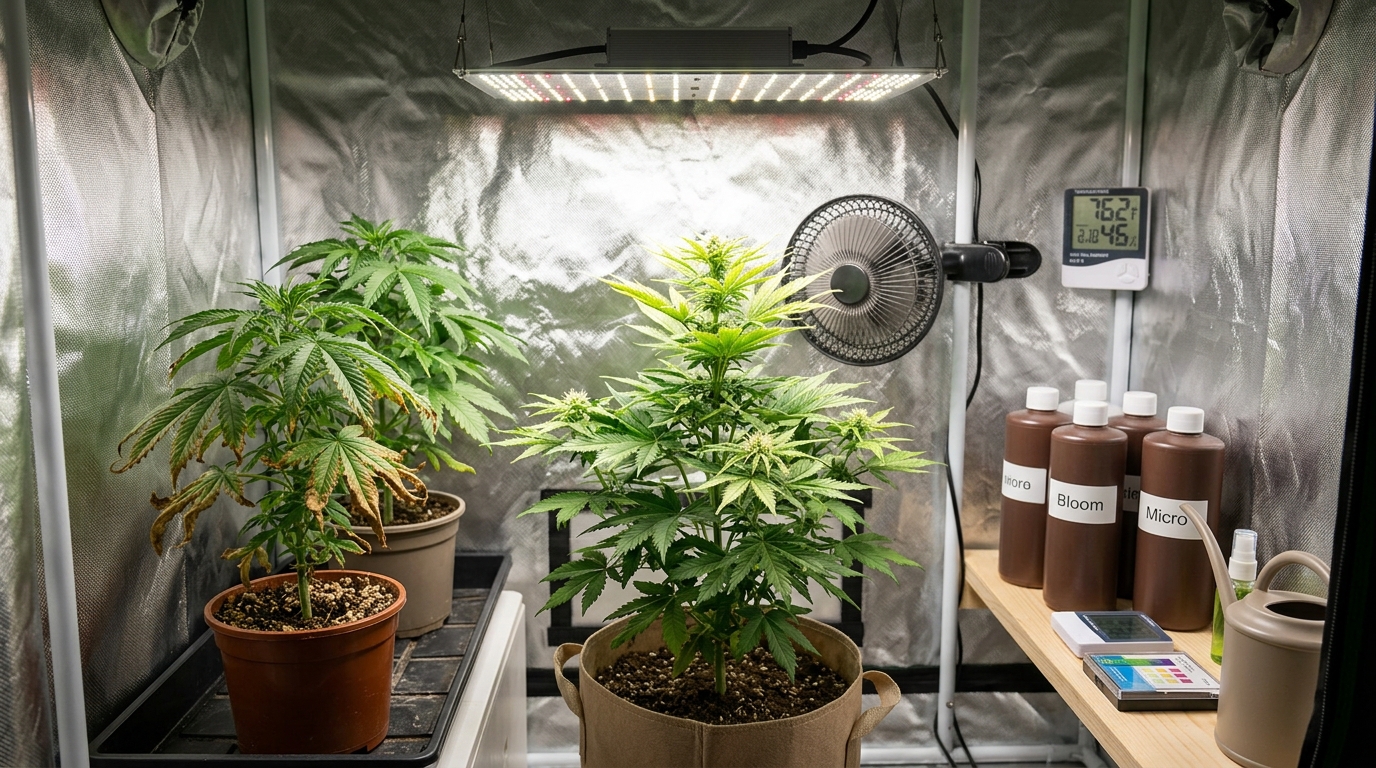
After 12 years of growing and helping newer growers troubleshoot their setups, these are the issues I see come up most consistently with grow box systems.
Heat buildup is the most common problem, especially in summer months or warm climates. If your canopy temps are running above 82°F consistently, your first move is to check whether your exhaust fan is actually sized correctly for your enclosure volume. Many entry-level grow boxes come with fans that are adequate in ideal conditions but struggle in a warm room. Adding a small USB fan for internal air circulation can also help break up hot spots near the light.
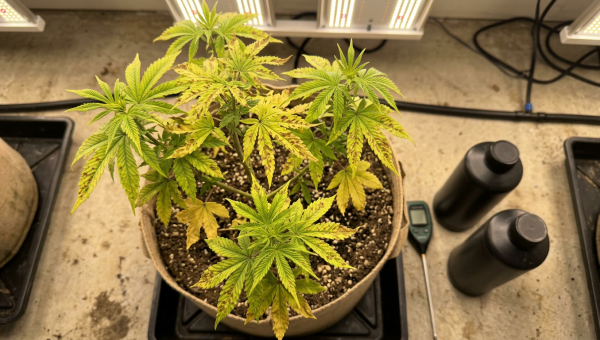
Nutrient problems in hydroponic grow boxes often trace back to pH drift. If your plants are showing yellowing, clawing, or interveinal chlorosis, check your reservoir pH before assuming a nutrient deficiency. In a small hydroponic reservoir, pH can drift significantly within 24–48 hours, especially during vigorous vegetative growth. Our plant problems diagnosis guide is the resource I send every grower to when they’re trying to figure out what their leaves are telling them.
Light leaks during the dark cycle are a serious issue for photoperiod strains. Even a small LED indicator light or a crack in a cabinet seal can stress photoperiod plants and trigger hermaphroditism. Do a thorough light-leak check before your first flowering cycle by getting inside a dark room and looking for any pinpoints of light with the grow box running in its “dark” state.
Root rot in hydroponic systems is the nightmare scenario for compact grow boxes. It spreads fast in warm reservoir water and can kill a plant in days. Keeping your reservoir temperature below 70°F, using beneficial bacteria products, and maintaining proper aeration are your primary defenses. If you see brown, slimy roots, act immediately — a hydrogen peroxide flush and a complete reservoir change can sometimes save a plant if you catch it early.
FAQ: Grow Boxes and Stealth Growing
Do grow boxes really work?
Yes, grow boxes genuinely work — and work well when used correctly. The key variables are strain selection (keep it compact), environmental management (especially heat and humidity), and realistic yield expectations. Commercial grow boxes from established brands like SuperCloset, Hey Abby, and Stealth Box USA are engineered specifically for cannabis cultivation and include the lighting, ventilation, and odor control needed for a complete grow. A first-time grower using a quality grow box with an appropriate autoflower strain can realistically harvest usable cannabis on their first attempt, which is not something you can say about most other cultivation approaches.
Does the Hey Abby grow box smell?
The Hey Abby system includes an integrated carbon filter in its exhaust path, and for most of the grow cycle — including vegetative growth and early flowering — odor control is effective. The challenge comes in late flowering, when resinous strains push heavy terpene production. Particularly fragrant strains (citrus, fuel, or skunk profiles) may push the limits of any compact carbon filter during peak flowering. Running the exhaust through a secondary carbon sock or placing an ONA gel block near the exhaust outlet provides an extra layer of protection for the most odor-intensive final weeks. Regular filter maintenance and replacement on schedule is essential for consistent performance.
Is a grow box good for beginners?
Grow boxes are arguably the best starting point for most beginners, specifically because they eliminate the most common early failure points. Improper light setup, inadequate ventilation, and poor odor control cause the majority of beginner grow failures — and a quality grow box addresses all three out of the box. The plug-and-play nature means you’re learning to grow cannabis, not learning to build a grow room simultaneously. That said, beginners should still invest time in understanding the fundamentals of plant nutrition, pH management, and growth stage identification. Our cannabis blog has extensive resources on all of these topics for growers at every level.
Are smart grow tents worth it?
Smart grow tents — tent setups with integrated environmental controllers, app connectivity, and automated climate management — occupy an interesting middle ground between traditional tent setups and fully integrated grow boxes. For growers who want the flexibility of a tent (scalable, upgradeable, better yield potential per dollar) but appreciate the convenience of automation, smart tent systems can be genuinely worth the premium. The trade-off versus a grow box is that you still have more assembly and configuration involved. For growers who are comfortable with that setup process and want more growing room than a compact grow box provides, a smart tent system in the 2×4 or 4×4 range often delivers better value per gram than a comparably priced grow box.
Is there a good fully automated grow system in the $1,000 range?
Yes — the 2026 market has matured to the point where budget-conscious growers can find fully automated 2×4 systems around the $1,000 price point. The Vivosun VGrow and comparable systems in this range offer most of the automation features (app control, automated lighting, environmental monitoring) that were previously only available in $2,000+ systems. The trade-offs at the $1,000 tier are typically in build quality, support infrastructure, and the depth of automation (sensor-based irrigation versus timer-based, for example). If $1,000 is your budget ceiling, focus on systems with strong community support and available replacement parts — the ongoing serviceability of a system matters as much as its initial feature set.
How do self-contained grow boxes compare to traditional setups for yield?
Traditional tent setups with separately sourced, high-quality components will generally outperform comparably priced grow boxes on raw yield — the flexibility to run higher-wattage lighting, more plants, and optimized airflow gives tent setups a structural advantage at scale. However, for 1–4 plant grows in compact spaces, the yield gap narrows considerably, especially when grow box users select appropriate strains and dial in their environments over multiple cycles. The Stealth Box USA 4-plant system’s 2–7 ounce range is genuinely competitive with a comparable tent setup when you account for the all-in cost and the learning curve advantage the grow box provides. For growers prioritizing total output over convenience, a tent setup wins. For growers prioritizing ease of use, stealth, and a complete system, grow boxes are the right call.
What automation features do smart grow boxes actually offer?
The automation features in smart grow boxes range from basic timer-controlled lighting all the way to full smartphone-connected environmental management. At the premium end, systems like SuperCloset’s smart app-controlled lineup offer real-time environmental monitoring (temperature, humidity, CO2), automated lighting schedules with stage-specific programming, remote alerts for out-of-range conditions, and in some cases automated nutrient dosing. Mid-tier systems typically automate lighting and provide basic environmental monitoring with manual adjustments. The most practically valuable automation features for new growers are automated lighting (eliminates the most common mistake of forgetting to flip the schedule) and humidity/temperature alerts (catches problems before they become plant-killing emergencies). Full nutrient automation is a genuine luxury that matters more in hydroponic systems than soil grows.