Here is a fact that surprises most modern cannabis consumers: virtually every premium flower you have purchased in the last decade — every dense, resinous, terpene-rich bud from a dispensary shelf in California, Colorado, Oregon, or Michigan — is, by strict botanical definition, sinsemilla. The word itself is not a strain name, a brand, or a marketing term. It is a Spanish compound meaning sin semilla: “without seed.” And yet, despite the fact that essentially all commercial cannabis grown today qualifies as sinsemilla, the term has largely vanished from everyday cannabis vocabulary, replaced by the language of feminized seeds, craft genetics, and boutique cultivars. Understanding why that happened — and what sinsemilla actually means at a chemical, botanical, and cultivation level — is the key to understanding how modern cannabis became as potent as it is.
- What Sinsemilla Actually Means: Cutting Through the Confusion
- The History of Sinsemilla: From Oaxacan Fields to American Grow Rooms
- The Plant Biology Behind Sinsemilla: Why Seeds Destroy Potency
- How Sinsemilla Is Grown: The Complete Cultivation Method
- Sinsemilla vs. Feminized Seeds: Understanding the Modern Terminology Shift
- The Chemistry of Sinsemilla: What Seedless Actually Does to Cannabinoid and Terpene Profiles
- Sinsemilla Quality: How to Identify It and What to Look For
- Where to Find Sinsemilla Genetics Today: Seeds, Clones, and Legal Access
- Sinsemilla in the Context of Modern Cannabis Culture: A Generational Knowledge Gap
- Sinsemilla and Therapeutic Cannabis: Why It Matters for Medical Patients
What Sinsemilla Actually Means: Cutting Through the Confusion
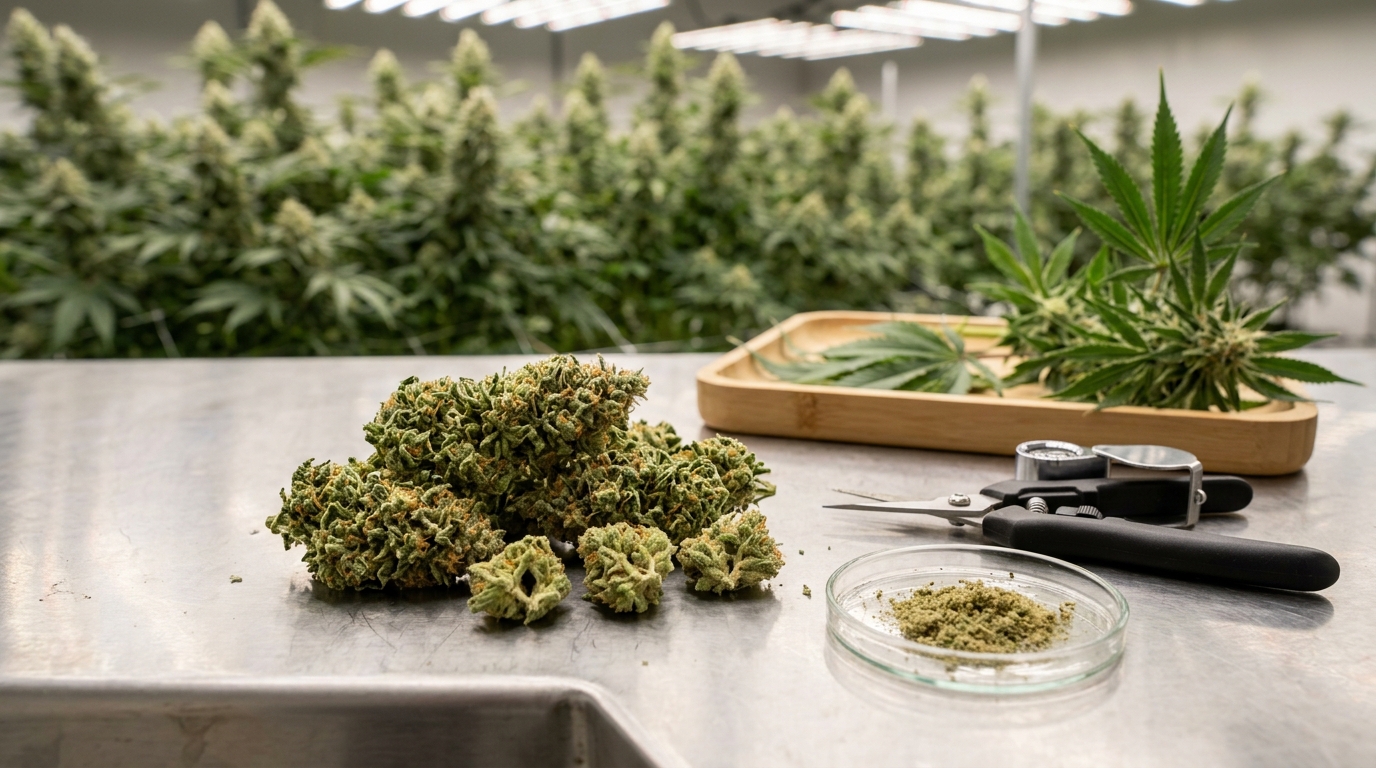
Sinsemilla (also spelled sensimilla or sensi in colloquial use) describes a specific physiological state of the female cannabis plant: unfertilized, seedless, and consequently producing the maximum possible concentration of cannabinoids and terpenes in her flowers. This is not a subspecies, a hybrid, or a proprietary cultivar. It is a cultivation outcome — the result of successfully preventing male pollen from reaching female flowers during the critical flowering window.
The botanical logic is elegant. Female cannabis plants produce resin — the sticky, trichome-laden coating that contains THC, CBD, and the full spectrum of terpenes — as a reproductive strategy. That resin is believed to function as a pollination trap, designed to capture airborne pollen and facilitate seed production. When fertilization never occurs, the plant continues to escalate resin production throughout its flowering cycle, essentially doubling down on its biological mission. The result is a flower with dramatically higher cannabinoid density than its fertilized counterpart would achieve. According to research published in the journal Drug and Alcohol Dependence and cited across multiple phytochemistry studies, unfertilized female cannabis plants can produce significantly higher THC concentrations compared to seeded plants of the same genetics — a difference that has profound implications for both recreational potency and therapeutic dosing.
It is worth addressing the spelling question directly, because it generates genuine confusion. “Sinsemilla” is the historically correct Spanish-derived spelling. “Sensimilla” is a phonetic anglicization that became common in American cannabis culture during the 1970s and 1980s. Both refer to the identical concept. In reggae culture and Jamaican cannabis tradition, “sensimilla” or “sensie” carried additional cultural weight, associated with high-quality herb. For the purposes of this article, I will use “sinsemilla” as the primary spelling while acknowledging that both are widely understood and accepted.
The History of Sinsemilla: From Oaxacan Fields to American Grow Rooms
The technique of cultivating seedless cannabis is not a modern invention, though its widespread adoption in the United States is a relatively recent phenomenon tied directly to the countercultural movements of the 1960s and 1970s. Indigenous and traditional cultivators in regions of Mexico, Colombia, and parts of South Asia had long understood that removing male plants from a crop produced superior flowers, even if the underlying plant biology was not formally articulated in those terms.
The pivotal moment for American cannabis culture came when travelers, researchers, and counterculture figures returning from regions like Oaxaca, Mexico brought back both seeds and cultivation knowledge in the late 1960s. These Oaxacan landraces — including what would later be celebrated as Mexican sativas — were being grown in ways that prioritized seedless female flowers. When American growers began experimenting with these genetics in California, Oregon, and Hawaii, they recognized that the seedless cultivation method produced a categorically different product from the compressed, seeded “brick weed” that dominated the illicit market at the time.
By the mid-1970s, sinsemilla cultivation had become a defining practice of the American domestic cannabis growing movement. Growers in Northern California’s Emerald Triangle — Humboldt, Mendocino, and Trinity counties — were producing sinsemilla that commanded premium prices and represented a genuine quality leap over imported product. A 1982 report from the National Organization for the Reform of Marijuana Laws (NORML) noted that domestic sinsemilla was fetching prices two to three times higher than seeded imported cannabis on the illicit market, reflecting consumer recognition of the quality difference.
The cultural cachet of sinsemilla during this era was enormous. It represented craft, knowledge, and intentionality in cultivation — a signal that the grower understood plant biology well enough to sex plants, remove males before pollen shed, and shepherd females through a full, uninterrupted flowering cycle. In a market with no lab testing, no certificates of analysis, and no regulatory oversight, the word “sinsemilla” functioned as a quality guarantee.
The Plant Biology Behind Sinsemilla: Why Seeds Destroy Potency
To truly understand why sinsemilla matters, you need to understand what happens inside a cannabis plant when fertilization occurs — and what the plant prioritizes when it does not. This is where the science becomes genuinely fascinating, and where my background in plant chemistry gives me a particular appreciation for the elegance of the mechanism.
Cannabis is a dioecious species, meaning individual plants are either male or female under natural conditions (hermaphroditism is also possible and is a significant concern for sinsemilla growers, which I will address shortly). Male plants produce pollen sacs, which rupture and release pollen into the air. Female plants produce pistillate flowers — the buds — equipped with sticky stigmas designed to capture airborne pollen. When a pollen grain lands on a receptive stigma and fertilization occurs, the plant immediately redirects a substantial portion of its metabolic resources toward seed production.
This metabolic redirection is the core issue. Seed development is energetically expensive. The plant must synthesize complex lipids, proteins, and carbohydrates to provision each seed, and it must do so while also continuing to develop the surrounding floral tissue. The result is a measurable reduction in the resources available for trichome development — the microscopic glandular structures that produce cannabinoids and terpenes. A study published in PMC (PubMed Central) examining cannabinoid biosynthesis confirmed that trichome density and cannabinoid concentration are directly linked to the reproductive status of the female plant, with unfertilized plants maintaining higher biosynthetic activity in the relevant metabolic pathways.
Beyond the simple resource-allocation argument, there is also a timing dimension. Seeded plants often reach a point where their biological mission — producing viable seeds — is essentially complete, and they begin to senesce (age) more rapidly. Sinsemilla plants, perpetually frustrated in their reproductive goal, continue to produce and refine their resin profile for a longer effective window. This gives growers more flexibility in harvest timing and often results in a more complex, fully developed terpene profile at harvest.
The practical implications for the consumer are significant. A seeded cannabis flower will typically contain more plant material and less resin per unit weight. When you smoke or vaporize seeded cannabis, you are combusting seed material that contributes harsh, acrid smoke and dilutes the cannabinoid and terpene content. Sinsemilla flowers burn cleaner, taste better, and deliver a more consistent and potent effect per gram. This is not marketing language — it is a straightforward consequence of the plant biology I have just described.
For a deeper look at how cannabinoids and terpenes interact once they are in your system, my colleague Darrel Henderson has written extensively about cultivation factors that influence final product quality, and the science of the entourage effect explains exactly why terpene preservation in sinsemilla matters as much as THC percentage.
How Sinsemilla Is Grown: The Complete Cultivation Method
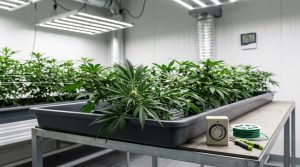
The cultivation of sinsemilla requires one fundamental intervention: the complete exclusion of male pollen from the growing environment during the female plant’s flowering phase. This sounds simple, but in practice it demands vigilance, botanical knowledge, and — in larger operations — systematic protocols for plant sexing and environmental control.
The traditional sinsemilla cultivation process begins with germination from regular (non-feminized) seeds, which will produce approximately a 50/50 ratio of male and female plants. Growers induce the plants to reveal their sex by manipulating the light cycle — typically shifting from 18 hours of light (vegetative growth) to 12 hours of light (flowering trigger) for photoperiod strains. Within one to three weeks of this light cycle change, plants begin to show their pre-flowers: male plants develop small, round pollen sacs clustered at the nodes, while female plants produce pairs of white, hair-like pistils emerging from a teardrop-shaped calyx.
The complete guide to sexing cannabis plants covers this identification process in detail, but the core principle for sinsemilla production is immediate and decisive action: male plants must be identified and removed from the growing space before any pollen sacs open and release their contents. A single male plant that is allowed to pollinate in a grow room can fertilize every female plant present, converting what would have been a sinsemilla crop into a seeded one. The window between pollen sac development and sac rupture is narrow — typically a matter of days — which is why experienced growers check their plants daily during early flowering.
Environmental contamination is also a serious concern. Pollen is extraordinarily light and can travel remarkable distances on air currents. Outdoor sinsemilla growers in states like Oregon and California must contend with the possibility of pollen drifting from neighboring properties, wild hemp populations, or other cannabis grows. This is one reason why many serious outdoor growers in legal states have moved toward feminized seeds, which eliminate the male plant risk entirely.
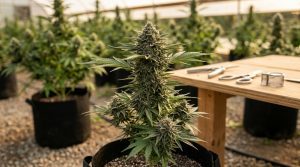
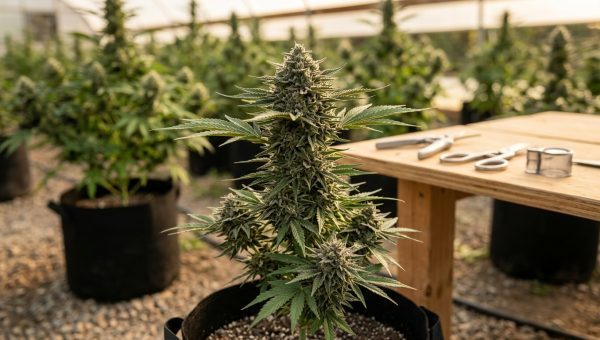
Hermaphroditism presents a more insidious challenge. Cannabis plants under stress — from light leaks during the dark period, temperature extremes, nutrient deficiencies, physical damage, or genetic predisposition — can develop both male and female reproductive structures on the same plant. These hermaphroditic plants, sometimes called “hermies,” can self-pollinate and pollinate neighboring females. Identifying and removing hermaphroditic plants, or at minimum removing any developing pollen sacs with tweezers before they open, is a critical skill for sinsemilla cultivation. This is why strain selection matters: genetics with low hermaphroditism tendency are strongly preferred for sinsemilla production.
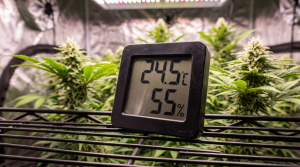
Environmental management during flowering extends beyond light control. Temperature, humidity, and vapor pressure deficit all influence resin production in the unfertilized female plant. Maintaining appropriate VPD — the subject of a detailed cannabis VPD guide — during late flowering helps maximize trichome development and preserve the delicate terpene compounds that define a strain’s aromatic and flavor profile. High-stress training techniques like super cropping can also increase resin production in sinsemilla plants by triggering a defensive response that upregulates terpene and cannabinoid biosynthesis.
Sinsemilla vs. Feminized Seeds: Understanding the Modern Terminology Shift
This is the question I encounter most frequently when discussing sinsemilla with newer cannabis enthusiasts: if modern cannabis is essentially all sinsemilla, why don’t we call it that anymore? The answer lies in a technological development that fundamentally changed cannabis cultivation in the 1990s and 2000s — the development and commercialization of feminized seeds.
Feminized seeds are seeds that have been bred or chemically treated to produce only female plants. The most common method involves treating a female plant with colloidal silver or silver thiosulfate solution, which suppresses ethylene production and causes the female plant to develop male pollen sacs. This chemically induced “male” plant produces pollen that carries only female (XX) chromosomes, because the plant producing the pollen is genetically female. When this pollen is used to fertilize another female plant, the resulting seeds carry only female genetics and will produce female plants with very high reliability — typically 99% or better under good growing conditions.
Feminized seeds represent a practical revolution for sinsemilla production. They eliminate the need to grow, sex, and cull male plants, reducing wasted space, time, and resources. For commercial operations in legal states like Colorado, Washington, and Michigan, where every square foot of canopy space has regulatory and economic significance, feminized seeds are not just convenient — they are economically essential. For home growers working within the plant count limits established by state law (typically 3-6 plants per adult in most recreational states), feminized seeds mean every plant counts toward the harvest.
The relationship between feminized seeds and sinsemilla is therefore one of means and ends. Feminized seeds are the most reliable modern method for achieving the sinsemilla outcome. But sinsemilla itself is the broader concept — it can be achieved with regular seeds through careful sexing, with feminized seeds through genetics, or with clones (which are always female) through vegetative propagation. The terminology shifted because “feminized seeds” describes the input (the seed type) in a way that is commercially useful for seed banks and retailers, while “sinsemilla” describes the output (the cultivation result) in a way that is more relevant to growers and consumers.
Autoflowering feminized seeds add another layer to this picture. These varieties, derived from Cannabis ruderalis genetics, flower based on age rather than light cycle and are almost universally sold as feminized. They produce sinsemilla by default when properly managed, and their rapid lifecycle (often 8-10 weeks from seed to harvest) has made them enormously popular with home growers across the United States. The comprehensive breakdown in our seed type comparison guide covers the trade-offs in detail.
| Method | Male Risk | Skill Required | Cost | Sinsemilla Reliability | Best For |
|---|---|---|---|---|---|
| Male Plant Removal | High | Low | Low | Moderate | Small-scale growers |
| Isolated Growing Space | Very Low | Moderate | Moderate | High | Commercial operations |
| Feminized Seeds | Very Low | Low | High | Very High | Reliable home cultivation |
| Rodelization | Moderate | High | Low | Moderate | Experienced growers |
| Greenhouse Screening | Low | Moderate | High | High | Outdoor/semi-outdoor |
The Chemistry of Sinsemilla: What Seedless Actually Does to Cannabinoid and Terpene Profiles
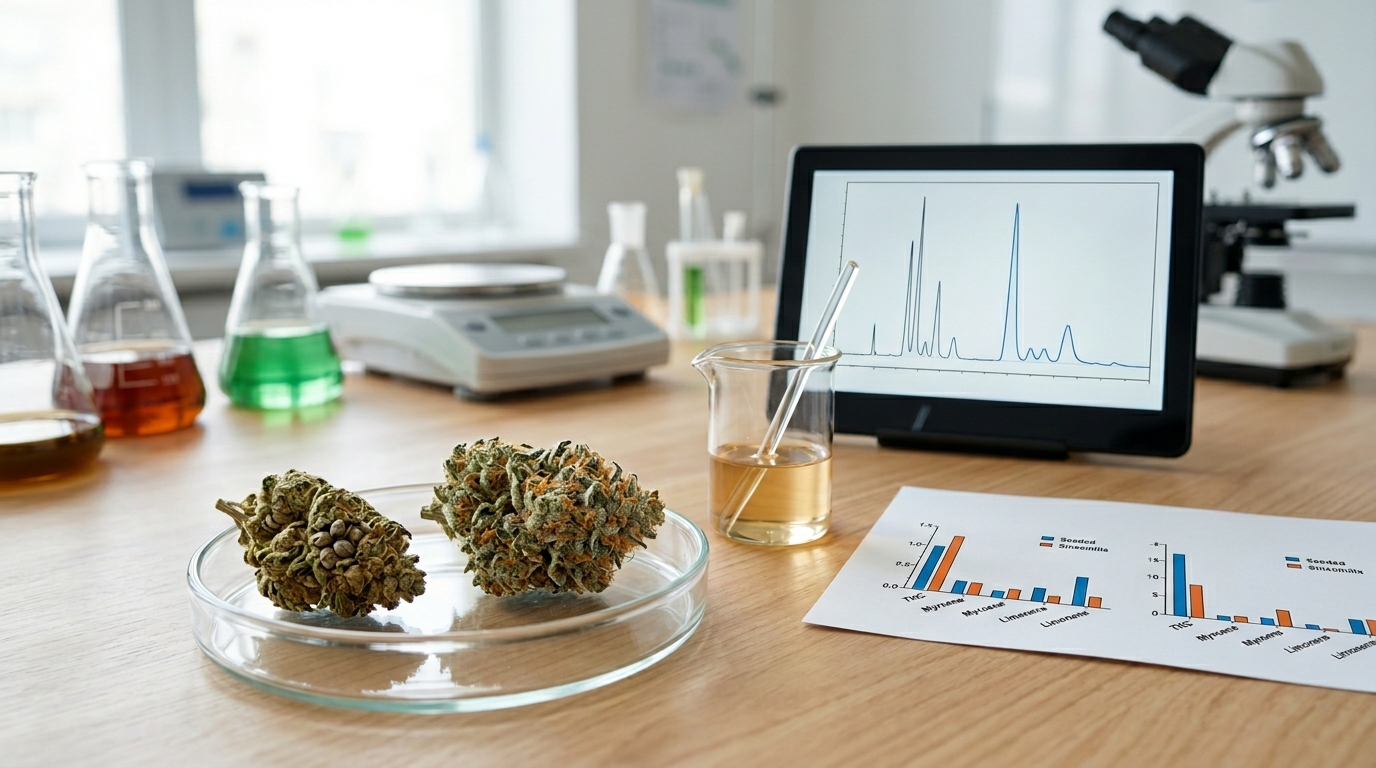
As a plant chemist by training, this is the section I find most compelling — and the one that I think is most underserved in popular cannabis writing. The difference between sinsemilla and seeded cannabis is not just a matter of convenience or aesthetics. It represents a genuine and measurable difference in phytochemical composition that has direct implications for the entourage effect, therapeutic applications, and the overall quality of the cannabis experience.
Cannabinoids — THC, CBD, CBG, CBC, and the dozens of minor cannabinoids identified in cannabis — are synthesized in the secretory cells of glandular trichomes. These trichomes are concentrated primarily on the bracts and calyxes of the female flower, with lower densities on leaves and stems. In an unfertilized sinsemilla plant, trichome development continues throughout the flowering cycle, with peak density and cannabinoid concentration typically occurring in the final two to three weeks before harvest. The plant’s continued investment in resin production during this period is directly linked to its unfertilized status.
Terpenes — the aromatic compounds responsible for the distinctive smell and flavor of cannabis strains, and increasingly recognized as pharmacologically active contributors to the cannabis experience — are also produced in trichomes and are highly sensitive to the plant’s physiological state. Strains like Blue Dream, with its characteristic myrcene and caryophyllene profile, or Sour Diesel, known for its distinctive terpinolene and caryophyllene combination, express their full aromatic complexity only when grown as sinsemilla. Fertilization not only reduces trichome density but can also alter the relative ratios of terpenes, as the plant’s metabolic priorities shift.
The entourage effect — the synergistic interaction between cannabinoids and terpenes that shapes the overall effect of cannabis — is therefore maximally expressed in sinsemilla. A seeded flower is not just lower in THC; it is also lower in the full spectrum of terpenes and minor cannabinoids that modulate how that THC is experienced. This is why experienced consumers and cannabis scientists consistently describe the sinsemilla experience as more nuanced, complex, and therapeutically interesting than equivalent-looking seeded cannabis.
100
100
100
100
0%
For strains where terpene complexity is a primary selling point — think Jack Herer with its unusual terpinolene dominance, or Amnesia Haze with its limonene and terpinolene interplay — sinsemilla cultivation is not optional if you want to experience what the genetics are actually capable of. I have analyzed terpene profiles from the same strain grown as sinsemilla versus accidentally pollinated, and the difference in total terpene content can be striking, with sinsemilla consistently showing richer and more complete aromatic profiles.
Sinsemilla Quality: How to Identify It and What to Look For
In legal markets, identifying sinsemilla cannabis is straightforward: virtually all licensed dispensary product in states like Oregon, California, Colorado, Washington, and Michigan is sinsemilla by regulatory expectation and commercial practice. Finding seeds in dispensary flower is genuinely rare and is often considered a quality control failure.
In legacy markets or in states where cannabis remains illegal, the distinction between sinsemilla and seeded cannabis is still meaningful. Traditional indicators of quality sinsemilla include dense, well-developed calyxes with abundant trichome coverage, a pronounced and complex aroma, and the complete absence of seeds (which are hard, dark, and immediately obvious when breaking apart a bud). The presence of even a few seeds suggests incomplete environmental control during cultivation.
Visual inspection remains the most immediate quality assessment tool. True sinsemilla flowers are characterized by swollen, resin-coated calyxes stacked densely along the branch — the classic “cola” structure that cannabis enthusiasts prize. The pistils (those orange or red hairs) should be present but not the dominant visual feature; in properly matured sinsemilla, the trichome-covered calyxes should be the most prominent structural element. Jessica Reed has written about the consumer experience of evaluating cannabis quality, and the visual markers she describes are all fundamentally properties of well-grown sinsemilla.
Aroma intensity is another reliable proxy for sinsemilla quality. Because terpenes are produced in the same trichomes as cannabinoids, a richly aromatic flower is almost always a high-terpene, high-cannabinoid flower. Strains like Og Kush, Gorilla Glue, or Wedding Cake should have immediately identifiable, complex aromas when properly grown as sinsemilla. A muted or generic smell often indicates either premature harvest, poor storage, or — in legacy market product — partial pollination that reduced terpene production.
For home growers, the harvest timing guide covers how to assess trichome maturity using a jeweler’s loupe or digital microscope, which is the most precise method for determining when your sinsemilla crop has reached its peak cannabinoid and terpene expression. Understanding trichome color transitions — from clear (immature) to cloudy (peak THC) to amber (THC degrading to CBN) — is essential for capturing the full potential of your sinsemilla flowers.
Where to Find Sinsemilla Genetics Today: Seeds, Clones, and Legal Access
The question of where to buy sinsemilla — or more precisely, where to source the genetics to grow your own sinsemilla — has a more complex answer in 2026 than it did even five years ago. The legal cannabis landscape in the United States has matured considerably, with recreational cannabis now legal in 24 states and medical programs operating in most of the remainder. This has created a bifurcated market: licensed dispensaries selling finished sinsemilla flower, and seed banks selling the genetics to grow your own.
For consumers in legal states, licensed dispensaries are the most straightforward source of sinsemilla cannabis. Every gram of flower on a dispensary shelf in Oregon, Colorado, California, or Michigan is — by the requirements of licensed commercial cultivation — sinsemilla. The regulatory frameworks in these states require licensed growers to maintain documented cultivation practices, and commercial production of seeded cannabis would be commercially catastrophic for any licensed operation.
For growers seeking to produce their own sinsemilla, the seed bank market offers an extraordinary range of options. The shift toward feminized seed production means that most major seed banks now offer their catalogs primarily in feminized form, making sinsemilla production accessible even to novice growers who lack the experience to sex plants reliably. Our complete guide to buying cannabis seeds online covers the legal landscape and practical considerations in detail.
Among the seed banks I have researched, several stand out for the quality of their feminized sinsemilla genetics. Our Growers Choice Seeds review examines a US-based option with a strong germination guarantee that is particularly relevant for growers who want reliable feminized seeds. For those interested in European genetics with a long track record, our Sensi Seeds review covers one of the oldest names in cannabis breeding. The Seeds Here Now review is worth reading for growers seeking premium US craft genetics, while our Barney’s Farm review covers one of Amsterdam’s most decorated breeders.
For growers in states with home cultivation rights — currently including Oregon (4 plants per household), Colorado (3 plants per adult, up to 6 per household), California (6 plants per adult), and Michigan (12 plants per household) — feminized seeds from reputable seed banks are the most reliable path to sinsemilla production. States like Texas, Idaho, and Kansas remain fully prohibited for home cultivation, so residents there are dependent on licensed dispensaries where available or remain in the legacy market.
Clone-based cultivation is another excellent option for sinsemilla production, particularly in states with legal clone sales through licensed dispensaries. Clones are cuttings taken from a known female mother plant, so they are guaranteed female and will produce sinsemilla when properly managed. The trade-off is that clones must be sourced locally (they cannot be legally shipped across state lines under federal law), and they carry the risk of transmitting pests or diseases from the mother plant. For growers interested in the full cultivation journey, our complete home growing guide walks through both seed and clone-based approaches.
Sinsemilla in the Context of Modern Cannabis Culture: A Generational Knowledge Gap
One of the most interesting dynamics I observe in cannabis communities — both online and in person — is the generational divide around sinsemilla terminology. Cannabis consumers who came of age before widespread legalization, particularly those who were active in the 1980s and 1990s, often have a visceral appreciation for sinsemilla as a quality designation. They remember when seedless cannabis was genuinely exceptional and commanded a premium precisely because it was difficult to produce and represented real grower expertise.
Younger consumers who have only purchased cannabis in legal markets often have no frame of reference for seeded cannabis at all. For them, sinsemilla is not a meaningful quality distinction because all legal cannabis is sinsemilla. The term appears in their experience only as a slightly archaic word encountered in cannabis history articles, reggae lyrics, or conversations with older enthusiasts. This is actually a remarkable success story for cannabis cultivation — the baseline quality of legal market cannabis has risen to the point where the defining quality innovation of 1970s cultivation is now simply the standard.
But there is genuine value in understanding sinsemilla even for consumers who have never encountered seeded cannabis. It explains why terpene profiles matter, why cannabinoid concentrations vary between strains, and why the plant biology of cannabis is so intimately connected to the quality of the final product. It also provides context for understanding why feminized seeds became the industry standard, why clone programs exist, and why commercial growers invest so heavily in environmental control during flowering.
The sinsemilla concept also bridges directly to contemporary discussions about craft cannabis versus commodity cannabis. The same principles that made 1970s sinsemilla exceptional — careful genetics selection, attentive cultivation, environmental precision, and respect for the plant’s biological needs — are what distinguish a truly exceptional modern cultivar from mediocre commercial product. Whether you are growing Northern Lights under LEDs in a basement in Portland or Purple Haze in a greenhouse in Sonoma County, the sinsemilla principles are the foundation of quality.
For those interested in exploring our full coverage of cannabis science, cultivation, and culture, our cannabis blog covers everything from terpene biochemistry to harvest techniques to strain-specific growing notes.
Sinsemilla and Therapeutic Cannabis: Why It Matters for Medical Patients
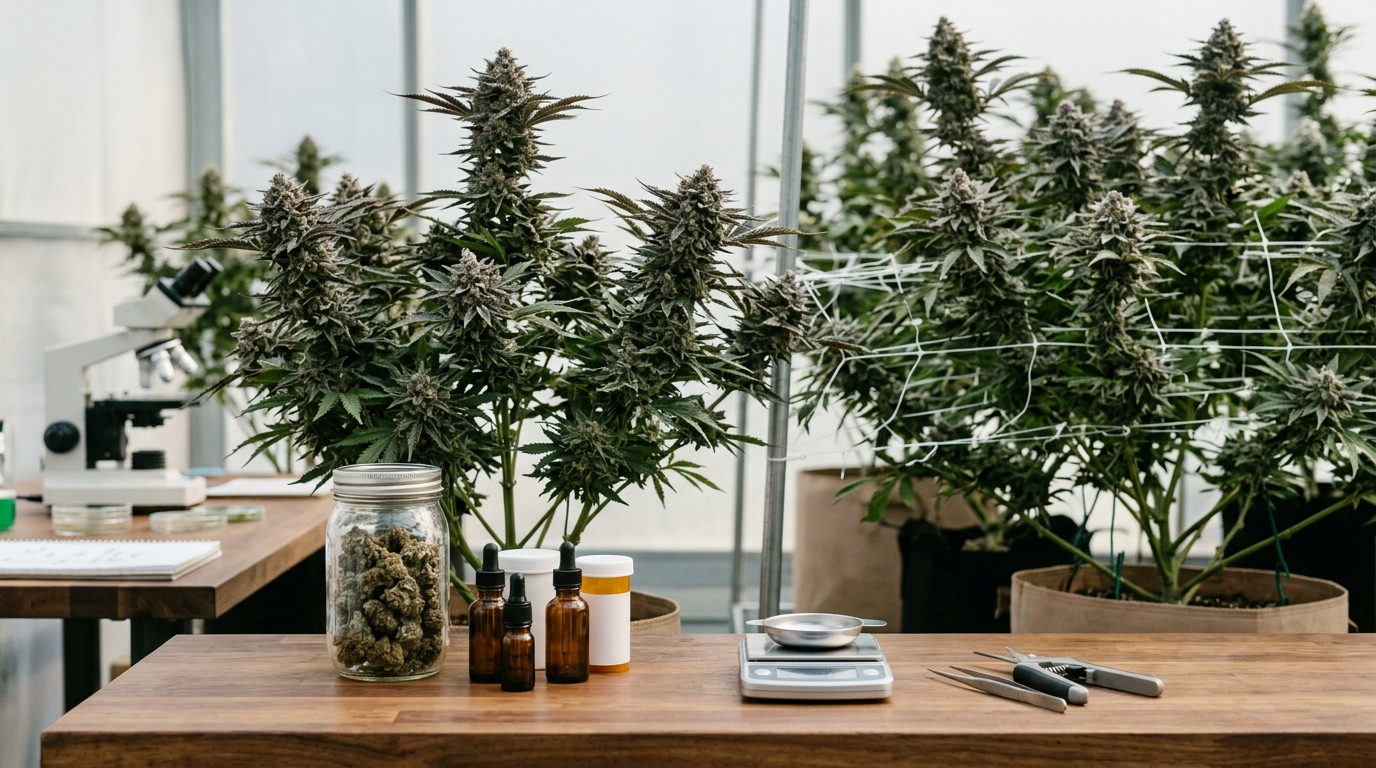
The implications of sinsemilla cultivation extend beyond recreational potency into the therapeutic cannabis space, where precise dosing and consistent cannabinoid profiles are clinically significant. Medical cannabis patients — whether using cannabis for chronic pain, anxiety, epilepsy, or other conditions — benefit from the consistency and potency that sinsemilla production enables.
Consider the dosing implications. A medical patient using a high-CBD strain for seizure management needs predictable cannabinoid concentrations in every dose. Seeded cannabis introduces variability not just in total cannabinoid content but in the ratio of cannabinoids, because seed development affects different biosynthetic pathways to different degrees. Sinsemilla production, particularly when combined with rigorous testing protocols, allows licensed producers to deliver consistent cannabinoid ratios batch after batch.
The endocannabinoid system — the complex network of receptors, endogenous ligands, and enzymes that cannabis compounds interact with — responds to the full phytochemical profile of cannabis, not just THC or CBD in isolation. This is the foundation of the entourage effect, which research published in the British Journal of Pharmacology has documented extensively. Sinsemilla cannabis, with its richer terpene and minor cannabinoid profile, provides a more complete pharmacological input to this system than seeded cannabis of equivalent weight. For patients seeking specific therapeutic outcomes, this distinction is clinically meaningful.
The complete terpene science guide covers how individual terpenes like myrcene, limonene, linalool, and caryophyllene contribute to the therapeutic profile of cannabis — all of which are expressed at their highest concentrations in properly grown sinsemilla.
Frequently Asked Questions About Sinsemilla
What is the difference between sinsemilla and regular cannabis?
Sinsemilla is cannabis grown from unfertilized female plants, meaning the flowers contain no seeds. Regular or “seeded” cannabis comes from female plants that were pollinated by males, causing the plant to redirect metabolic resources from resin production to seed development. The result is that sinsemilla flowers contain significantly higher concentrations of THC, CBD, and terpenes per gram compared to seeded cannabis of the same genetics. In practical terms, sinsemilla burns cleaner, tastes better, and delivers a more potent and complex effect.
Is all dispensary cannabis sinsemilla?
Yes, in all practical terms. Every licensed commercial cannabis operation in legal US states — California, Colorado, Oregon, Washington, Michigan, and others — produces sinsemilla as the standard. Licensed growers use feminized seeds or clone-based cultivation specifically to ensure that all female plants remain unfertilized throughout their flowering cycle. Finding seeds in dispensary flower is extremely rare and is generally considered a quality control failure. The term “sinsemilla” has effectively become redundant in legal markets because it describes the universal standard rather than an exceptional quality tier.
What does sinsemilla mean in Spanish?
Sinsemilla is a compound of two Spanish words: sin (without) and semilla (seed). The complete phrase sin semilla means “without seed.” The term entered American cannabis vocabulary in the 1960s and 1970s, when growers and travelers returning from Mexico and Central America brought back both the cultivation technique and the Spanish terminology that described it. The anglicized spelling “sensimilla” is also widely used and refers to the same concept.
Why don’t people say “sinsemilla” anymore?
The decline of the term reflects its own success. When sinsemilla was introduced to American cannabis culture in the 1970s, it was a meaningful quality distinction in a market dominated by seeded, imported cannabis. As domestic cultivation expanded, feminized seeds became commercially available, and legal markets emerged, sinsemilla became the universal baseline rather than an exceptional quality marker. The industry shifted to describing cannabis by strain name, cannabinoid percentages, terpene profiles, and seed type (feminized, autoflower, regular) — all of which provide more specific information than the simple seedless/seeded distinction. The concept is still entirely relevant; it just no longer needs its own word because it describes the default state of modern cannabis.
Can you grow sinsemilla with regular seeds?
Absolutely. Regular (non-feminized) seeds produce approximately 50% male and 50% female plants. To grow sinsemilla from regular seeds, you germinate the seeds, allow the plants to develop through the vegetative stage, then induce flowering by shifting the light cycle to 12 hours light/12 hours dark. Within one to three weeks, plants will reveal their sex through their pre-flowers. Male plants — identified by their clustered, round pollen sacs at the nodes — must be removed immediately and completely before any pollen sacs open. The remaining female plants, if kept isolated from all pollen sources for the remainder of their flowering cycle, will produce sinsemilla. This traditional approach requires more space, time, and vigilance than feminized seeds, but it remains the method of choice for breeders and traditionalists working with specific genetics.
How does sinsemilla affect terpene profiles?
Sinsemilla cultivation allows female cannabis plants to invest their full biosynthetic capacity into trichome production throughout the flowering cycle, because seed development never occurs to divert metabolic resources. Terpenes are synthesized in the same glandular trichomes as cannabinoids, so the higher trichome density and continued biosynthetic activity in sinsemilla plants results in richer, more complete terpene profiles at harvest. Strains with complex terpene signatures — myrcene-dominant indicas, terpinolene-dominant sativas, caryophyllene-rich hybrids — express their full aromatic and pharmacological potential only when grown as sinsemilla. Partial pollination can measurably alter terpene ratios and reduce total terpene content even in strains with strong genetic terpene expression.
Is sinsemilla the same as feminized cannabis?
Sinsemilla and feminized cannabis are related but not identical concepts. Sinsemilla describes the outcome — seedless, unfertilized female flowers with maximum resin production. Feminized cannabis describes the seed type — seeds bred to produce only female plants. Feminized seeds are the most reliable modern method for achieving the sinsemilla outcome, but sinsemilla can also be produced from regular seeds (by removing males), from clones (which are always female), or from autoflowering feminized seeds. Think of it this way: all properly grown feminized cannabis is sinsemilla, but not all sinsemilla requires feminized seeds. The confusion arises because modern seed bank marketing focuses on the input (feminized seeds) while the traditional term focused on the output (seedless flowers).