Here is a fact that surprises most first-time growers: cannabis does not decide to flower because it has matured — it flowers because the darkness tells it to. Photoperiod cannabis plants are essentially biological light meters, using a photoreceptor protein called phytochrome to measure the duration of uninterrupted darkness each night and translate that signal into a hormonal cascade that either sustains vegetative growth or triggers the entire reproductive process. A 2024 study published in PMC confirmed that photoperiodic flowering in Cannabis sativa is mediated by circadian clock genes — the same molecular machinery found in other short-day plants — making the light schedule you choose one of the most consequential decisions in your entire grow. Understanding this biology is not just academic. It is the difference between a plant that flowers on your schedule and one that flowers whenever it feels like it, which is the core distinction separating photoperiod seeds from their autoflowering counterparts. If you are building out a serious home setup, this guide — alongside our complete home growing guide — will give you the scientific foundation to grow photoperiod cannabis with genuine precision.
- What Photoperiod Seeds Actually Are (And Why the Biology Matters)
- Photoperiod vs. Autoflower: An Honest ROI Comparison
- Light Schedules Explained: Beyond the Basic 12/12
- When to Flip to 12/12: Reading Your Plant, Not Just Your Calendar
- Indoor vs. Outdoor Photoperiod Growing: Real Timelines
- Troubleshooting Photoperiod-Specific Problems
- Best Photoperiod Strains for Different Growing Scenarios
- The Entourage Effect Advantage: Why Photoperiod Genetics Dominate Terpene Science
What Photoperiod Seeds Actually Are (And Why the Biology Matters)
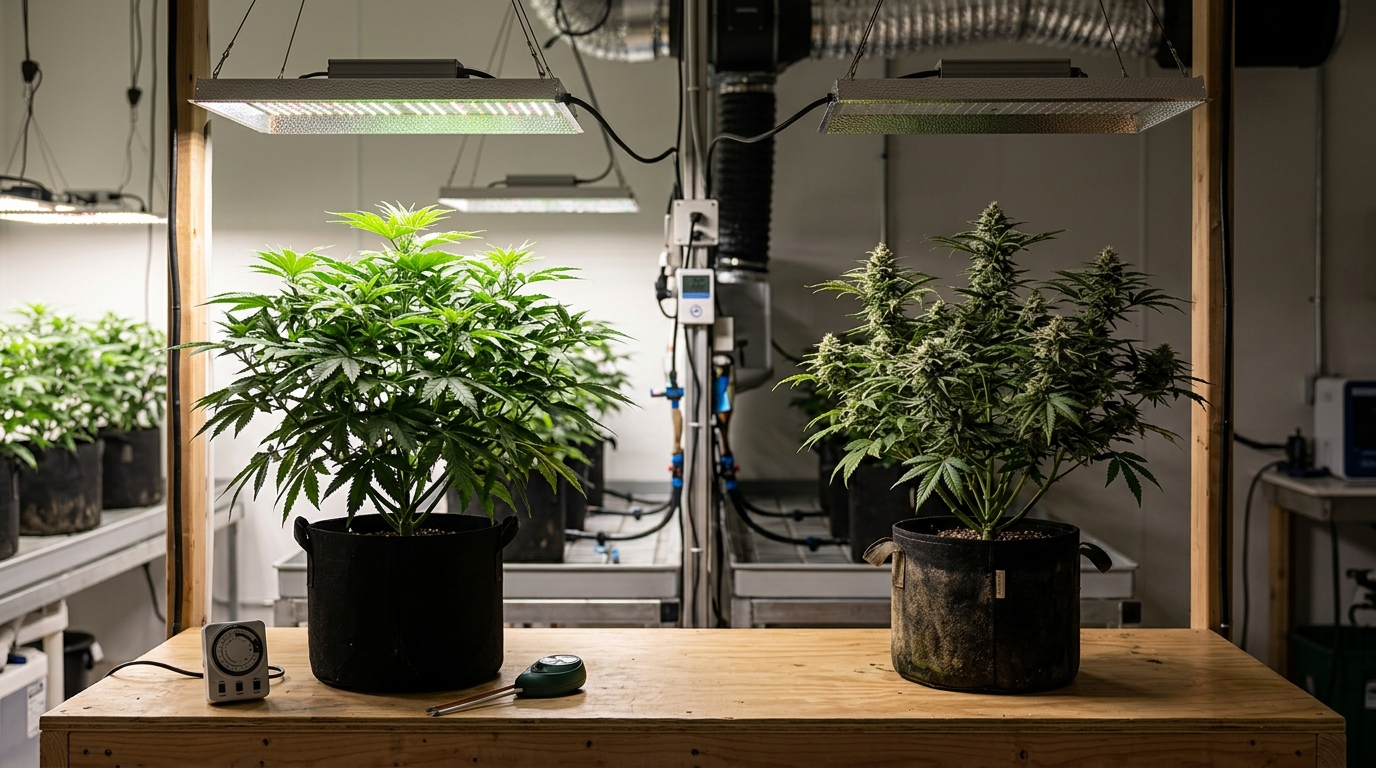
Photoperiod cannabis seeds produce plants whose transition from vegetative growth to flowering is entirely governed by the ratio of light to darkness they receive each day. In botanical terms, cannabis is classified as a short-day plant, meaning it initiates flowering when the period of continuous darkness exceeds a critical threshold — generally around 12 hours, though the precise trigger point varies by strain and genetic lineage. This is fundamentally different from what happens with autoflowering varieties, which carry Cannabis ruderalis genetics that decouple flowering from light entirely, causing them to flower based on age rather than photoperiod. I wrote a detailed breakdown of the ruderalis species in our piece on cannabis ruderalis genetics if you want to go deeper on that divergence.
The practical implication of photoperiod genetics is profound: you, the grower, hold the trigger. Indoors, you control the light schedule with a timer. Outdoors, the natural seasonal shift from long summer days to shorter autumn days provides the trigger automatically. This control is the central value proposition of photoperiod seeds. You can keep a plant in vegetative growth for as long as you need — weeks or months — to build the canopy architecture, root mass, and overall biomass that will ultimately support a much larger harvest than a time-limited autoflower could ever produce.
The phytochrome system at the heart of this process is worth understanding briefly. Phytochrome exists in two interconvertible forms: Pr (which absorbs red light) and Pfr (which absorbs far-red light). During daylight, Pfr accumulates. During darkness, Pfr slowly reverts back to Pr. When the dark period is long enough that Pfr levels drop below a critical threshold, the plant’s circadian clock registers the signal and begins redirecting energy toward reproductive development. This is precisely why even a brief light interruption during the dark period — a phenomenon growers call a “light leak” — can reset the clock and delay or prevent flowering entirely.
Photoperiod vs. Autoflower: An Honest ROI Comparison
The debate between photoperiod and autoflower seeds is one of the most reliably heated topics in every cannabis growing community I have encountered, and the reality is that neither type is objectively superior — they are optimized for different priorities. What I can do is give you a data-grounded comparison so you can make the decision that fits your actual situation.
Autoflowers complete their full life cycle — from seed to harvest — in roughly 8 to 11 weeks regardless of light schedule. That speed is genuinely useful for growers in states with short outdoor seasons, like those in the northern tier of the US (think Minnesota, Montana, or Michigan), where a late spring planting and a September frost window make a fast-finishing plant almost mandatory. Indoors, autoflowers can be run under 18 to 20 hours of light continuously, eliminating the need for a light schedule transition and allowing multiple harvests per year in a single space.
Photoperiod plants, however, offer something autoflowers structurally cannot: scalable yield potential. Because the vegetative phase has no fixed endpoint, an experienced grower can train, top, and shape a photoperiod plant into a wide, multi-cola canopy before ever flipping to flower. Techniques like the Sea of Green method or super cropping are far more effective on photoperiod plants precisely because the grower controls when the vegetative clock stops. A well-grown indoor photoperiod plant can realistically yield two to four times what an autoflower of the same strain would produce in the same space, though it takes considerably longer to get there.
From a cost and time investment perspective, the honest calculus looks like this: autoflowers demand less electricity (no light schedule switching), less grower attention during the vegetative phase, and produce faster returns. Photoperiods demand more setup time, more training investment, and more patience — but they reward that investment with larger harvests, more genetic diversity in available strains, and the ability to take cuttings (clones) for perpetual production, which autoflowers cannot reliably support.
| Metric | Photoperiod Seeds | Autoflower Seeds |
|---|---|---|
| Total Grow Time (Indoor) | 14–22 weeks (veg + flower) | 8–11 weeks seed to harvest |
| Flowering Trigger | 12/12 light schedule (grower-controlled) | Age-based (automatic, ~3–4 weeks) |
| Yield Potential (Indoor) | Higher — scalable with training | Lower — fixed canopy window |
| Cloning Viability | Yes — reliable mothers possible | No — not recommended |
| Light Schedule Flexibility | Requires 12/12 to flower | Runs 18–20h throughout |
| Strain Variety Available | Vastly larger catalog | Growing but still limited |
| Beginner Friendliness | Moderate — requires light discipline | High — forgiving schedule |
Light Schedules Explained: Beyond the Basic 12/12
Most guides stop at “give your plants 18 hours of light to veg, then switch to 12/12 to flower.” That is accurate as far as it goes, but it leaves out a significant amount of nuance that experienced growers leverage to optimize both growth rate and final yield. Let me walk through the full spectrum of light schedule strategies I have seen work in real cultivation environments.
During vegetative growth, the standard recommendation is 18 hours of light and 6 hours of darkness, often written as 18/6. This schedule mimics long summer days and keeps phytochrome in a state that suppresses flowering. Some growers run 20/4 or even 24/0 (continuous light) during veg, arguing that more photons equal faster growth. The research here is nuanced: a study referenced in PMC’s 2025 cannabis physiology literature notes that cannabis, like most plants, benefits from a dark period for respiration and metabolic recovery, suggesting that 18/6 or 20/4 is likely superior to continuous light for overall plant health, even if raw growth rate metrics sometimes favor 24/0 in the short term.
When it comes to initiating flowering, 12/12 is the universal standard — 12 hours of light followed by 12 hours of uninterrupted darkness. This is sufficient to push virtually all photoperiod strains into flowering mode. However, some Sativa-dominant strains with equatorial genetics — varieties like Amnesia Haze or Sour Diesel — evolved in regions where the natural dark period at harvest time is closer to 11 to 11.5 hours rather than 12. Running these strains at 11/13 during flower can actually tighten up finishing times and improve resin density by more closely mimicking their native photoperiodic environment.
Conversely, some growers experiment with a gradual light transition — stepping down from 18/6 to 15/9 to 12/12 over two to three weeks — to mimic the natural seasonal shift outdoors. Anecdotally, this approach can reduce the “stretch” that many strains exhibit during the first two weeks of flower (sometimes called the transition stretch), though controlled research specifically on this technique in cannabis remains limited. The VPD management guide on our site pairs well with light schedule optimization, since vapor pressure deficit targets also shift between veg and flower phases.
When to Flip to 12/12: Reading Your Plant, Not Just Your Calendar
One of the most common mistakes I see from newer growers is treating the 12/12 flip as a fixed calendar event rather than a response to actual plant development. The right time to flip depends on three converging factors: the size of your grow space, the expected stretch of your specific strain, and the training goals you have set for your canopy.
The first factor — grow space — is the most practically important. Most photoperiod strains will roughly double in height during the first two to three weeks of flowering, a phenomenon driven by the surge in gibberellin production that accompanies the flowering transition. If you are growing in a tent that is 1.5 meters tall and your plant is already 75 centimeters at the time of the flip, you are going to have a serious space problem by week three of flower. As a general rule, I recommend flipping when your plant reaches approximately one-third to one-half of your available vertical grow space, accounting for the expected stretch of your specific genetics.
The second factor is strain-specific stretch. Indica-dominant varieties like Northern Lights or Granddaddy Purple tend to stretch modestly — perhaps 25 to 50 percent above their pre-flip height. Sativa-dominant and Haze-lineage strains can stretch 100 to 200 percent or more, which is a critical planning consideration. If you are growing a pure Haze in a standard 2-meter tent, you may need to flip significantly earlier than you would with a compact Kush variety.
The third factor is training maturity. Techniques like topping, LST (low-stress training), and SCROG (screen of green) require time to execute properly before the flip. A plant that has been topped and allowed to develop four to eight main colas, then trained horizontally across a screen, will need several weeks of vegetative recovery time after each major training event before you flip. Rushing the flip before your training is complete is one of the most reliable ways to leave yield on the table.
In terms of minimum vegetative time, most photoperiod plants benefit from at least four to six weeks of vegetative growth after they have established a root system. Some growers run eight to twelve weeks of veg for large indoor plants or outdoor specimens, building genuinely tree-like structures before flipping. Darrel Henderson covers extended vegetative strategies and canopy management in detail — his perspective on timing the flip for maximum yield is worth reading alongside this piece.
Indoor vs. Outdoor Photoperiod Growing: Real Timelines
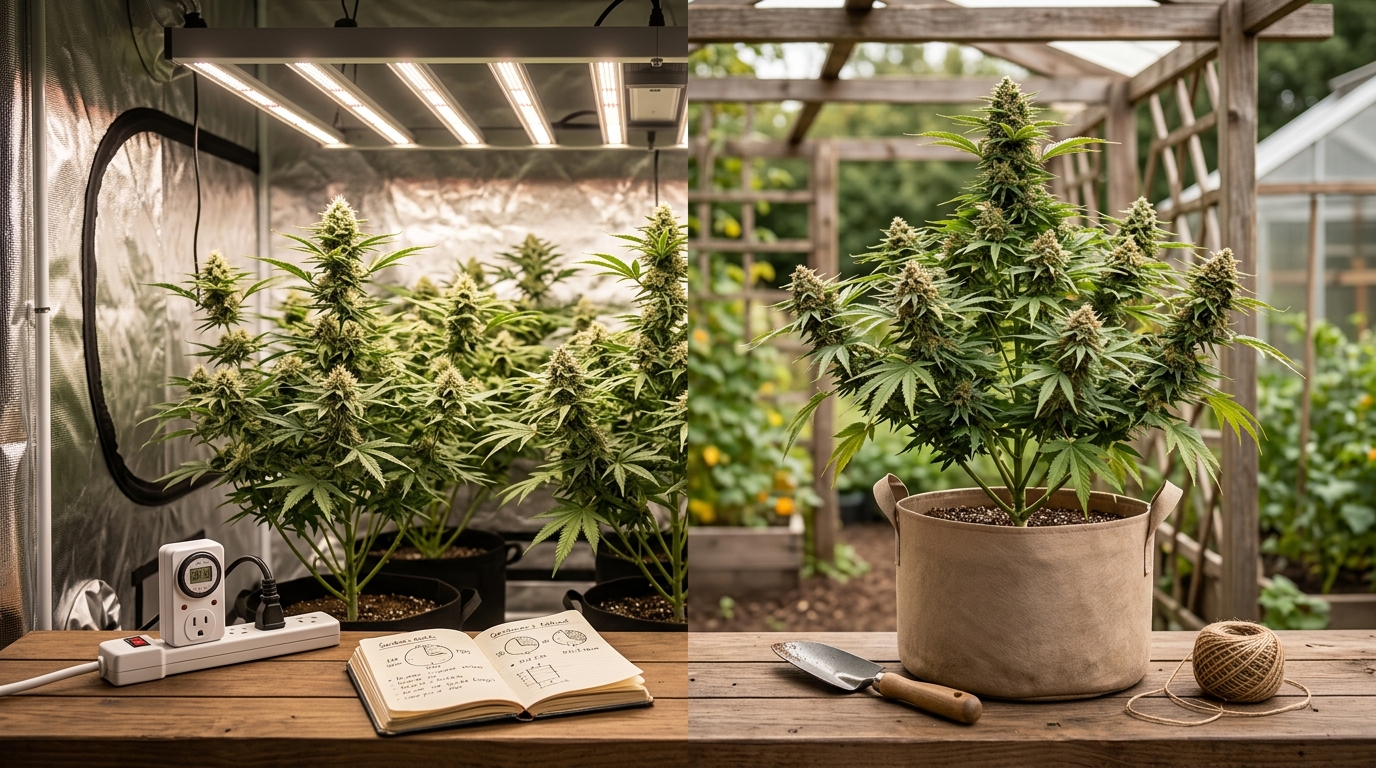
The experience of growing photoperiod cannabis indoors versus outdoors is different enough that I think of them as genuinely distinct disciplines that happen to use the same plant genetics. Both have compelling advantages, and the right choice depends heavily on your location, legal situation, and available resources.
Indoors, you have complete environmental control. You decide when the plant flowers by changing the timer, and you can dial in temperature, humidity, CO₂, and spectrum with precision. A typical indoor photoperiod grow timeline looks something like this: germination and seedling stage takes one to two weeks, vegetative growth runs four to eight weeks depending on your target size and training approach, flowering takes seven to eleven weeks depending on the strain, and post-harvest drying and curing adds another two to four weeks before the product is ready. Total time from seed to cured flower: roughly four to six months for a standard grow, though this can be compressed or extended based on your goals.
Outdoors, the timeline is governed by your latitude and the natural photoperiod of your location. In most of the continental United States, photoperiod cannabis planted outdoors in late spring (after the last frost) will remain in vegetative growth through the summer solstice in June and begin flowering naturally as day length shortens through July and August. Most outdoor photoperiod varieties finish between late September and early November, depending on the strain’s flowering time and your specific location. Growers in California, Oregon, and other parts of the Pacific Coast have particularly favorable conditions — warm temperatures, low humidity in the fall, and a natural photoperiod that aligns well with most hybrid strains’ 8 to 10 week flowering windows.
Travis Cole has written extensively about optimizing outdoor photoperiod grows for different US climate zones, including strategies for regions where early fall rains create mold pressure during the final weeks of flower — a problem that strain selection can partially mitigate.
One outdoor-specific technique worth mentioning is light deprivation (often called “light dep”), which involves using blackout tarps or automated greenhouse systems to artificially shorten the photoperiod and trigger flowering earlier than the natural season would allow. Light dep is widely used in commercial cannabis cultivation in states like California, Colorado, and Washington, and it allows outdoor growers to achieve multiple harvests per season — essentially combining the yield potential of outdoor growing with the schedule control of indoor cultivation.
| Stage | Indoor Timeline | Outdoor Timeline (US, Mid-Latitude) |
|---|---|---|
| Germination / Seedling | 1–2 weeks | Plant after last frost (April–May) |
| Vegetative Growth | 4–8 weeks (grower-controlled) | May through July (natural long days) |
| Flowering Trigger | Flip timer to 12/12 | Natural day shortening (July–Aug) |
| Flowering Duration | 7–11 weeks (strain-dependent) | 7–11 weeks (same genetics) |
| Harvest Window | Controlled, year-round possible | Late September – November |
| Total Seed-to-Harvest | 4–6 months typical | 5–7 months (spring plant) |
| Harvests Per Year | 2–3 possible with planning | 1 (or 2 with light dep) |
Troubleshooting Photoperiod-Specific Problems
Photoperiod cannabis introduces a category of problems that simply does not exist with autoflowers, and most of them trace back to light schedule discipline. Understanding these failure modes before they happen is the mark of a grower who thinks scientifically about the process.
Light leaks are the most consequential photoperiod-specific problem. Even a brief interruption of the dark period — as little as a few minutes of light exposure from a timer malfunction, a poorly sealed tent seam, or a phone screen left on in the grow space — can reset the phytochrome clock and cause the plant to revert toward vegetative growth or, in severe cases, produce hermaphroditic flowers as a stress response. The hermaphrodite risk is particularly important to understand: cannabis plants under chronic light stress during flowering will sometimes produce male pollen sacs alongside female flowers as a survival mechanism, which can pollinate your entire crop and produce seeded buds. I always recommend using a light meter or a simple visual inspection of your tent in complete darkness before committing to a flowering schedule. Our guide on identifying male cannabis plants covers sexing and hermaphrodite detection in detail.
Flowering delays are another common issue, particularly with Sativa-dominant strains that have higher critical dark period thresholds. If a plant is not showing clear flowering signs (white pistils emerging from preflower sites) within two weeks of flipping to 12/12, the most likely culprits are light leaks, an inaccurate timer, or genetics that require a longer dark period than the standard 12 hours. Trying an 11/13 schedule — 11 hours light, 13 hours dark — often resolves stubborn flowering delays in equatorial Sativa genetics.
Revegetation is a phenomenon where a flowering plant reverts to vegetative growth, either intentionally (as a technique called “re-vegging”) or accidentally due to light schedule disruptions. Accidental revegetation is disorienting for growers who have not seen it before: buds stop developing, leaves begin growing from within bud sites, and the plant’s energy shifts back toward vegetative metabolism. Recovery from accidental revegetation is possible but typically costs two to four weeks of development time. Intentional revegetation, on the other hand, is a legitimate technique for preserving exceptional genetics from a plant you did not clone before flowering — though it is stressful for the plant and should be approached with realistic expectations.
Nutrient timing errors are amplified in photoperiod grows because the longer timeline means mistakes compound over more weeks. The transition from vegetative to flowering nutrition — reducing nitrogen while increasing phosphorus and potassium — should begin at the flip or within the first week of visible flowering signs, not weeks later when deficiencies have already set in. Our leaf diagnosis guide is an invaluable reference for identifying whether what you are seeing is a nutrient issue, a pH lockout, or a light-related stress response.
Best Photoperiod Strains for Different Growing Scenarios
Strain selection for photoperiod growing is a genuinely consequential decision, because you are committing to a genetics package that will define your grow for four to six months. I have organized my recommendations by growing scenario rather than by effect profile, because the practical cultivation characteristics of a strain matter just as much as what it does when you smoke it.
For beginners growing indoors for the first time, Northern Lights is the strain I recommend most consistently. It is an indica-dominant classic with a compact structure, moderate stretch, and a flowering time of approximately 7 to 9 weeks — forgiving enough for growers who are still calibrating their environment. Its myrcene-dominant terpene profile produces the deeply relaxing effects the strain is famous for, and it is genuinely resilient to minor temperature and humidity fluctuations that would stress more sensitive genetics. Blue Dream is another excellent beginner choice for those who want a sativa-leaning experience: it has a predictable structure, flowers in 9 to 10 weeks, and produces generous yields even without advanced training techniques.
For intermediate growers who want to explore training techniques, Girl Scout Cookies and Gorilla Glue both respond exceptionally well to topping and SCROG setups. GSC’s naturally branchy structure develops impressive secondary colas when the apical dominance is broken early in veg, and Gorilla Glue’s legendary resin production makes the extra training investment feel worthwhile at harvest. Both strains flower in approximately 9 to 10 weeks and are widely available from reputable seed sources.
For experienced growers chasing maximum potency and terpene complexity, Animal Mints and Kush Mints represent the current frontier of caryophyllene-dominant photoperiod genetics. These strains demand more precise environmental control — particularly during the final three weeks of flower when terpene production peaks — but reward that attention with cannabinoid profiles and aromatic complexity that simply cannot be matched by autoflowering genetics. The seed type comparison guide on our site goes deeper into why premium genetics are almost exclusively available in photoperiod form.
For outdoor growers in northern US states with shorter seasons, Jack Herer is a standout choice — its 8 to 9 week flowering time means it can finish before October frosts in most of the northern continental US, and its terpinolene-dominant profile produces a distinctively bright, creative effect that is well-suited to daytime outdoor activities. Pineapple Express is another reliable outdoor photoperiod option with a similar finishing window and exceptional mold resistance, which matters enormously for outdoor growers in the Pacific Northwest or the Great Lakes region where late-season humidity is a persistent challenge.
Terpene Profiles of Featured Photoperiod Strains
Northern Lights
50%
25%
15%
Blue Dream
40%
35%
20%
Jack Herer
45%
30%
20%
The Entourage Effect Advantage: Why Photoperiod Genetics Dominate Terpene Science
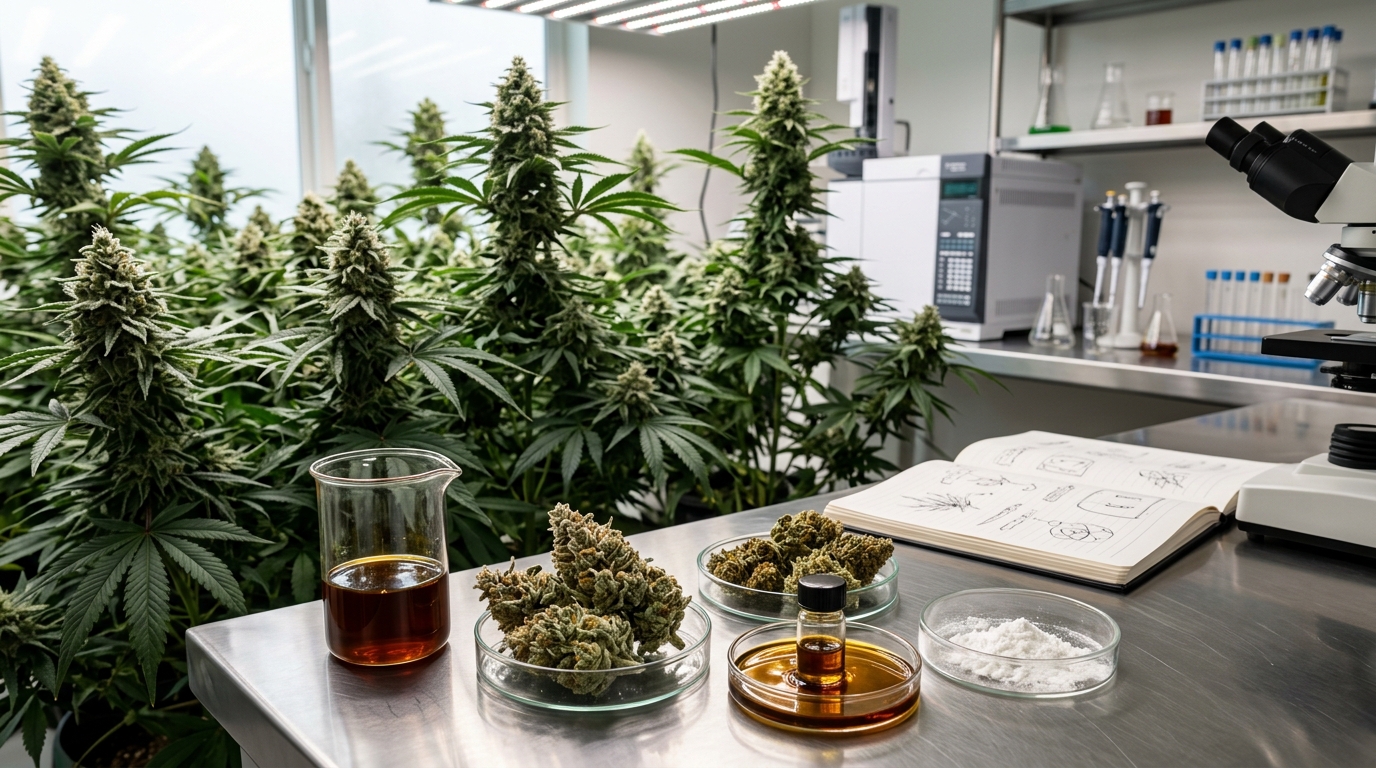
From a cannabis chemistry perspective, one of the most compelling arguments for photoperiod seeds is their dominance in the upper tier of terpene complexity and cannabinoid concentration. The entourage effect — the synergistic interaction between cannabinoids, terpenes, and other phytochemicals that shapes the character of a cannabis experience — is most fully expressed in genetics that have been bred and refined over generations without the dilution introduced by ruderalis hybridization.
Research published in PubMed examining cannabinoid-terpene interactions in Cannabis sativa found that terpene profiles are highly heritable traits that are significantly influenced by both genetics and environmental conditions during flowering — particularly light intensity, temperature, and the duration of the flowering phase itself. Photoperiod strains, with their longer and more controllable flowering windows, give growers more opportunity to optimize these environmental variables during the critical final weeks when terpene biosynthesis peaks.
The practical implication is that if you are interested in the full-spectrum pharmacological potential of cannabis — not just THC percentage — photoperiod genetics give you more tools to work with. You can dial in your light spectrum (adding far-red or UV during late flower to stress-stimulate terpene and resin production), control your temperature differential between day and night to encourage anthocyanin expression in strains like Purple Haze or Granddaddy Purple, and time your harvest with precision using trichome development as your guide. Our trichome harvest timing guide explains exactly how to read those signals. The full science of how these compounds interact in your endocannabinoid system is covered in our piece on entourage effect science.
For growers interested in the science of cannabis terpenes, the message is clear: photoperiod genetics represent the deepest catalog of terpene diversity available, and the extended flowering window gives you more environmental levers to pull to maximize the expression of those terpenes at harvest.
Frequently Asked Questions About Photoperiod Cannabis Seeds
What is the difference between photoperiod and autoflower cannabis seeds?
Photoperiod cannabis seeds produce plants that flower in response to light schedule changes — specifically, an increase in uninterrupted darkness to approximately 12 hours per night. Autoflower seeds, which carry Cannabis ruderalis genetics, flower based on age rather than light, typically beginning the flowering process three to four weeks after germination regardless of how many hours of light they receive. Photoperiod plants offer greater yield potential, cloning capability, and terpene complexity, while autoflowers offer speed, simplicity, and flexibility in light scheduling.
When should I switch my photoperiod plant to 12/12?
The right time to flip to 12/12 depends on your grow space height, your strain’s expected stretch, and how much canopy training you have completed. As a general rule, flip when your plant has reached one-third to one-half of your available vertical grow space, accounting for the fact that most strains will double in height during the first two to three weeks of flowering. For most indoor setups, this means flipping after four to eight weeks of vegetative growth, though some growers extend veg to twelve weeks or more for large canopy builds.
Can photoperiod plants flower under 18 hours of light?
No — photoperiod cannabis plants require a minimum period of uninterrupted darkness (typically around 12 hours) to initiate and sustain flowering. Under an 18/6 light schedule, the dark period is insufficient to trigger the phytochrome-mediated flowering response, and the plant will remain in vegetative growth indefinitely. This is the fundamental distinction from autoflowering varieties, which flower regardless of light schedule.
What causes a photoperiod plant to hermaphrodite?
Hermaphroditism in photoperiod cannabis is most commonly triggered by chronic light stress during the flowering phase. Light leaks that interrupt the dark period, inconsistent light schedules caused by timer malfunctions, or extreme environmental stressors (severe heat, nutrient toxicity, or physical damage) can cause a female plant to develop male pollen sacs as a survival mechanism. Preventing hermaphroditism requires a light-tight grow space, a reliable timer, and stable environmental conditions throughout the flowering phase.
How long does the flowering stage last for photoperiod cannabis?
Flowering duration varies significantly by strain and is one of the most important genetic characteristics to research before choosing a variety. Indica-dominant strains typically flower in 7 to 9 weeks. Hybrid varieties generally run 8 to 10 weeks. Sativa-dominant and Haze-lineage strains can require 10 to 14 weeks or longer, with some pure equatorial Sativas taking up to 16 weeks. Always use trichome development — specifically the ratio of clear to cloudy to amber trichomes — as your primary harvest indicator rather than relying solely on the breeder’s stated flowering time.
Can I grow photoperiod seeds outdoors?
Absolutely — in fact, photoperiod cannabis evolved as an outdoor plant, and outdoor cultivation can produce exceptional results for growers with the right climate and legal environment. In most of the continental United States, photoperiod plants flower naturally as day length shortens through late summer, with most varieties finishing between late September and early November. Growers in states like California, Oregon, Colorado, and Michigan have particularly favorable outdoor photoperiod growing conditions. Light deprivation techniques using blackout tarps can trigger early flowering and allow multiple outdoor harvests per season.
Are photoperiod strains more potent than autoflowers?
Photoperiod strains generally have access to a wider range of high-potency genetics than autoflowers, and the longer, more controllable flowering phase gives growers more opportunity to optimize conditions for cannabinoid and terpene production. However, modern autoflower breeding has closed the gap considerably, and many contemporary autoflowering varieties can achieve THC levels and terpene profiles that rival mid-tier photoperiod strains. The more accurate statement is that the highest-expression, most complex genetics available today are predominantly photoperiod varieties — not that all photoperiod plants are more potent than all autoflowers.