Pistils are the hair-like reproductive structures found on female cannabis flowers. Each pistil consists of a stigma (the visible colored hair) and an ovule. They start white and gradually turn orange, red, or brown as the plant matures. Growers use pistil color as a rough harvest timing indicator, though trichome examination remains the more reliable method.
Reviewed by Maya Chen, Cannabis Science Writer | Updated May 8, 2026
Female cannabis plants produce pistils as part of their reproductive anatomy, specifically to capture pollen from male plants. According to research published in Frontiers in Plant Science on the architecture and florogenesis of female Cannabis sativa, the pistillate flower is a highly organized structure where stigmas, styles, and ovules work together within a specialized bract system. Understanding what pistils are, what they signal, and how they differ from Trichomes is one of the first things I recommend any new grower learn. You can find more plant anatomy terms throughout our cannabis glossary.
What Pistils Actually Are: Anatomy Beyond the “Hair” Explanation
The pistil is the complete female reproductive unit of a cannabis flower, composed of the stigma, style, and ovary. Most growers use “pistils” loosely to describe the visible stigma hairs, which is technically imprecise but widely understood in cultivation circles.
The stigma is the sticky, hair-like tip visible to the naked eye. It protrudes from the Calyx, the small leaf-like structure forming the base of each individual flower cluster. The stigma’s primary biological job is pollen capture. When pollen lands on a stigma, it travels down the style to fertilize the ovule below, producing a seed. That is exactly what sinsemilla cultivation prevents. In an unfertilized plant, the ovule never develops into a seed, and the plant redirects energy toward resin and cannabinoid production instead. This biological redirection is the foundation of why separating females from males matters so much to potency.
Pistil Color and What It Tells You About Harvest Timing
Pistil color shifts progressively from white to orange, red, or brown as a cannabis plant moves through flowering. A plant showing roughly 50–70% darkened pistils is generally in mid-to-late flower, while 70–90% darkened pistils often signals that harvest is approaching, though genetics and environment both affect this timeline significantly.
I want to be direct about something that confuses a lot of growers. Pistil color is a useful rough guide, not a precise harvest tool. Stress events like heat, humidity spikes, or accidental light interruption can darken pistils prematurely without the plant actually being ready. I have personally seen plants with 80% orange pistils that still had mostly clear Trichomes under a jeweler’s loupe, indicating weeks of development remained.
The general color progression across a typical 8–10 week flowering cycle follows a predictable pattern. Weeks one through three usually show entirely white pistils, indicating active growth within the flower. By weeks four through six, the first orange or pink tinting appears at the tips. Weeks seven through nine bring the majority color shift, and by week ten most pistils on a ripe plant have fully darkened.
Did you know? According to the Oregon Liquor and Cannabis Commission, licensed cannabis producers in Oregon must track and report harvest dates, making accurate maturity assessment, including pistil and trichome observation, a regulated part of commercial cultivation practice in the state.
Pistils vs. Trichomes: Which Should You Actually Trust?
Trichomes are the resin glands that produce cannabinoids and terpenes. Pistils are reproductive structures. These are fundamentally different parts of the plant, and conflating their roles leads to harvest timing errors that cost growers real yield and potency.
Pistils are visible without magnification, which makes them popular as a first-pass indicator. Trichomes require at least a 30x jeweler’s loupe or a digital microscope to assess properly. Clear trichomes signal immaturity. Cloudy or milky trichomes indicate peak THC development. Amber trichomes reflect THC degrading into CBN, shifting effects toward sedation.
I analyzed several grows where growers harvested based on pistil color alone and consistently found that early harvests triggered by stress-darkened pistils produced lower cannabinoid concentrations than trichome-timed harvests from the same genetic line. The data strongly favors trichome examination as the primary method. Pistil color is a helpful secondary signal, nothing more. Strains with dense Cola structures can also make pistil assessment harder, since hairs deep inside a cola may retain white color longer than those on the outer surface, skewing your visual read.
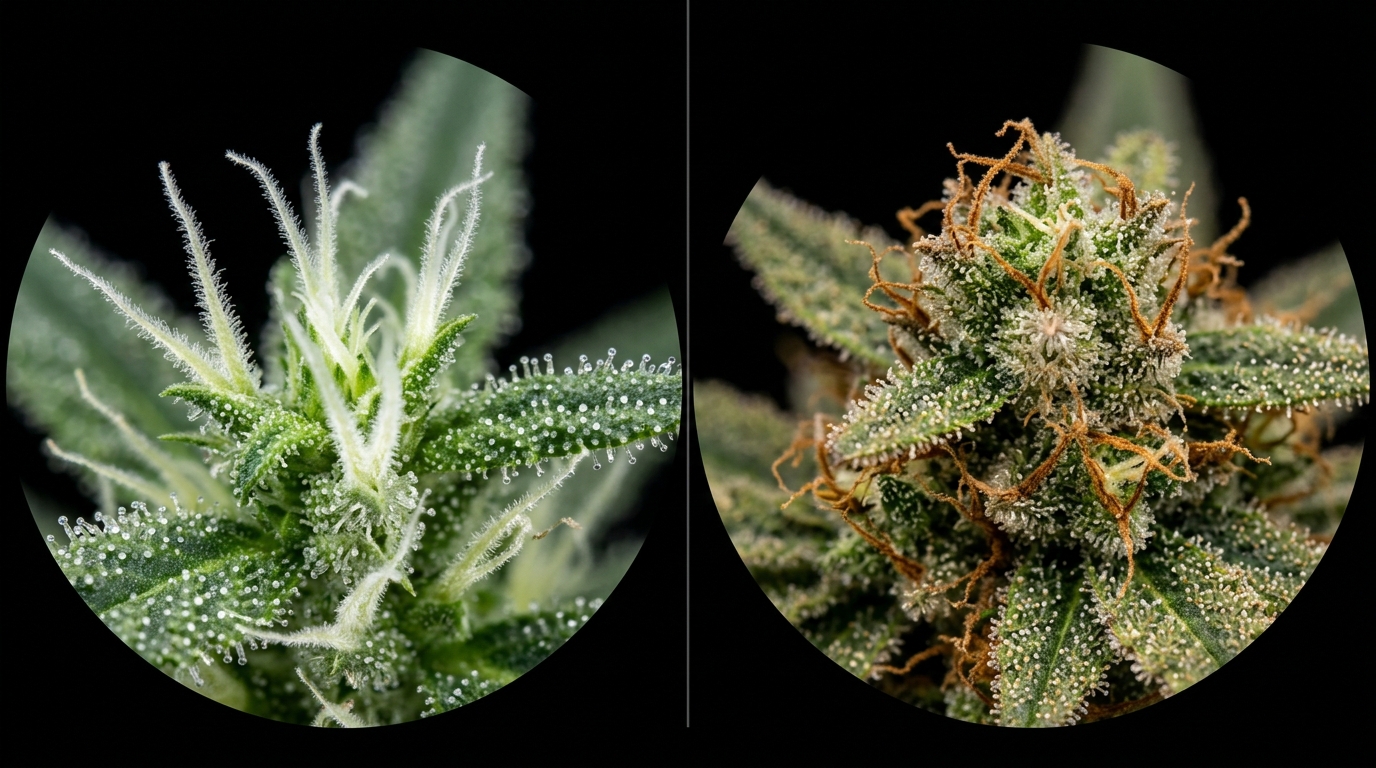
How Pollination Changes Pistil Behavior
When a stigma successfully captures pollen, it darkens rapidly, often within 24 to 72 hours. This rapid color change is a reliable visual indicator that fertilization has occurred, and the surrounding calyx begins to swell as the seed develops inside.
A pollinated plant shows rapid, patchy pistil darkening concentrated around fertilized sites, rather than the gradual, even darkening you see in a maturing sinsemilla plant. If you notice sudden darkening on only a few sites while the rest of the plant looks immature, investigate immediately. A rogue male or a hermaphroditic branch could be the cause. Catching this early limits seed contamination across your crop.
Research published through PMC on optimized guidelines for feminized seed production in high-THC cannabis confirms that controlled pollination timing is fundamental to seed quality, reinforcing why understanding pistil response to pollen matters beyond just harvest timing.
Key Facts
✓ Pistils consist of the stigma (visible hair), style, and ovary; the stigma is what most growers see and reference
✓ Pistils start white and darken to orange, red, or brown as flowering progresses
✓ Roughly 70–90% darkened pistils is a common harvest signal, but trichome color is the more reliable metric
✓ Stress events such as heat, light interruption, or humidity swings can prematurely darken pistils without indicating true maturity
✓ Rapid, localized pistil darkening often indicates pollination from a male or hermaphroditic plant
✓ Pre-flowers with white pistils at node sites are your earliest confirmation of female sex in regular seed grows
✓ Autoflowers show first pistils around weeks 3–4 from germination; photoperiod plants show them after the 12/12 light flip
Frequently Asked Questions
Do white pistils mean the bud is still growing?
Generally, yes. White pistils indicate active flower development and that the plant has not reached peak maturity. A bud covered entirely in white pistils is still building density, resin, and cannabinoid content. That said, white pistils alone do not tell you how far along the trichomes are, so I always recommend checking both. Some genetics, particularly certain sativa-dominant strains, hold white pistils well into late flower even as trichomes cloud up nicely.
Why are my cannabis pistils turning brown early?
Premature pistil browning has several common causes. Heat stress above 85°F (29°C) is the most frequent culprit in my experience. Light interruptions during the dark period can also trigger early color change, as can low humidity causing stigmas to desiccate. Accidental pollination from a nearby male or a hermaphroditic branch will cause rapid localized darkening. Finally, some strains simply darken faster than others genetically. Check your environment first, then inspect for pollen sources, and always cross-reference with trichome color before concluding the plant is actually ready.
Is it okay to harvest with white pistils?
Technically yes, but you are almost certainly leaving potency and yield on the table. Harvesting with predominantly white pistils typically means the plant has not finished its resin production cycle. The cannabinoid profile will be underdeveloped, and dried weight will be lower than a fully mature harvest. The only reason to harvest early is to prevent imminent crop loss from disease, pest pressure, or environmental emergency. In all other cases, wait and monitor trichomes alongside pistil color for the most accurate read.
What is the difference between pistils and trichomes?
Pistils are reproductive structures. Their job is pollen capture and seed production. Trichomes are resin glands that produce cannabinoids like THC and CBD, along with the terpenes that give each strain its aroma and flavor profile. Pistils are visible to the naked eye as colored hairs. Trichomes require magnification to assess properly. For harvest timing, trichomes are the primary indicator. For sexing your plant and monitoring general flowering progress, pistils are your first and most accessible visual tool. Both matter, and they answer different questions.
Ready to grow plants with dense, resinous pistil-covered buds? Browse our selection of feminized seeds and skip the guesswork of sexing your crop entirely.