A node is the point on a cannabis plant’s stem where branches, leaves, or new growth shoots emerge. Nodes appear at regular intervals along the main stalk and lateral branches, with the empty stem section between two nodes called an internode. Node spacing and count are key indicators of plant health, growth stage, and training readiness.
Reviewed by Darrel Henderson, Cannabis Cultivation Specialist | Updated May 6, 2026
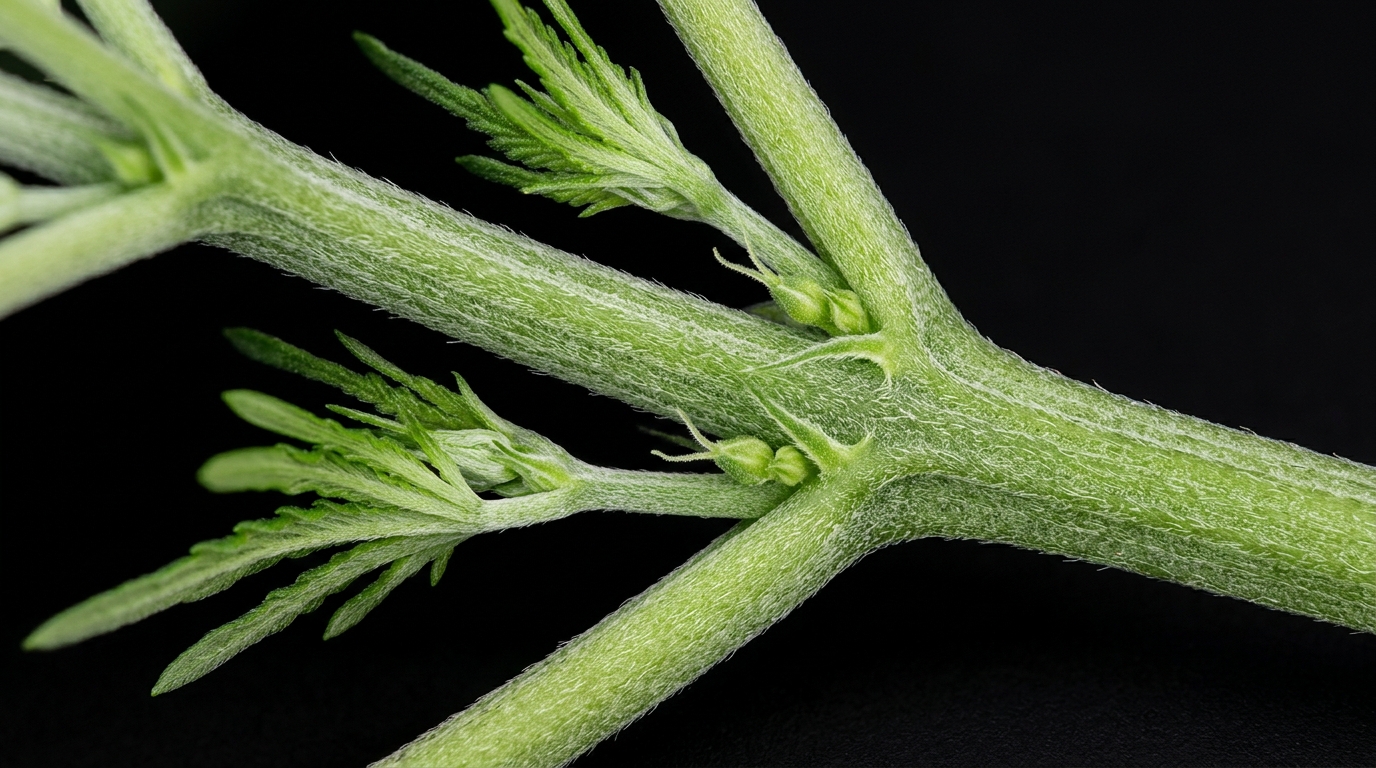
What Is a Node on a Cannabis Plant?
Nodes are structural junction points where new growth originates on a cannabis plant. Each node produces a pair of leaves, a branch, or in mature plants, a bract or pre-flower that reveals the plant’s sex. The space between two consecutive nodes is the internode, and together these structures define the plant’s overall shape and branching architecture.
I think of nodes as the plant’s decision points. Every time the stem reaches one, it’s committing resources to a new branch or leaf set. When I’m scouting a young plant in my veg room, I’m counting nodes almost instinctively because they tell me exactly where I am in the growth timeline and what training moves are coming up next.
Early in seedling development, nodes appear alternately on opposite sides of the stem. As the plant matures toward sexual maturity, that pattern typically shifts to opposite node pairs. Growers sometimes call this the “alternating to opposite” transition, and it’s a reliable signal that pre-flowers are coming soon. For a look at how node structure relates to cloning success, the NCBI study on cannabis propagation for clinical research covers how nodal cuttings are selected in controlled cultivation settings.
Why Node Spacing Matters for Your Grow
Node spacing, the distance between consecutive nodes along a stem, is one of the most practical indicators a grower can observe without any equipment. Tight spacing signals healthy, compact growth and good light penetration. Wide spacing, called stretching, usually points to insufficient light intensity or a plant reaching for a distant source.
In my experience, node spacing tells you more about your light setup than almost any other visual cue. Last fall I ran a Blue Dream pheno that was stretching badly in week two of veg. Nodes were four inches apart instead of the one-to-two inch spacing I usually target. Dropping my LED closer by about eight inches tightened everything up within a week, and the canopy was much more manageable by flip.
Tight internodes also mean your future bud sites stack closer together on each branch, which contributes directly to denser colas at harvest. Loose internodes spread those sites out, reducing density even if the plant looks big and bushy.
Did you know? Colorado’s regulated cannabis facilities must document plant counts and canopy size under state rules. According to the Colorado State Licensing Authority, canopy measurements directly affect licensing tiers, which is why commercial growers in Denver pay close attention to training techniques that control node spacing and plant structure to maximize yield per square foot of licensed canopy.
How Nodes Are Used in Training, Topping, and Sexing
Nodes are the reference points for almost every major training technique in cannabis cultivation. Topping is performed above a specific node. LST ties anchor around nodes and internodes. Lollipopping removes lower nodes to redirect energy upward. Even determining a plant’s sex relies on examining structures that develop at nodes once the plant matures.
Topping above the third or fifth node is the most common approach I use in my veg room. Cutting just above a node forces the two lateral shoots at that node to become dominant colas instead of one. Done right, you double your main colas with a single cut. Check out the glossary entry on Topping for the full breakdown on technique and timing.
Pre-flowers appear at nodes too. Around the fourth to sixth node, most plants show their first sex indicators, either a small calyx with pistils for females or a pollen sac cluster for males. I always note which node I first spotted pre-flowers on because it helps me gauge how close the plant is to being ready for flip.
Lollipopping specifically targets the lower nodes. Nodes deep in the canopy, where light barely reaches, produce airy underdeveloped buds that aren’t worth the plant’s energy. Removing those lower nodes redirects resources to the top canopy nodes where trichome coverage and bud density are highest. For the full picture on training timing, the Topping vs Fimming entry covers how node count guides both techniques.
Key Facts
✓ A node is the junction point on a cannabis stem where branches, leaves, or pre-flowers emerge.
✓ The space between two nodes is called an internode; tight internodes indicate healthy light levels.
✓ Most growers top cannabis plants above the third to fifth node for optimal branching.
✓ Pre-flowers that reveal plant sex typically appear at nodes four through six as the plant matures.
✓ Wide node spacing (stretching) is commonly caused by insufficient light intensity or poor light positioning.
✓ Nodal cuttings taken from healthy mid-canopy branches are the standard method for producing clones.
✓ Lower nodes with poor light exposure are typically removed during lollipopping to concentrate energy on productive canopy sites.
Frequently Asked Questions
How many nodes should a cannabis plant have before flowering?
Most growers flip to flower once a plant has developed between six and eight nodes, though some push to ten or more for larger plants. The node count at flip directly affects how many bud sites you end up with. I personally prefer flipping around the seventh or eighth node when running a standard photoperiod grow in a 4×4 tent. That gives me enough branching structure to fill the canopy without the plant getting too tall before stretch finishes. Autoflowering strains are different since they flower on their own schedule regardless of node count. See our Autoflower vs Photoperiod entry for more on that distinction.
How many nodes before topping cannabis?
The standard recommendation is to top above the third, fourth, or fifth node. Topping too early stresses a young plant that hasn’t built enough root mass and leaf surface to recover quickly. Waiting until node five gives the plant solid structure below the cut and plenty of established lateral shoots to take over as new dominant growth. In my grow room I almost always top at the fifth node because it gives me a clean, symmetrical plant that’s easy to train flat with a screen or low-stress ties afterward. You can find more detail in our cannabis glossary entries on Topping and Screen of Green (SCROG).
What causes wide node spacing (stretching) in cannabis?
Stretching is almost always a light problem. When your plant isn’t getting enough intensity, it elongates its internodes trying to reach a better source. That’s survival response, not vigor. Heat stress can also cause stretch, as can sativa-dominant genetics that are naturally lanky by nature. I’ve also seen it happen when growers dim their lights too aggressively trying to save electricity during veg. The fix is usually straightforward: raise light intensity, lower the fixture to the correct distance for your specific lamp, or switch to a higher-output light if your current setup is genuinely underpowered for your canopy size.
Can you take cuttings from any node?
Yes, but some nodes produce better clones than others. Cuttings taken from mid-canopy nodes on healthy branches tend to root faster and more reliably than cuttings from the very top or the lowest, shadiest parts of the plant. The node you cut just below is where roots will emerge, so you want a clean, healthy node with no signs of stress or disease. I always take my cuttings from the third to fifth branch node down from the top of the donor plant. Those sites have strong cellular activity, which translates to faster rooting times in my cloning setup.
Ready to grow plants with tight nodes and killer structure from day one? Start with genetics bred for vigorous, manageable growth indoors. Browse our full selection and find the right pheno for your setup.