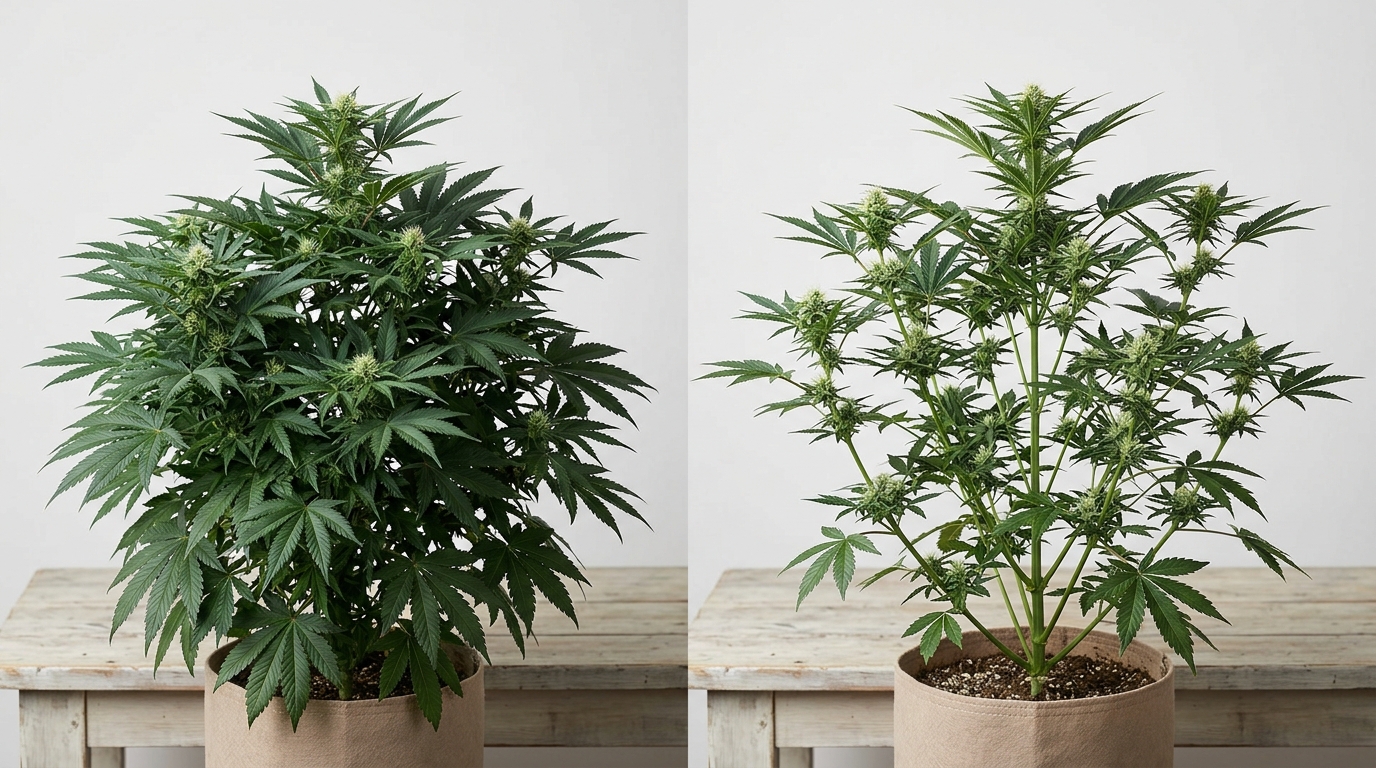
Defoliation is the intentional removal of fan leaves and excess foliage from a cannabis plant to redirect energy toward bud production, improve light penetration to lower canopy sites, and increase airflow to reduce humidity and pest pressure. Done correctly during vegetative growth or early flowering, it can meaningfully improve both yield size and bud quality.
Reviewed by Darrel Henderson, Cannabis Cultivation Specialist | Updated May 2, 2026
What Is Defoliation in Cannabis Growing?
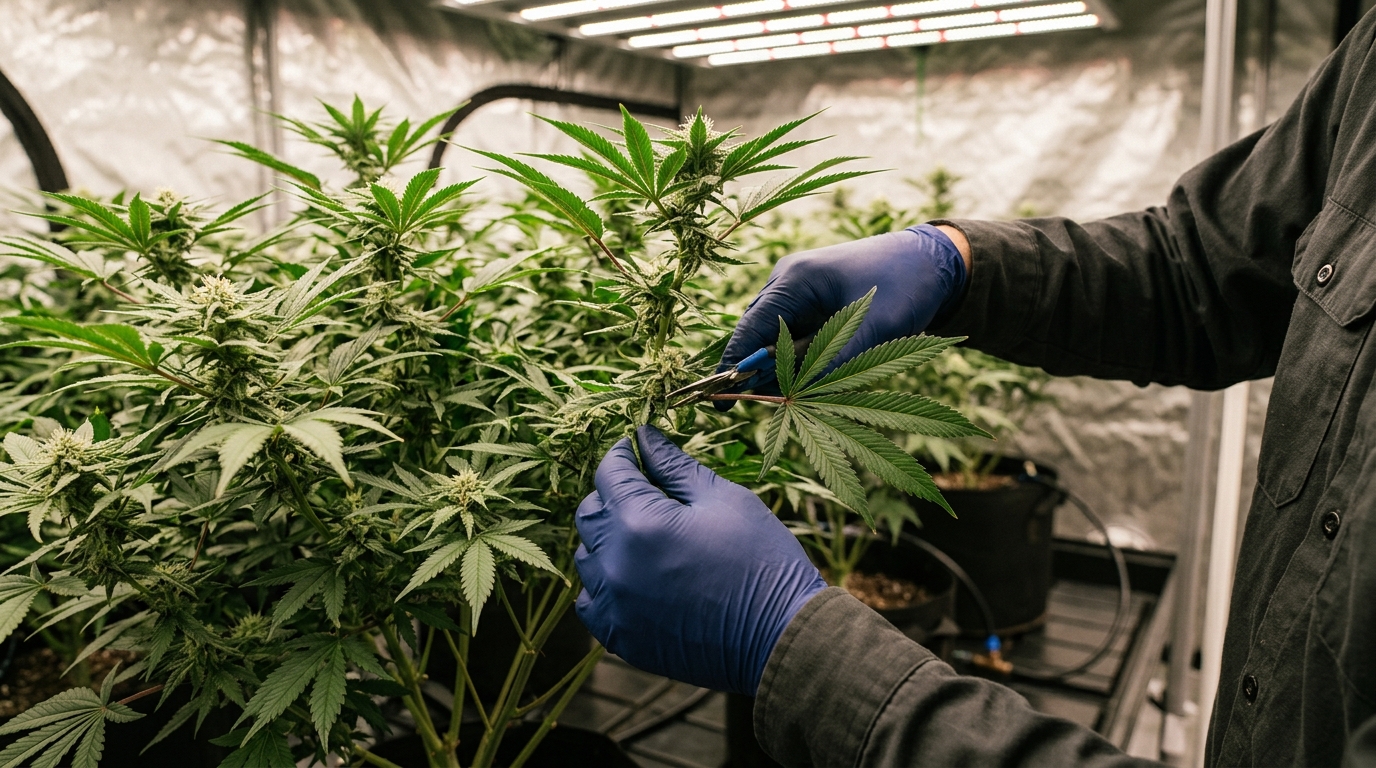
Defoliation is a canopy management technique where growers selectively remove leaves, primarily large fan leaves, to expose bud sites and improve resource allocation. It is not random leaf stripping. It is a deliberate, timed intervention that works with the plant’s biology.
I’ve been running indoor photoperiod grows for over a decade, and defoliation is one of those techniques that separates growers who get decent harvests from growers who get great ones. A cannabis plant has a fixed amount of energy at any given moment. Big, shading fan leaves pull resources while simultaneously blocking light from lower bud sites that would otherwise just sit there as popcorn or nothing at all.
Research published on PMC examining how defoliation affects stored carbohydrates and regrowth dynamics confirms that strategic leaf removal triggers compensatory growth responses, pushing energy toward developing tissues rather than maintaining older, less efficient foliage. That’s exactly what we want when fattening up flowering sites.
It’s worth separating defoliation from Lollipopping, though the two often get used together. Lollipopping focuses specifically on removing growth from the lower third of the plant. Defoliation is broader, targeting fan leaves throughout the canopy at specific growth stages.
Why Defoliation Matters for Yield and Bud Quality
Strategic defoliation improves light distribution, reduces humidity-related disease pressure, and concentrates photosynthate toward the bud sites that matter most. Canopy structure directly influences both yield size and cannabinoid distribution across the plant.
When I ran a dense Girl Scout Cookies pheno last fall, the middle of the plant was a humidity trap by week three of flower. I pulled maybe 30% of the fan leaves over two sessions and the difference in airflow was dramatic. Mold risk dropped noticeably, and those mid-canopy colas that had been struggling in the shade actually caught up to the top colas by harvest.
A study on how cannabis plant shape affects chemical uniformity across bud sites found that canopy structure directly influences cannabinoid distribution. Better light exposure to more bud sites means more uniform, higher-quality flower across the whole plant, not just the top cola.
Dense foliage creates microclimates with elevated humidity right against the buds. Botrytis thrives in exactly those conditions. Defoliation opens up the plant so air moves through properly. That alone is reason enough to do it even if you’re skeptical about the yield claims.
Did you know? According to the Colorado Marijuana Enforcement Division, licensed commercial cannabis facilities in Colorado routinely incorporate defoliation as a standard cultivation practice, particularly in large indoor canopy grows where humidity management is harder to control at scale.
When and How to Defoliate
Most experienced growers perform two main defoliation sessions: one during late vegetative growth and one around day 21 of flowering, once the stretch has slowed and bud sites are clearly defined. Timing and technique together determine whether defoliation helps or hurts.
The first session, during late veg or just before the flip to 12/12, is the more forgiving one. The plant has plenty of time to recover and the stress response actually encourages bushier growth heading into flower. I usually go fairly aggressive here, removing any leaf that’s blocking two or more bud sites below it.
The second session around day 21 of flower requires more discipline. Focus on leaves directly shading developing colas and any yellowing foliage that’s just inviting problems. Remove what’s blocking light. Leave what’s still actively contributing. Heavy defoliation after week five is generally a bad idea since the plant needs to focus on ripening, not recovering from stress.
Tool hygiene is non-negotiable. I wipe my scissors with isopropyl alcohol between plants and between sessions on the same plant during heavy work. One infected cut can introduce pathogens to multiple wound sites. Thirty seconds of prep time matters. Always remove the full leaf including the petiole, cutting cleanly at the base. Leaving a stub behind creates a dead tissue site that rots fast.
Don’t remove more than 20-30% of foliage in a single session during flower. I learned this the hard way with a Gorilla Glue pheno that was enormous. Pulled too much at once in week two of flower and stunted bud development for nearly a week while it recovered. Staged removal is always the smarter move.
Autoflowers are a special case. Because they run on a fixed internal clock, they have much less recovery time built in. I keep defoliation very light on autos, usually just removing clearly dead or blocking leaves rather than doing structured sessions. The Autoflower vs Photoperiod difference really matters here.
Key Facts
✓ Best performed during late veg and around day 21 of the flowering stage
✓ Never remove more than 20-30% of foliage in a single session during flowering
✓ Autoflowers require much lighter defoliation than photoperiod plants
✓ Always remove the full leaf including the petiole to prevent rot at the wound site
✓ Sterilize scissors with isopropyl alcohol between plants to prevent pathogen spread
✓ Improved airflow directly reduces humidity and botrytis risk in the canopy
✓ Research confirms better light distribution improves cannabinoid uniformity across bud sites
Frequently Asked Questions
When should you defoliate a cannabis plant?
The two most effective windows are during late vegetative growth, one to two weeks before flipping to flower, and around day 21 of the flowering stage once the stretch has settled and bud sites are clearly visible. The veg session is more forgiving since the plant recovers fully before flowering stress kicks in. Avoid heavy defoliation after week five of flower since the plant needs to focus on ripening, not recovery.
Where exactly do you cut when defoliating?
Cut at the base of the petiole, the thin stem connecting the fan leaf to the main stalk, and remove the entire leaf and stem cleanly. Leaving a stub behind creates a dead tissue site that can rot and invite fungal issues fast. Sharp, sterilized scissors make a real difference. A clean cut heals significantly faster than a torn or crushed wound, and that matters when you’re making dozens of cuts per plant.
Does defoliation actually increase yields?
In my experience, yes, particularly in dense indoor grows where light penetration is the main limiting factor. The improvement comes from two places: lower bud sites that were getting minimal light develop into proper colas instead of popcorn, and the plant’s energy gets redirected more efficiently toward flowering. Research on cannabis plant architecture and cannabinoid distribution supports the idea that canopy management improves uniformity and quality across the plant. Outdoor plants with plenty of natural light and open airflow may see less dramatic gains than indoor grows.
How many defoliation sessions should you do during flower?
Two structured sessions is the practical limit for most photoperiod grows. The first around day 14-21, a lighter follow-up around day 35-42 if needed. More than two aggressive sessions during flower is generally pushing it. The plant is under significant metabolic demand during bud development and repeated heavy removal slows that process. Light cleanup of dead or dying leaves can happen anytime, but structured sessions should be limited and well-timed.
Ready to put your defoliation skills to work? Start with genetics that reward training. Our indoor seed catalog includes high-yielding photoperiod strains built for canopy management.
Want to go deeper on cultivation technique? The cannabis glossary covers everything from training methods to harvest timing, all in one place.