PGR weed is cannabis grown with synthetic plant growth regulators, chemicals that manipulate plant development to force unnaturally dense, heavy buds. These compounds suppress terpene and cannabinoid production, resulting in harsher, weaker flower. Residual chemical exposure from compounds like paclobutrazol also raises legitimate health concerns for consumers.
Reviewed by Darrel Henderson, Cannabis Cultivation Specialist | Updated March 19, 2026
What Are Plant Growth Regulators in Cannabis?
Plant growth regulators are chemical compounds that alter how plants develop, either by mimicking natural hormones or blocking them entirely. In cannabis, the synthetic versions most commonly misused include paclobutrazol, daminozide, and chlormequat chloride. These are not the same as naturally derived inputs like kelp extracts or chitosan, which carry far fewer concerns and work with the plant rather than against it.
I first ran into PGR weed at a dispensary back in 2018. The buds looked almost too uniform, rock-solid and weirdly brown. No real smell. That spongy-but-hard texture with zero terp expression was my first clue something was off. Once you know what you’re looking for, you can’t unsee it.
Paclobutrazol works by inhibiting gibberellin biosynthesis, which stunts vertical growth and redirects energy into lateral bud development. Bigger-looking buds, faster. Sounds appealing until you see what gets sacrificed. According to a toxicological review published on PubMed, certain synthetic PGRs exhibit endocrine-disrupting properties and some have been flagged for carcinogenic potential in animal studies. Research suggests repeated inhalation exposure to residues may carry health risks, though human-specific cannabis inhalation data remains limited.
PGR Weed vs Non-PGR: How to Tell the Difference
Identifying PGR-treated cannabis versus naturally grown flower comes down to a handful of visual and sensory cues that experienced growers and consumers can spot quickly. The differences show up in color, smell, texture, and the high itself.
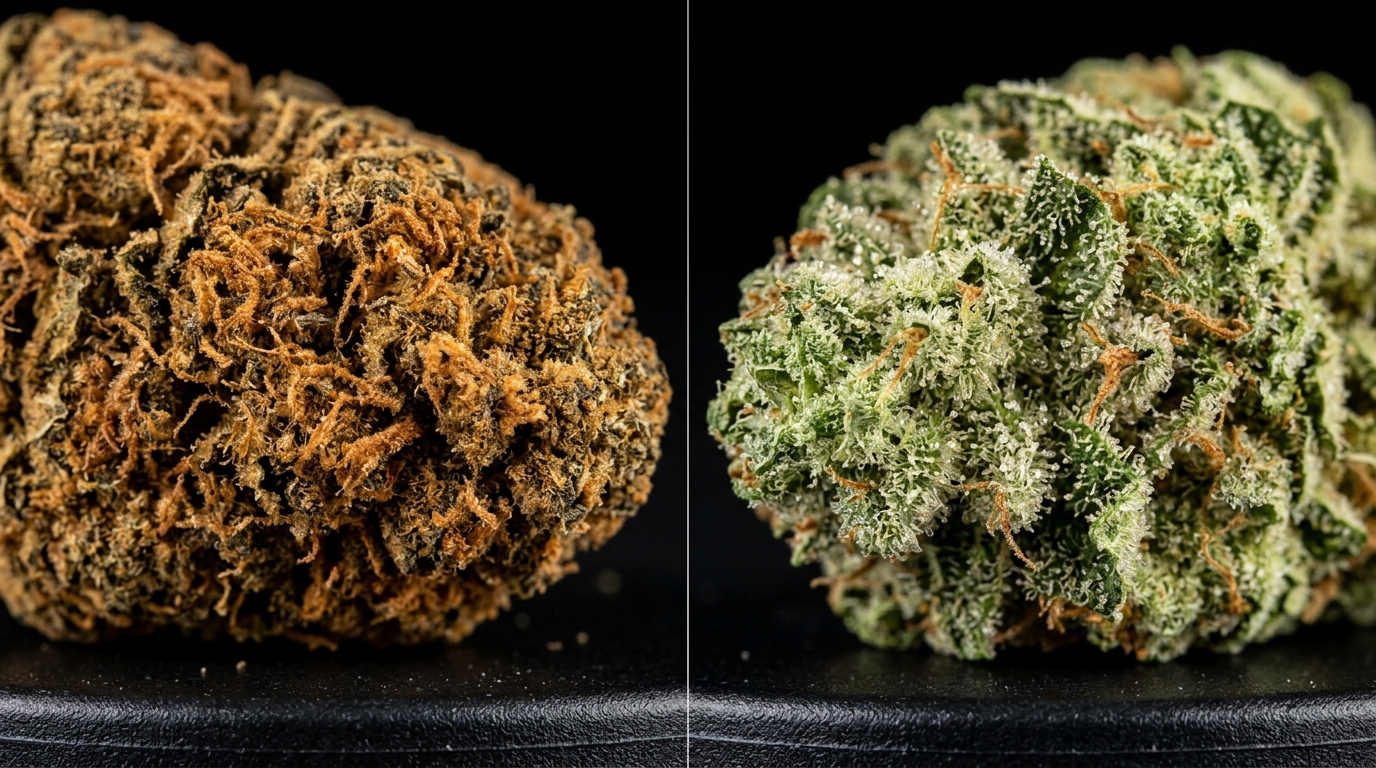
Color is the first tell. PGR buds often run brown or reddish-orange with almost no visible trichome coverage and very few healthy pistils. Naturally grown cannabis, especially from a clean organic run, should be frosted in resin glands. No sparkle is a red flag. Smell is the next test. Terpenes develop through the same metabolic pathways that PGRs disrupt, so PGR weed smells flat, sometimes faintly chemical. Compare that to a well-grown pheno of Gorilla Glue where the terp expression hits you from across the room. The difference is dramatic.
Texture matters too. PGR buds feel unnaturally dense and spongy at the same time, heavy for their size and reluctant to break apart cleanly. Properly grown, well-cured flower has a stickiness from the resin and a slight give when squeezed. The smoke from PGR weed also runs harsher, with a chemical aftertaste that lingers. Most users report a weak, short-lived effect, which makes sense. THC and other Cannabinoids develop in trichome structures that synthetic PGRs actively suppress.
Why Some Growers Use Synthetic PGRs (And Why It’s Not Worth It)
Synthetic PGRs appeal to commercial operations chasing yield weight and shelf consistency on a compressed timeline. Denser buds weigh more per unit and look uniform under dispensary lighting. For operations prioritizing margin over quality, the short-term math can look attractive.
The problem is that what gets gained in density gets lost everywhere else. Research on phytohormone impacts on cannabis morphology confirms that growth-regulating compounds significantly affect secondary metabolite production. Secondary metabolites are your Terpenes, your cannabinoids, your flavor and effect profile. Suppress those pathways and you’re growing biomass, not quality flower.
In my own grow room, I’ve never touched synthetic PGRs. When I ran Ice Cream Cake last fall, I got beautiful dense nugs purely from dialing in canopy management, VPD, and a clean organic feed program. The trichome coverage was heavy and the smell was there from week five of flower. No shortcuts needed.
There’s also a regulatory dimension here. Many synthetic PGRs are not approved for use on crops intended for human consumption, especially inhalation. Testing labs in regulated markets sometimes screen for pesticide residues, but PGR-specific testing isn’t universally required, meaning some treated product still reaches consumers.
Did you know? According to the U.S. Environmental Protection Agency’s pesticide registration program, paclobutrazol is registered for use on ornamental plants and certain food crops but is not approved for cannabis intended for human consumption. Growers applying it to cannabis are doing so outside legal pesticide use guidelines, regardless of state cannabis legalization status.
Natural vs Synthetic PGRs: An Important Distinction
Not everything labeled a plant growth regulator is harmful. This distinction matters when growers are evaluating inputs for their garden.
Natural PGRs like chitosan, triacontanol, and kelp-derived cytokinins work with the plant’s existing hormone systems rather than overriding them. I use a kelp-based supplement in veg and early flower on most of my runs. It supports root development and canopy uniformity without touching terpene or cannabinoid pathways. Synthetic PGRs are a completely different situation. Paclobutrazol, daminozide, and chlormequat chloride disrupt gibberellin and auxin signaling at a level that produces all the negative markers described above. When people talk about PGR weed negatively, they mean synthetic. That’s the version to avoid, both as a grower and as a consumer.
Key Facts
✓ Synthetic PGRs commonly misused in cannabis include paclobutrazol, daminozide, and chlormequat chloride
✓ PGR weed typically shows brown coloring, minimal trichome coverage, spongy-dense texture, and little to no smell
✓ Synthetic PGRs suppress terpene and cannabinoid production, resulting in weaker, harsher flower
✓ Paclobutrazol is not EPA-approved for use on cannabis intended for human consumption
✓ Natural PGRs like kelp extracts and chitosan are considered safe and do not produce the same negative effects
✓ Toxicological research flags certain synthetic PGRs for endocrine disruption and potential carcinogenic properties
✓ PGR-specific testing is not universally required in regulated cannabis markets
Frequently Asked Questions
Does PGR weed get you high?
It can produce some effect, but generally much less than naturally grown cannabis of comparable appearance. THC and other cannabinoids are produced in trichomes, and synthetic PGRs suppress trichome development. Less trichome coverage means less cannabinoid production. Most users report a weak, short-lived experience from PGR weed compared to clean, properly grown flower, with the flat terp profile making the overall experience feel hollow.
What does PGR weed feel like to smoke?
Harsh is the most common description. PGR weed tends to produce rough, scratchy smoke with a chemical or fertilizer-like aftertaste. Because terpene production is suppressed, you lose the smooth, complex flavor that well-grown cannabis delivers. Some people also report headaches after smoking PGR weed, which may relate to residual chemical content. The effect itself tends to feel blunted and short, without the depth you’d get from a terpene-rich pheno grown clean from seed to harvest.
How can I spot PGR weed before buying?
Four things I check every time. Color first. PGR buds often run brown or rust-colored with almost no visible trichome frost. Smell it next. Little to no aroma, or a faint chemical odor, is a serious warning sign. Then feel the texture. PGR buds are unnaturally dense and spongy, heavy for their size, and don’t break apart naturally. Finally, check trichome coverage under a loupe if you have one. Sparse, underdeveloped trichomes on supposedly top-shelf flower is a dead giveaway. Buying from licensed dispensaries in regulated markets with lab testing requirements helps, though it’s not a perfect guarantee. Growing your own from quality genetics using a clean feed program is the only way to be completely certain. Browse our cannabis glossary for more terms that help you understand what’s actually in your flower.
Are there safe plant growth regulators for cannabis?
Yes, absolutely. Naturally derived inputs like kelp-based cytokinins, chitosan, and triacontanol are widely used by organic and craft growers without the negative effects tied to synthetic PGRs. These compounds support the plant’s existing hormonal systems and don’t suppress terpene or cannabinoid production. The key distinction is always synthetic versus natural. When in doubt, research any input before adding it to your garden and stick to nutrients formulated for cannabis from brands with transparent ingredient labeling.
Starting with quality genetics from clean, untreated seeds is the first step toward growing flower you can actually trust. Browse our selection of premium feminized seeds and grow something worth smoking.