Nutrient lockout is a condition where cannabis plants cannot absorb one or more essential nutrients from the growing medium, even when those nutrients are physically present. It is most commonly triggered by incorrect pH levels, nutrient salt buildup, or antagonistic mineral interactions. The result looks like a deficiency, but feeding more nutrients makes the problem worse.
Reviewed by Darrel Henderson, Cannabis Cultivation Specialist | Updated April 9, 2026
What Is Nutrient Lockout in Cannabis?
Nutrient lockout occurs when root zone chemistry prevents plants from taking up minerals, regardless of how much fertilizer has been applied. The plant starves while surrounded by food. I’ve watched first-time growers dump more nutrients onto a locked-out plant and wonder why it kept getting worse. That’s the trap.
The most common cause is pH drift. Cannabis roots absorb different nutrients across a fairly narrow pH window. In soil, that sweet spot sits between 6.0 and 7.0. Hydro runs tighter, around 5.5 to 6.5. When pH creeps outside those ranges, certain mineral ions change form at the molecular level and the plant’s root transport proteins simply can’t grab them. Research published via PMC’s cannabis foliar symptomology study confirms that nutrient availability is closely tied to root zone chemistry, not just raw nutrient concentration.
Salt buildup is the second major culprit. Every time you feed, mineral salts accumulate in the medium. Over weeks, that buildup creates a high-EC environment that reverses osmotic pressure, pulling water out of roots instead of letting them drink. Nutrient antagonism is the third cause and the sneakiest. Too much calcium locks out magnesium. High phosphorus interferes with zinc and iron. You can have perfectly dialed pH and still trigger lockout by overfeeding a single element.
Lockout vs. True Deficiency: How to Tell the Difference
Nutrient lockout symptoms look almost identical to nutrient deficiencies, which is why so many growers misdiagnose and overfeed. The key difference is context. True deficiency appears when you haven’t been feeding enough; lockout appears despite regular or heavy feeding.
Check your runoff pH first. Always. If runoff is outside the optimal range while your plants show yellowing, interveinal chlorosis, or brown tips, lockout is your prime suspect. A true deficiency in a properly pH’d medium responds to targeted feeding. Lockout does not, and feeding into it digs you deeper.
Symptoms vary by which nutrient is locked out. Nitrogen lockout shows uniform yellowing from the bottom up. Calcium lockout causes distorted new growth and brown spots. Magnesium lockout produces classic interveinal chlorosis on older leaves. Iron lockout hits newest growth first, turning young leaves almost white. I ran a Blue Dream mother plant a few seasons back that showed textbook iron lockout because my reservoir pH had crept to 7.1 overnight. She looked severely iron deficient, but feeding more iron would’ve done nothing. Fixing the pH fixed the plant.
Did you know? Colorado’s licensed cultivators must track nutrient inputs as part of their official cultivation plans. According to the Colorado State Licensing Authority, cultivation facilities must maintain records covering growing medium management, which directly includes pH monitoring and flushing protocols designed to prevent nutrient lockout.
How to Fix Nutrient Lockout
Fixing nutrient lockout starts with identifying the cause, then flushing the medium to reset root zone chemistry. Skipping the diagnosis step is where growers waste time and lose plants.
Correct your pH first. Test input water and runoff with a calibrated meter, not strips. In my grow room, I check pH every single feed. No exceptions. Once pH is dialed, flush the medium with plain pH-adjusted water. For soil, use two to three times the pot volume. A five-gallon pot gets ten to fifteen gallons of flush water. You can check the Flushing entry in our cannabis glossary for a deeper breakdown of flushing technique.
After flushing, let the medium dry back to normal moisture before reintroducing nutrients. Start at half-strength with properly adjusted pH. New growth tells you if you fixed it. Old damaged leaves won’t recover, and that’s fine.
In hydro, the fix is faster. Drain the reservoir, clean it, refill with fresh pH-adjusted solution at reduced concentration. I’ve seen hydro plants bounce back within 48 hours after a proper reset. Soil takes longer, usually a week before you see clear improvement. Research covered in this fertigation systems study reinforces that delivery method and nutrient balance together determine how efficiently plants access what’s in their medium.
Prevention beats fixing every time. I run plain water every third feed in soil. I check runoff EC and pH weekly. I never chase deficiency symptoms without checking pH first. That single habit has saved more harvests than any other practice in my grow room.
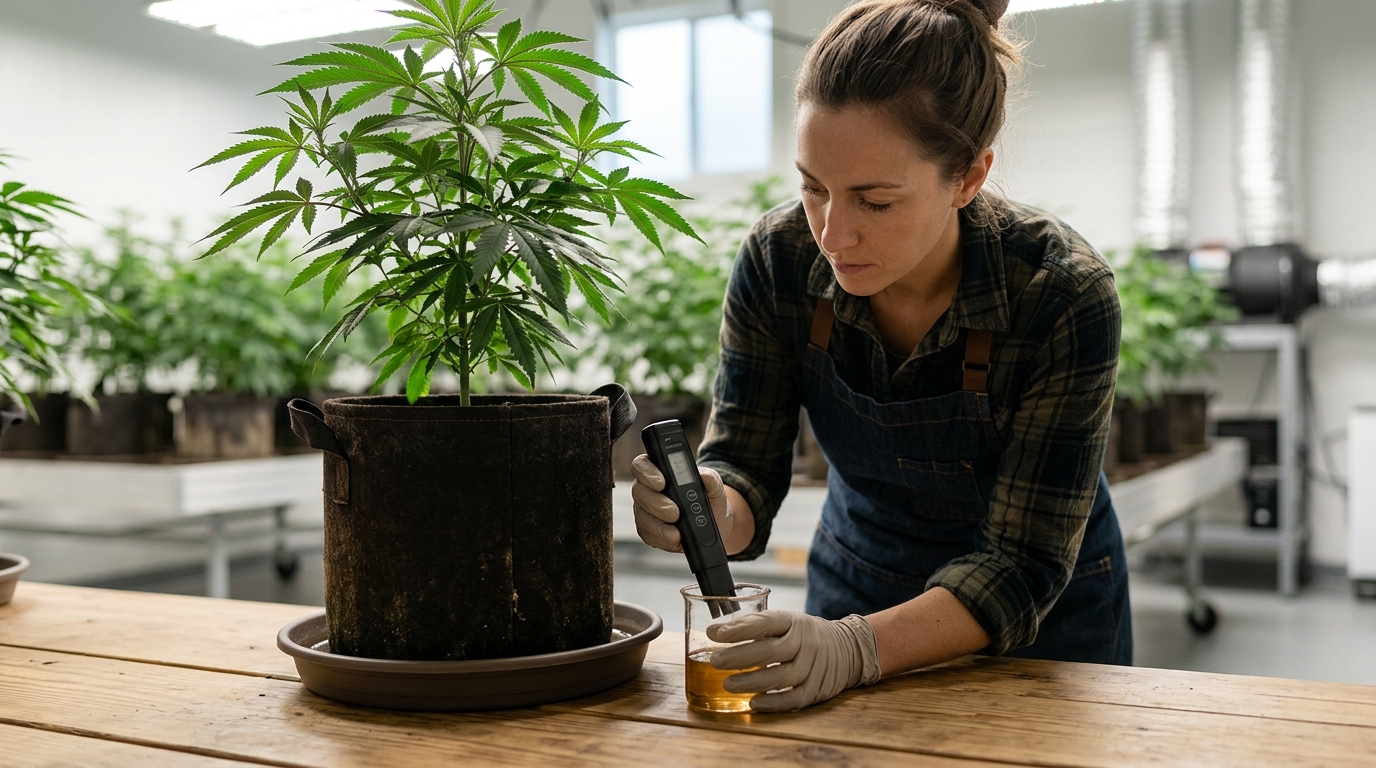
Nutrient Lockout During Flowering
Lockout during flowering is especially damaging because the plant has less time to recover and the stakes are higher. Trichome development, bud density, and terp production all depend on consistent mineral access through the entire flowering window.
Late-stage salt buildup is common in flower because growers push nutrient concentrations higher to support bud development. I’ve seen EC levels creep well above 3.0 on heavy feeders, and that’s where lockout risk spikes hard. A mid-flower flush around week four or five of an eight-week strain keeps the medium from getting oversaturated. Calcium and magnesium lockout are the most common flowering-stage problems I see, usually triggered by high phosphorus feeding. Strains like Gorilla Glue and OG Kush are notoriously heavy feeders and need careful EC management all the way through harvest.
Key Facts
✓ Nutrient lockout is caused by pH imbalance, salt buildup, or nutrient antagonism, not a lack of nutrients in the medium
✓ Optimal soil pH for cannabis is 6.0 to 7.0; hydroponic systems run best between 5.5 and 6.5
✓ Adding more nutrients to a locked-out plant makes the problem worse
✓ Flushing with pH-adjusted water is the primary fix for salt-buildup-related lockout
✓ Different nutrients lock out at different pH levels, making a pH availability chart a useful diagnostic tool
✓ Runoff pH testing is the fastest way to confirm lockout vs. a true deficiency
✓ Recovery time in soil is typically 5 to 10 days after correction; hydro can recover in 24 to 48 hours
Frequently Asked Questions
What causes nutrient lockout in cannabis?
The three main causes are pH outside the optimal range for your medium, excessive salt buildup from repeated heavy feeding, and nutrient antagonism where too much of one mineral blocks uptake of another. pH problems are the most common cause by far. In my experience, about 80% of lockout cases come down to pH drift the grower didn’t catch early enough.
How do I fix nutrient lockout fast?
Test and correct your water pH first. Then flush the medium thoroughly with pH-adjusted plain water, using two to three times the pot volume for soil. Let the medium dry back normally, then reintroduce nutrients at half strength. In hydro, drain and replace the reservoir with fresh solution. Soil plants typically show improvement within five to seven days. Hydro can bounce back in a day or two.
Can nutrient lockout kill a cannabis plant?
Severe, prolonged lockout absolutely can kill a plant, or at minimum destroy a flowering cycle. I’ve seen plants locked out for three or more weeks come back looking skeletal. Catching it early, within the first week of symptoms, usually means a full recovery. Waiting too long during flowering results in stunted bud development, poor trichome coverage, and dramatically reduced yields.
Starting with quality genetics bred for stable, vigorous growth gives you a better foundation for managing nutrient programs. Resilient plants handle minor pH swings and feeding inconsistencies better than weaker genetics.