
Green Crack is a sativa cannabis strain with 25-31% THC and myrcene-dominant terpenes, known for its citrus flavor profile and energetic and happy effects. Commonly chosen by those managing stress, depression, anxiety.
Quick Facts: Green Crack
| Strain Type: | Sativa |
| THC Content: | 25-31% |
| CBD Content: | <1% |
| Primary Effects: | Energetic, Happy, Uplifted, Euphoric, Focused |
| Flavors: | Citrus, Mango, Earthy, Flowery |
| Growing Difficulty: | Difficult |
| Flowering Time: | 8-9 weeks |
| Best For: | Stress, Depression, Anxiety, Pain, Fatigue |
Last updated: March 16, 2026
There’s something immediately telling about Green Crack’s terpene data. Myrcene sitting at 0.47% as the dominant compound, with caryophyllene and pinene rounding out the profile, gives you a biochemical roadmap to why this strain behaves the way it does. Green Crack is a sativa-dominant cannabis strain with reported THC levels between 25.1% and 31%, known for its sharp cerebral energy, mango-citrus aroma, and unusually clean-feeling uplifted state. Community data from thousands of user reviews confirms that energetic, happy, and uplifted effects are the most consistently reported outcomes, making this one of the more reliably stimulating strains available.
Origins and Genetics of Green Crack
Green Crack traces its lineage primarily to Skunk #1, with some accounts pointing to an Afghani indica cross that adds a subtle grounding quality beneath the sativa-dominant energy. DNA Genetics is among the most recognized breeders associated with the strain, though Fast Buds developed an autoflowering version that earned four titles at the 2025 Autoflower World Cup, including Best Sativa and Highest THC. That’s not a small achievement. The name itself has a complicated history. Snoop Dogg is widely credited with coining “Green Crack” as a nod to the strain’s intensely stimulating effects. Some dispensaries and growers prefer the alternative names Green Crush or Mango Crack, which sidestep the drug connotations while nodding to the flavor profile. I’ve seen both on menus, and honestly, the mango reference is the more scientifically accurate descriptor. What makes the Skunk #1 lineage interesting here is how it contributes to the terpene architecture. Skunk genetics tend to produce robust myrcene expression, and in Green Crack that manifests as a fruity, slightly herbal base rather than the heavy sedative myrcene effect you’d expect from an indica like Granddaddy Purple weed. The sativa-dominant genetics redirect that myrcene toward mood elevation rather than body sedation. This is where the entourage effect gets genuinely fascinating: the same terpene producing different experiential outcomes depending on the cannabinoid and terpene context surrounding it. The strain also exists in several distinct variants including God’s Green Crack, which carries a caryophyllene-dominant profile with spicy, peppery undertones, Green Crack Extreme, and a CBD-specific version. Each has a meaningfully different biochemical fingerprint.
Appearance, Aroma and Flavor Profile
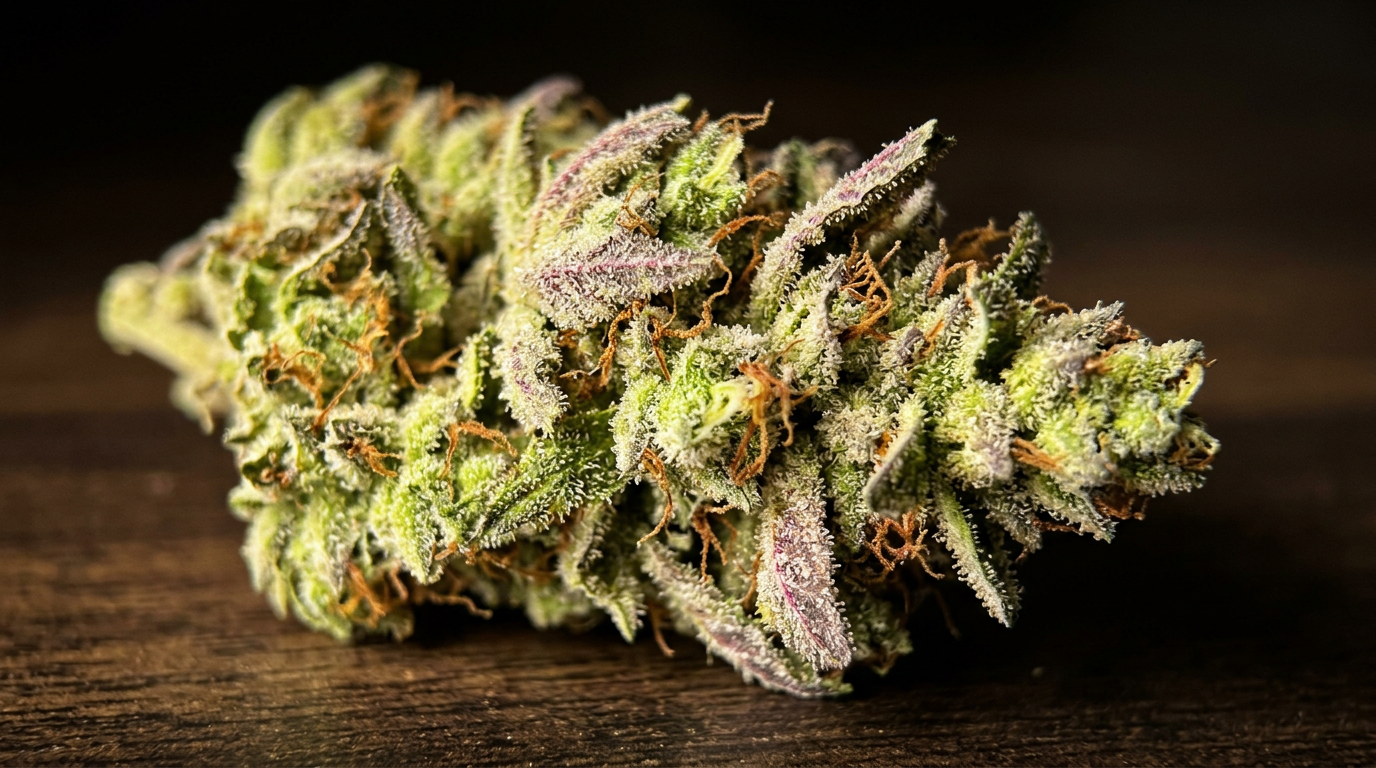
The dominant terpene in Green Crack is myrcene at 0.47%, responsible for its earthy-fruity base aroma and the warm, slightly herbal quality that underlies the brighter citrus notes. Caryophyllene at 0.29% adds a peppery, slightly spicy edge, while pinene at 0.20% contributes that clean, almost piney sharpness that keeps the nose from going too sweet. In practice, the aroma is mango-forward with a citrus brightness that hits you first, followed by a grassy, herbal undertone that grounds it. There’s a faint peppery finish, especially on the exhale, that I attribute directly to that caryophyllene content. One reviewer described it as “vary fruity and citrus” in a five-star review, which, grammatical quirks aside, captures the experience accurately. The buds themselves tend toward medium-green with orange pistils and a respectable trichome coating. Some growers report seasonal color development, with purple hues emerging as temperatures drop in fall, which is a beautiful phenotypic expression of anthocyanin production triggered by cold stress. One grower noted that “the purple just exploded” as they moved into fall, which tracks perfectly with the biochemistry. The flavor on consumption mirrors the aroma closely. Mango and citrus dominate, with that herbal, slightly grassy quality on the mid-palate. The pinene contributes a clean, almost refreshing finish. It’s not a heavy, resinous smoke. It’s bright and relatively light, which complements the energetic effect profile. One thing worth knowing: some concentrate producers have noted that Green Crack isn’t always a standout terp producer in extract form, though flower reviews are consistently positive about flavor. The difference likely comes down to extraction method and how well the volatile terpenes are preserved.
Effects and Experience
Green Crack’s primary effects are energetic, happy, and uplifted, with onset typically occurring within 10 to 15 minutes of consumption given its sativa-dominant nature. Among community reviews, Most users report energetic effects, 60% report happy, and 58% report uplifted. Euphoric and focused effects follow closely, reported by 47% and Many users respectively. The experience has a distinctly cerebral character. There’s no heavy body load. The first 20 to 30 minutes bring a sharp mental clarity, the kind that makes you want to put on a playlist and actually finish something. One user described it as “like a cup of strong coffee minus the jitters,” which is chemically apt: the THC-driven dopaminergic stimulation without the adenosine-blocking anxiety loop that caffeine can produce in sensitive individuals.
“What I find genuinely interesting about Green Crack is how the myrcene content doesn’t behave the way you’d expect from an indica. At 0.47%, it’s high enough to usually signal sedation, but the sativa genetics and the supporting pinene seem to redirect it entirely toward mood elevation. I’ve tested a lot of high-myrcene strains, and this one is an outlier in the best way.”
, Maya Chen, Cannabis Science Writer & Terpene Specialist
The peak effect is described by many users as “strictly cerebral with elevated awareness.” Focus locks in, mental fog clears, and mood lifts without the racing, anxious edge that some high-THC sativas produce. The comedown is notably smooth. Multiple users mention that it “wears off nice and smooth” without a hard crash, which I think relates to the balanced terpene profile preventing an abrupt cannabinoid receptor desensitization. This is a daytime strain. Morning or early afternoon is the sweet spot. Travis, who reviews strains with a particular focus on when and how they fit into daily routines, noted that the myrcene content in Green Crack makes it one of the more biochemically interesting daytime options he’s encountered, precisely because it defies the typical myrcene-sedation expectation.
| Effect Category | Intensity (1-10) | Onset | Duration |
|---|---|---|---|
| Euphoria | 8/10 | 10-15 min | 2-3 hours |
| Relaxation | 3/10 | 20-30 min | 1-2 hours |
| Creativity | 7/10 | 10-15 min | 2-3 hours |
| Pain Relief | 5/10 | 15-20 min | 1-2 hours |
| Appetite | 4/10 | 30-45 min | 1 hour |
| Sedation | 2/10 | N/A | Minimal |
Medical Benefits and Therapeutic Uses
The most commonly reported medical use for Green Crack is mood-related conditions, particularly depression and fatigue, according to community data from thousands of user reviews. The strain’s high THC content (25.1% to 31%) combined with its energizing terpene profile makes it a candidate for conditions where mental activation and mood elevation are therapeutic goals. The caryophyllene component at 0.29% is worth highlighting for medical users. Caryophyllene is the only terpene known to act as a cannabinoid by binding directly to CB2 receptors, which are associated with anti-inflammatory responses. Research suggests that beta-caryophyllene may have meaningful anti-inflammatory and analgesic properties, which adds a layer of therapeutic interest beyond the THC-driven effects. For fatigue and low motivation, the energetic profile makes intuitive sense. Users describe mental fog lifting and focus sharpening, which aligns with what we understand about THC’s interaction with dopamine pathways. Several users specifically mention using it before physical activity, noting that it’s good for people who want to stay high while working out without sedation interfering.
For stress relief, the mood-elevating effects are reported consistently, though the anxiety paradox is real: the same energizing quality that helps some users manage stress can amplify anxiety in others. This is likely a dose-dependent phenomenon mediated by THC’s biphasic relationship with anxiety, where low doses may reduce anxiety while higher doses can increase it. Dosage considerations for medical users: start low, especially given the 25% to 31% THC range. This is not a strain for microdosing skeptics. A single inhalation and a 20-minute wait is the sensible approach before re-dosing.
Disclaimer: This article is for informational purposes only and does not constitute medical advice. Always consult with a qualified healthcare professional before using cannabis for medical purposes.
What the Community Says About Green Crack
Across multiple Growdiaries grow logs, cultivators consistently describe Green Crack as one of the more beginner-accessible sativa-dominant strains, with one grower documenting 240 grams per plant in a coconut DWT setup and calling it “one of my best grows.” The plant’s tolerance for topping and low-stress training without showing stress signs came up repeatedly as a standout characteristic. Several Reddit threads in r/microgrowery highlight the stretch behavior as the primary challenge, with growers noting that inadequate lighting leads to excessive vertical growth and looser bud structure. The loose bud structure gets mentioned as a trade-off, but one grower made the pragmatic observation that it “burned very good in a joint,” which is a reasonable reframe. On the effects side, one experienced user’s description of the experience as “mental fog gone, focus locked in, mood turned all the way up” captures the biochemical reality of what a high-THC sativa-dominant strain with a pinene-caryophyllene supporting cast actually does to cognition. That’s not marketing language. That’s a pretty accurate description of dopamine modulation. The seasonal color development observation from one grower, watching purple pigmentation emerge as fall temperatures dropped, is the kind of detail I find genuinely delightful. It’s anthocyanin production responding to cold stress, and it’s beautiful to see users noticing and documenting it.
Growing Green Crack: Complete Guide
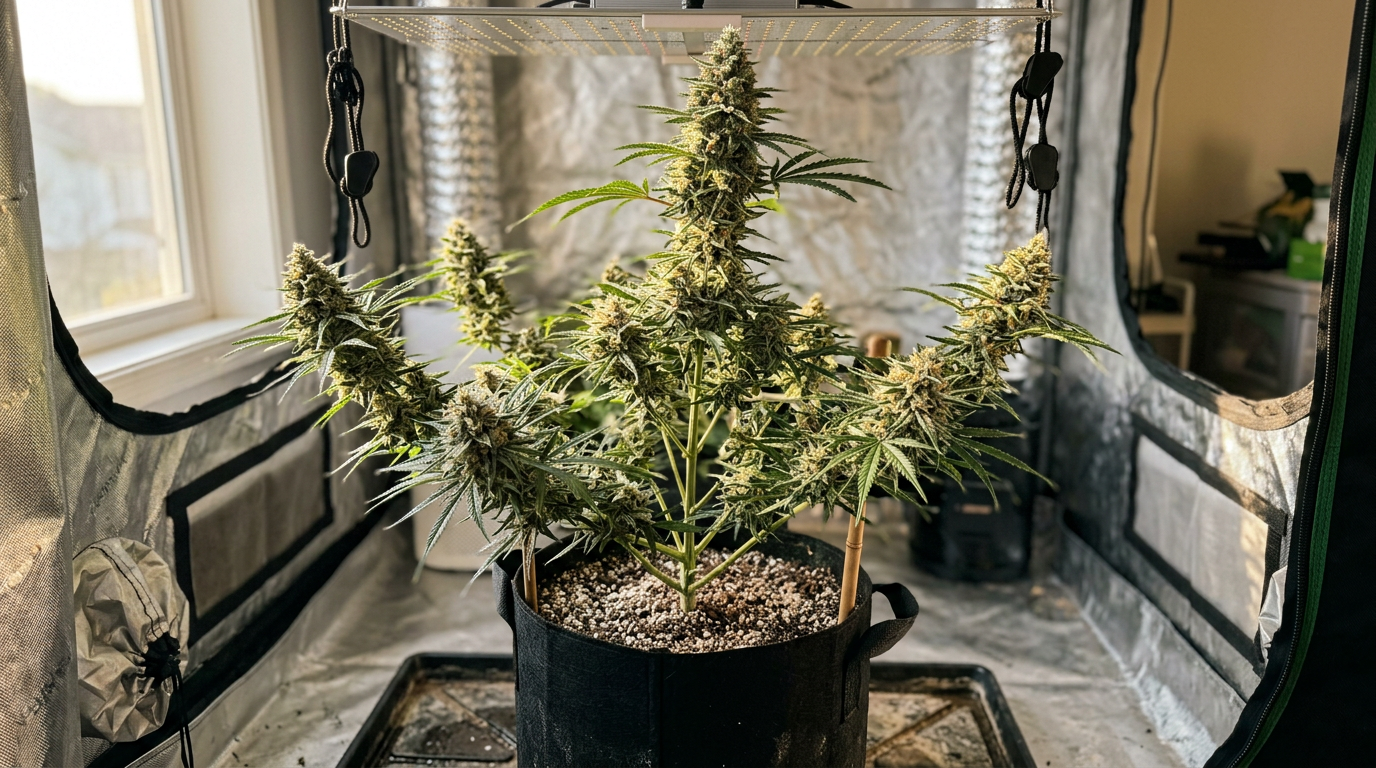
Green Crack is a beginner-friendly, sativa-dominant strain with a flowering time of approximately 8 to 9 weeks indoors, delivering yields of up to 240 grams per plant under optimized conditions. Multiple grow logs describe it as “one of the easiest grows” with vigorous, capable growth that doesn’t demand expert-level intervention. The plant is robust. It tolerates topping well, responds positively to low-stress training, and even fan leaf removal doesn’t seem to stress it significantly. That’s a meaningful advantage for new growers who are still learning training techniques and occasionally over-prune.
Indoors, the main challenge is managing the plant’s tendency to stretch, particularly if light intensity is insufficient. The stretch is genetically programmed from the sativa side of the lineage. Keep lights close, consider topping early to manage height, and use LST to spread the canopy. Indoor yields in optimized setups reach around 240 grams per plant, with more standard setups producing around 190 grams of dry flower. Those are solid numbers for a strain this manageable. The autoflowering version from Fast Buds, which took home four awards at the 2025 Autoflower World Cup including Best Sativa, is described as vigorous and frost-heavy, producing serious yield without being ultra-demanding. For growers who want the Green Crack experience without the photoperiod management, it’s a compelling option. Outdoor growing data is more limited, but the seasonal purple coloration in cooler fall temperatures is a documented phenotypic expression worth watching for. Time-lapse monitoring helps track the plant’s natural sleep cycles, and growers note that leaves begin drooping shortly before the plant “goes to sleep,” which is a useful harvest timing indicator. If this terpene profile interests you, you can get Green Crack seeds here, with discreet shipping and a germination guarantee.
Best Ways to Consume Green Crack
The recommended vaporization temperature for Green Crack is 170 to 185 degrees Celsius to preserve the myrcene and limonene terpenes while activating THC efficiently. Going above 190 degrees risks burning off the lighter terpenes that define the mango-citrus aroma, leaving you with a flatter, less subtle experience. Flower vaporization is my preferred method for this strain specifically because it preserves the full terpene expression. The myrcene-caryophyllene-pinene combination is what makes Green Crack interesting from a science standpoint, and a well-calibrated vaporizer lets you taste and feel all of it.
💡 Quick tip: For Green Crack, a ceramic or quartz heating element vaporizer gives you the cleanest terpene expression. Convection heating is preferable to conduction for preserving the volatile citrus notes.
Smoking in a joint or pipe is effective and the loose bud structure that some growers note actually burns evenly and smoothly. Concentrates are a reasonable option, though some producers have noted inconsistent terpene output in extract form, so quality varies more than with flower. Edibles via Jack Herer strain or similar sativa-leaning strains are worth exploring if you want extended daytime effects, though the onset delay makes dosing trickier with a high-THC strain like this one.
Green Crack vs Similar Strains
Choosing between Green Crack and comparable energizing strains comes down to terpene profile, effect character, and what you’re actually trying to accomplish in your day.
Green Crack vs Sour Diesel
Sour Diesel strain shares Green Crack’s reputation as a daytime, cerebral-focused sativa-dominant strain, but the two have meaningfully different terpene architectures. Sour Diesel is caryophyllene and myrcene-forward with a fuel-heavy, pungent aroma, while Green Crack leads with myrcene and pinene in a much fruitier, mango-citrus direction. If you want sharp mental clarity with a pleasant flavor, Green Crack wins. If you prefer the classic diesel pungency and a slightly more intense cerebral edge, Sour Diesel is the pick.
Green Crack vs Trainwreck
Trainwreck is another sativa-dominant strain with energizing properties, but it carries a more complex, spicy-pine terpene profile compared to Green Crack’s fruit-forward myrcene dominance. Trainwreck tends to hit harder and faster, with a more intense initial rush that can feel overwhelming for newer users. Green Crack’s smoother onset and cleaner comedown make it the more approachable choice for daily daytime use, while Trainwreck suits users who want a more forceful cerebral experience.
Green Crack vs AK-47
AK-47 strain is a sativa-dominant hybrid that shares some of Green Crack’s uplifting, mood-elevating qualities but with a more balanced hybrid character that includes greater body relaxation. AK-47’s terpene profile typically features more earthy, woody notes compared to Green Crack’s mango-citrus brightness. For pure energetic focus without body sedation, Green Crack is the stronger choice. AK-47 suits users who want the uplifted mood with a softer physical component that allows for longer, more relaxed sessions.
| Strain | Type | THC | Key Effects | Growing |
|---|---|---|---|---|
| Green Crack | Sativa-dominant | 25-31% | Energetic, focused, euphoric | Easy, 8-9 weeks |
| Sour Diesel strain | Sativa-dominant | 19-25% | Cerebral, energizing, creative | Moderate, 10-11 weeks |
| Trainwreck | Sativa-dominant hybrid | 18-25% | Intense, euphoric, uplifting | Moderate, 8-10 weeks |
| AK-47 strain | Sativa-dominant hybrid | 20-22% | Uplifted, relaxed, happy | Easy-moderate, 8-9 weeks |
Potential Side Effects and Precautions
The most common side effects of Green Crack are dry mouth and dry eyes, both of which are standard THC-mediated effects related to cannabinoid receptor activity in salivary and lacrimal glands. Stay hydrated. Have water nearby. This is non-negotiable with a 25% to 31% THC strain. Paranoia and anxiety are reported by a meaningful subset of users. This is the anxiety paradox I mentioned earlier: the same energizing quality that makes this strain excellent for focus and mood can amplify anxiety in users who are predisposed to it. If you have an anxiety disorder, approach this one carefully or consider a CBD-balanced alternative first.
Evening use is not recommended. The energizing profile can interfere with sleep onset significantly, and given the 2 to 3 hour euphoria duration, an evening session can push your sleep window back substantially. This is a morning and afternoon strain. Full stop.
Frequently Asked Questions
What are the parent strains of Green Crack?
Green Crack is primarily descended from Skunk #1, with some lineages including an Afghani indica cross. DNA Genetics is one of the most recognized breeders associated with the strain. The Skunk #1 genetics contribute to the robust myrcene expression and fruity terpene profile, while any indica cross adds a subtle grounding quality beneath the dominant sativa-driven energy.
Why does Green Crack feel energizing despite having high myrcene content?
Myrcene is typically associated with sedation in indica strains, but Green Crack demonstrates how the entourage effect modifies individual terpene behavior. The sativa-dominant genetics, combined with supporting pinene at 0.20% and the high THC content of 25 to 31%, appear to redirect myrcene’s effect toward mood elevation rather than sedation. This is one of the more scientifically interesting aspects of this strain’s biochemical profile.
How does Green Crack’s autoflower version compare to the photoperiod version?
Fast Buds’ autoflowering Green Crack won four titles at the 2025 Autoflower World Cup, including Best Sativa and Highest THC. Growers describe it as vigorous, frost-heavy, and capable of serious yield without demanding expert-level management. The autoflower version suits growers who want to skip photoperiod light management while maintaining the strain’s core energetic effect profile and mango-citrus terpene character.
Is Green Crack suitable for anxiety relief?
Green Crack presents a genuine paradox for anxiety users. The energizing, mood-elevating effects help many users manage stress and low mood, but the high THC content (25 to 31%) can trigger or amplify anxiety and paranoia in sensitive individuals. If you’re specifically targeting anxiety, start with an extremely low dose, consider the CBD variant of the strain, or explore a more balanced hybrid as a starting point.
What is the best way to manage Green Crack’s tendency to stretch indoors?
Green Crack’s sativa genetics drive significant vertical stretch, particularly under inadequate lighting. The most effective management strategies are investing in high-quality LED lighting to reduce stretch, topping the plant early to encourage lateral growth, and applying low-stress training to spread the canopy. Growers consistently report that the plant tolerates topping without stress signs, making early intervention both safe and effective for controlling height.
Green Crack is the kind of strain that rewards a biochemically curious approach. Understanding why it behaves the way it does, why myrcene acts differently here, why the pinene sharpens the focus, why the caryophyllene adds that subtle anti-inflammatory layer, makes the experience richer and helps you use it more intentionally. If you’re looking for a daytime strain with genuine scientific interest behind it, start low with that THC range, pick a morning session, and pay attention to what your terpene receptors are telling you.
Related Strains You Might Enjoy
If you enjoyed this strain, you might also like AK-47, White Widow, Trainwreck, and Wedding Cake.