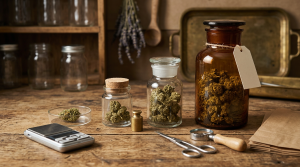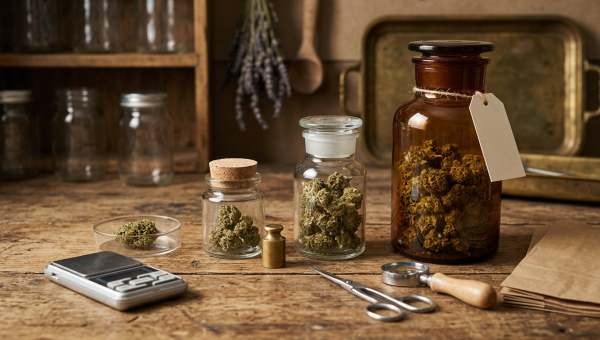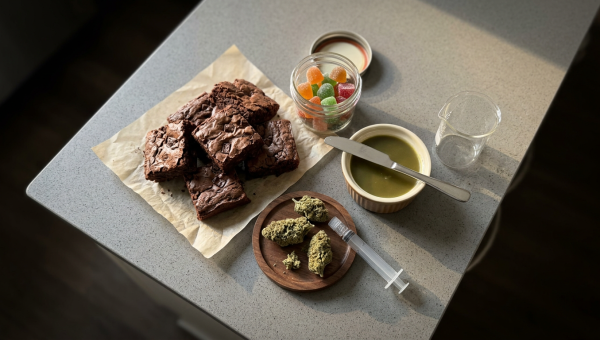
You know that sparkly, golden-green powder collecting in the bottom chamber of your grinder? The stuff that looks almost too pretty to touch? That’s kief, and if you’ve been ignoring it or brushing it aside without a second thought, I genuinely feel for you, because you’ve been leaving the best part behind. I didn’t fully appreciate kief until a friend showed me her collection jar at a dinner party in Silver Lake, this little glass vessel packed with what looked like fine, luminous dust. She pinched a tiny amount over a bowl of Girl Scout Cookies and the experience was something else entirely. That was the moment I understood: kief isn’t a byproduct. It’s a treasure.
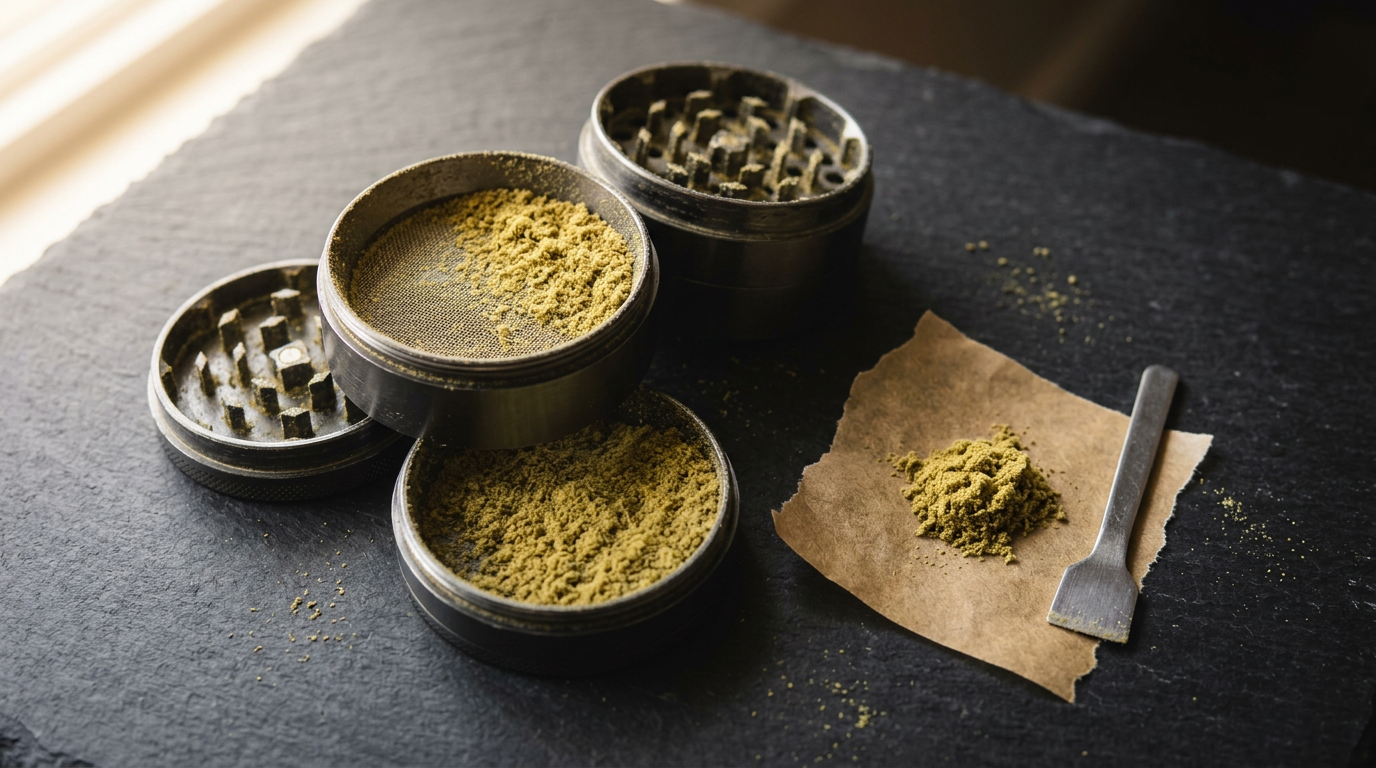
Whether you’re a casual consumer curious about that mysterious powder or a seasoned enthusiast looking to level up your collection and cooking game, this guide covers everything, from what kief actually is at a molecular level, to how to collect it efficiently, smoke it, press it into hash, and cook with it. I’ll also bridge the gap between the smoking side of things and the edibles world, because honestly, kief is one of the most versatile cannabis ingredients you can have in your kitchen. Let’s get into it.
- What Kief Actually Is (And Why It’s Stronger Than Flower)
- How to Collect Kief: Three Methods Worth Knowing
- How to Smoke Kief: Every Method That Actually Works
- Kief vs Hash: Understanding the Difference
- How to Make Hash from Kief at Home
- Cooking with Kief: Where Things Get Really Interesting
- How to Store Kief Properly (And Does It Go Bad?)
- Is Kief Legal? Understanding Its Status Across the US
- Does Kief Get You Higher? Setting Realistic Expectations
What Kief Actually Is (And Why It’s Stronger Than Flower)
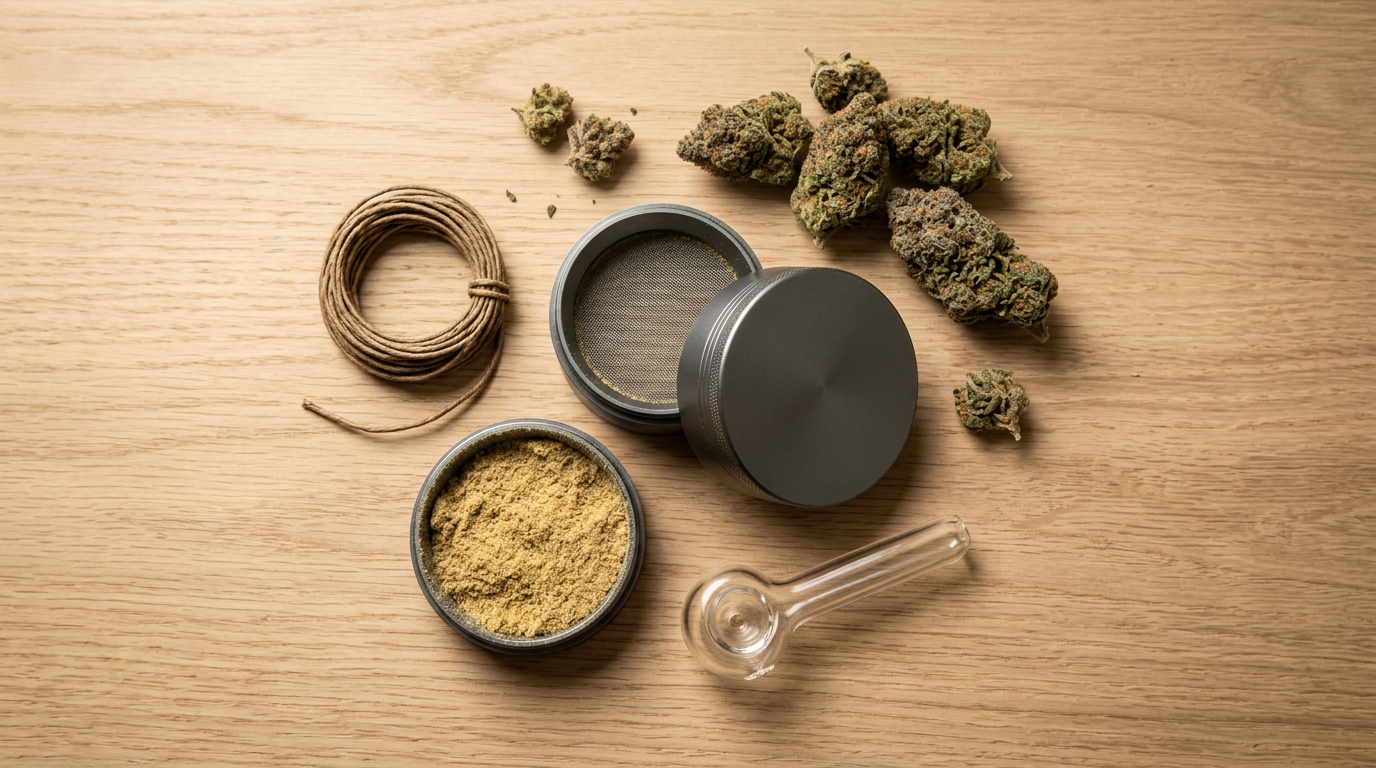
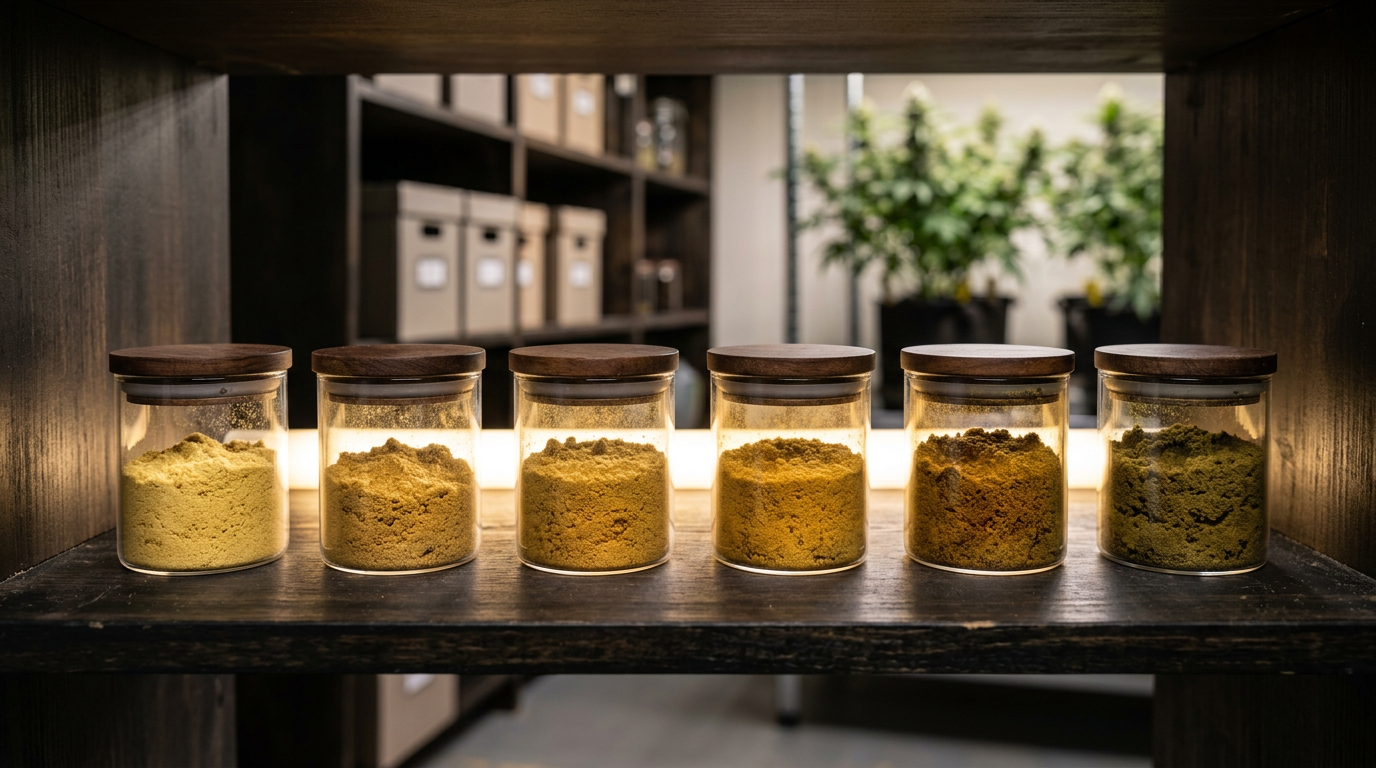
Kief is the collection of separated trichome heads from cannabis flower, the tiny, resinous glands where the plant concentrates its cannabinoids, terpenes, and other compounds. When you grind cannabis, those delicate trichome heads break off from the plant material and, if you’re using the right grinder, fall through a fine screen into a dedicated collection chamber. What you’re left with is an incredibly potent, powder-like concentrate that represents the most chemically active part of the plant in its most accessible form.

To understand why kief hits harder, you need to understand what trichomes actually do. Maya Chen has written extensively about trichome biology in her deep-dive on how cannabinoids and terpenes work together, and the short version is this: trichomes are the plant’s chemical factory. The stalked glandular trichomes, the ones that produce kief, are packed with THC, CBD, terpenes, flavonoids, and dozens of other compounds. When you separate those heads from the rest of the plant matter (cellulose, chlorophyll, waxes), you’re dramatically increasing the concentration of everything that actually produces an effect.
Regular cannabis flower typically contains somewhere between 15% and 25% THC. Kief, because it’s composed almost entirely of trichome heads with minimal plant material diluting the mix, can range from roughly 40% to 60% THC, and some well-sifted, high-quality kief from premium strains can push even higher. That’s why a small pinch goes a long way. When I first started cooking with kief, I made the classic mistake of treating it like regular flower and completely overdid my first batch of infused shortbread. Trust me on the dosing section, we’ll get there.
The flavor profile of kief also deserves attention. Because it retains the terpene-rich heads of the trichomes, good kief carries the aromatic character of whatever strain it came from. Kief collected from Lemon Cherry Gelato will have a distinctly fruity, citrus-forward sweetness. Kief from Gorilla Glue will lean earthy and piney with that characteristic diesel undertone. The terpene concentration is one of the things that makes kief such a joy to cook with, it adds both potency and flavor complexity to whatever you’re making.
How to Collect Kief: Three Methods Worth Knowing
The most effective and accessible kief collection method for everyday consumers is using a three- or four-piece grinder with a dedicated kief catcher, a design that makes passive collection completely effortless. A standard two-piece grinder just chops your flower and mixes everything together. A three-piece grinder adds a middle chamber where your ground flower collects, plus a fine mesh screen at the bottom that allows trichome heads to sift through into a sealed lower compartment. A four-piece grinder works the same way but separates the grinding chamber from the flower-catching chamber with an additional screen. Every time you grind, a small amount of kief falls through and accumulates. It’s genuinely the most passive form of concentrate collection you can do, you’re just grinding your flower the way you always would, and the good stuff saves itself for later.
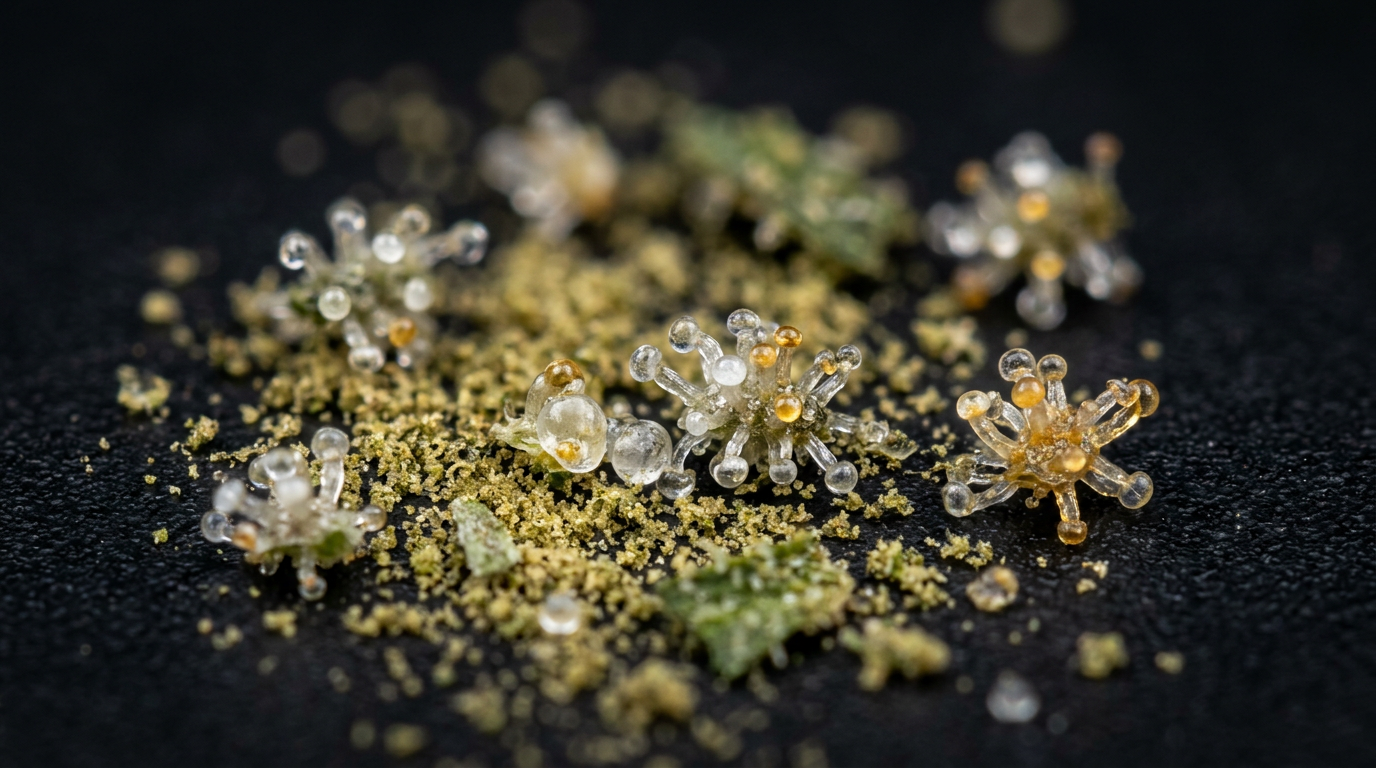
The screen size matters more than most people realize. A 100-micron screen is considered the sweet spot for kief collection, fine enough to catch trichome heads while keeping most plant matter out, but not so fine that it clogs constantly. Some grinders use 150-micron screens, which collect faster but include more plant material and produce a less refined product. If you want truly clean, light-colored kief, the finer the screen the better, though you’ll collect more slowly.
A kief box, sometimes called a pollen box or sifter box, is the next step up for more dedicated collectors. These are typically wooden or acrylic boxes with a built-in mesh screen. You place your dried cannabis on the screen, gently agitate it, and the kief falls through onto a smooth collection surface below. Some enthusiasts use two or even three stacked screens of progressively finer micron ratings to produce ultra-refined kief with minimal plant contamination. I have a simple wooden sifter box that I use when I’ve accumulated enough trim or lower-quality flower to run through, it’s meditative in a weird way, and the yield can be surprisingly generous.
For large-scale collection, the dry ice method is worth knowing about. You combine your cannabis or trim with dry ice in a bucket, agitate it over a mesh bag or screen, and the extreme cold causes trichomes to become brittle and break off more readily than at room temperature. The yield is significantly higher than passive grinder collection, and the product can be quite pure if you use the right screen size and don’t over-agitate (which starts pulling in more plant material). This method is more involved and requires careful handling of dry ice, but if you’re growing your own, and Darrel Henderson has a fantastic complete home growing guide if that’s your path, the trim and lower bud material from harvest can produce a substantial kief haul this way.
One practical tip I always share: put a small coin in your grinder’s kief catcher chamber. The weight of the coin helps knock trichomes through the screen more efficiently as you grind, and a quick shake of the grinder after grinding speeds up collection noticeably. A clean, unused nickel or dime works perfectly.
How to Smoke Kief: Every Method That Actually Works
The most reliable and beginner-friendly way to smoke kief is to sprinkle it on top of a packed bowl of flower, a technique sometimes called “crowning” a bowl, which gives you a significant potency boost without the challenges of smoking pure kief on its own. This is my go-to method when I want to elevate a session without any prep. You pack your bowl as usual, then use a small tool or your finger to gently sprinkle a thin layer of kief over the surface. Light it carefully from the edge rather than directly in the center, kief ignites easily and can scorch if you hold the flame too close.
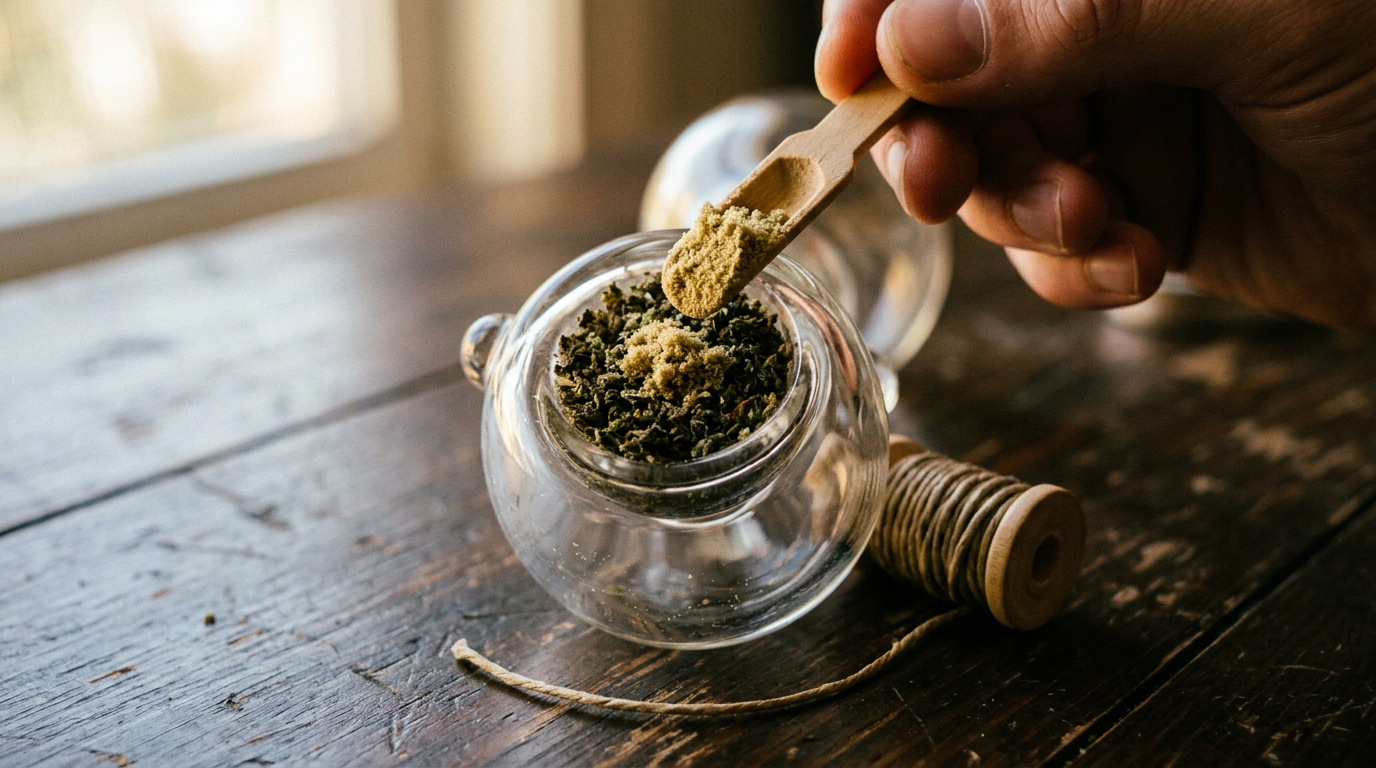
Adding kief to a joint or blunt is equally effective. You can either sprinkle it over your ground flower before rolling, or lay a thin line of kief along the center of the paper before adding your flower on top. The latter method distributes it more evenly. Some people roll kief on the outside of a joint, wetting the paper slightly, rolling it through a pile of kief so it adheres, which is visually impressive but wastes a fair amount and burns unevenly. I’d skip that approach unless you’re going for aesthetics over efficiency.
Can you smoke kief by itself? Technically yes, but it’s genuinely tricky and not the best experience on its own. Pure kief melts and can clog pipes, and it burns very quickly and unevenly without the structural support of flower. If you want to smoke it solo, the best approach is to sandwich it, a thin layer of flower, a layer of kief, another layer of flower on top. This creates a “kief sandwich” in your bowl that burns much more evenly. Using a hemp wick instead of a lighter gives you more temperature control and helps avoid scorching, which is especially important with kief since high heat can degrade terpenes quickly. If you want a deeper dive into consumption methods and technique, the complete smoking methods guide covers the full spectrum.
Vaping kief is another option if you have a dry herb vaporizer with a concentrate pad or insert. Kief vapes beautifully at lower temperatures, around 315°F to 350°F, and the terpene expression at those temperatures is remarkable. You get the full flavor profile of the strain without combustion byproducts. I’ve found that mixing kief with a small amount of flower in the chamber produces the most consistent vapor and the most complete extraction.
Kief vs Hash: Understanding the Difference
Kief and hash are closely related products, hash is essentially kief that has been compressed and, in many traditional methods, gently heated to bind the trichome heads together into a solid block, but they differ meaningfully in texture, handling, potency expression, and how you consume them. Understanding the distinction helps you choose the right product for your use case and, if you’re making your own, decide which is worth the extra effort.
| Category | Kief | Hash |
|---|---|---|
| What it is | Loose, separated trichome heads | Compressed and often heat-treated trichome heads |
| Appearance | Fine, powdery; light gold to greenish | Solid block or patty; tan, brown, or dark |
| Texture | Dry powder | Firm, pliable, or crumbly depending on method |
| Typical THC range | 40–60% | 40–80% depending on purity and method |
| How to consume | Top bowls, add to joints, cook with | Crumble into bowls, roll into joints, vape, cook with |
| Ease of home production | Very easy (grinder or sifter) | Moderate (hand-press) to easy (hair straightener method) |
| Flavor profile | Bright, terpene-forward, strain-specific | Richer, earthier; some terpene loss from heat |
| Shelf life | 6–12 months with proper storage | 1–2 years with proper storage |
The practical difference I notice most is in handling. Kief is loose and powdery, which makes it perfect for cooking and for adding to bowls or joints, but it can fly away with a breath or a breeze, which is endlessly frustrating. Hash is solid and much easier to handle, store, and transport. For cooking purposes, I actually prefer kief because it dissolves more readily into warm fat during infusion. Hash works too, but it can take a bit more coaxing to fully incorporate.
How to Make Hash from Kief at Home
Making hash from kief at home is one of the most satisfying DIY cannabis projects, and the simplest method, the hair straightener press, requires nothing you don’t already have in your bathroom. The basic principle is applying gentle heat and pressure to kief, which causes the trichome heads to rupture and their oils to bind together into a cohesive, malleable slab. The result is a form of rosin-adjacent hash that’s cleaner than traditional hand-pressed varieties and genuinely impressive for something you made at home in ten minutes.
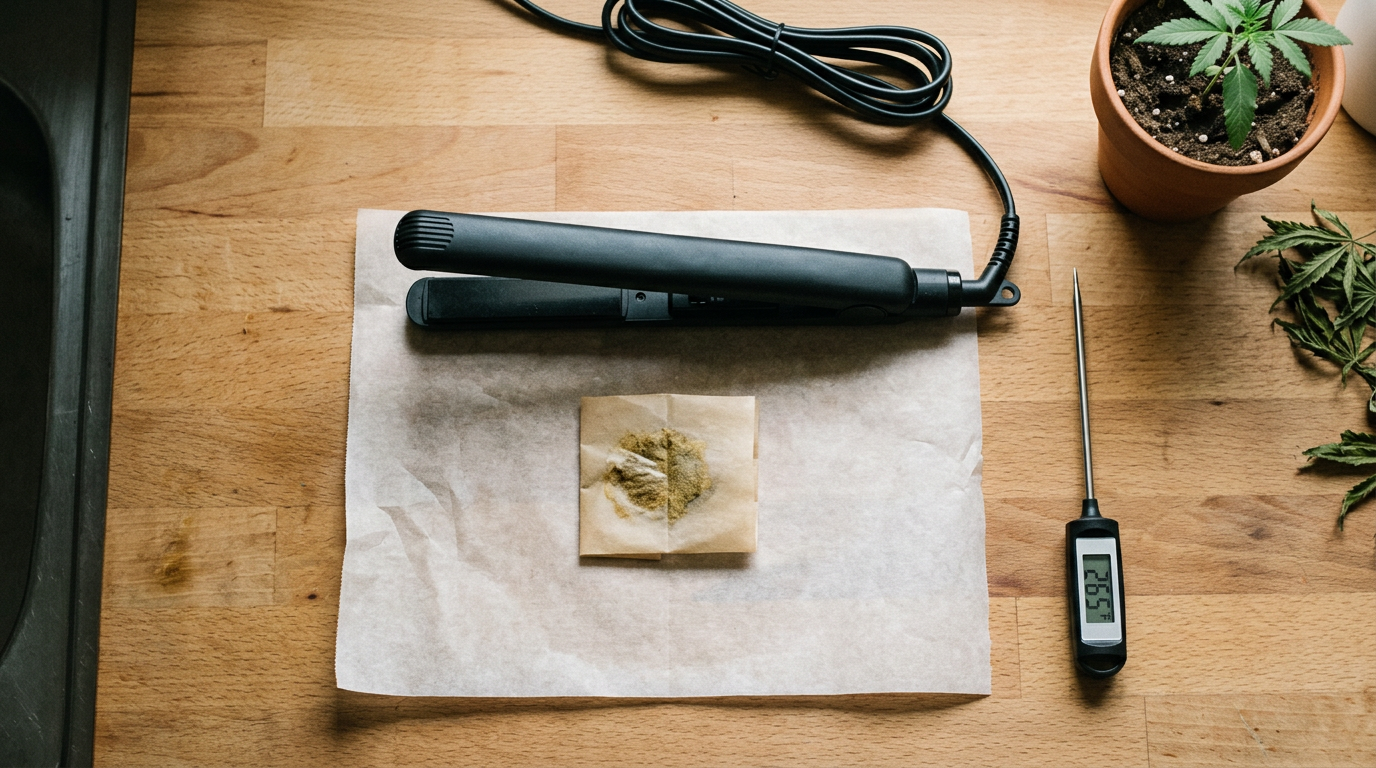
For the hair straightener method, you’ll need parchment paper (not wax paper, it melts), your accumulated kief, and a flat iron set to its lowest heat setting, ideally around 250°F to 300°F. Fold a small amount of kief, start with half a gram to a gram, into a folded piece of parchment paper, creating a little packet. Place the packet between the flat iron plates and apply firm, even pressure for about 3 to 5 seconds. Open, check the consistency, refold, and press again if needed. The kief will transform from loose powder into a darker, cohesive patty. Let it cool completely on the parchment before handling, it firms up significantly as it cools.
The other home method is hand-pressing, which requires no tools at all beyond your hands and some patience. Take a small amount of kief, wrap it tightly in cellophane or a small piece of parchment, and work it between your palms, applying consistent pressure and warmth from your body heat. This takes 10 to 15 minutes of rolling and pressing to produce a small, rudimentary hash ball. The result is less refined than a heat press but genuinely works, it’s the oldest hash-making technique in the world, and there’s something satisfying about connecting to that history.
Cooking with Kief: Where Things Get Really Interesting
Cooking with kief is genuinely where I feel most at home with this ingredient, and it’s the angle that I think gets underserved in most kief guides that lean heavily toward the smoking side. Kief is, in my opinion, the most elegant cannabis cooking ingredient available to home cooks, more concentrated than flower, easier to measure and incorporate than hash, and with a terpene profile that contributes real flavor complexity to infusions. Let me walk you through the essentials.
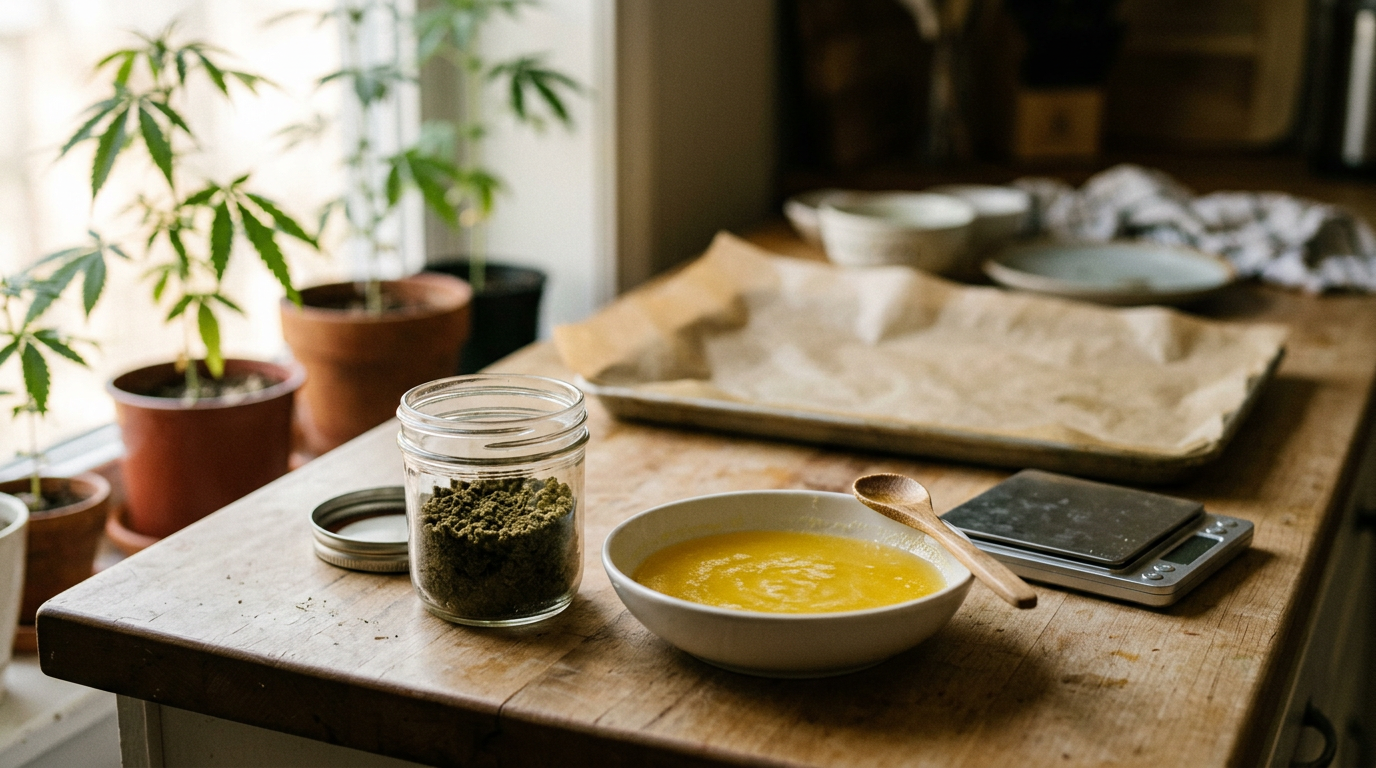
The first and most critical step is decarboxylation, converting the inactive THCA in your kief into active THC through heat. This is non-negotiable if you want your edibles to actually work. Raw kief sprinkled into a recipe will not get you high in any meaningful way. To decarb kief, spread it in a thin, even layer on a piece of parchment paper on a small baking sheet. Place it in an oven preheated to 240°F (115°C) and bake for 25 to 30 minutes. You’ll notice it darkens slightly and may clump a little, that’s normal. The lower temperature and shorter time compared to decarbing flower accounts for the fact that kief has less plant material to work through and is already more concentrated. Don’t rush it with higher heat, which will degrade your terpenes and some cannabinoids before they’ve had a chance to activate fully.
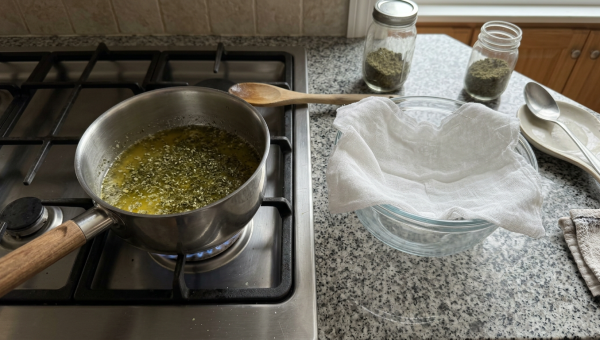
Once decarbed, kief infuses into fat beautifully. My preferred method is incorporating it directly into warm butter or oil, the fat-soluble cannabinoids bind readily to lipids. Because kief is so much more concentrated than flower, you need significantly less of it to achieve the same effect. For a basic kief butter, I use roughly 1 to 2 grams of decarbed kief per cup of butter, which produces a moderately potent infusion suitable for most baking applications. My full process, ratios, and dosing math are detailed in the cannabutter guide, which I’d strongly recommend reading alongside this section.
The dosing conversation with kief edibles is genuinely important and I want to be direct about it: start low, go slow, and account for the higher potency. If you’re used to making edibles with flower at 20% THC, and you switch to kief at 50% THC without adjusting your recipe, you’re making something roughly 2.5 times as potent per gram of cannabis used. That math matters. A batch of cookies that produced a pleasant, manageable 5mg-per-cookie experience with flower could easily become an overwhelming 12mg-per-cookie situation with kief if you don’t recalculate. The full edibles dosing framework lives in my complete edibles guide, and I can’t recommend it enough for anyone getting serious about cooking with cannabis.
Beyond butter, kief dissolves readily into warm honey, coconut oil, and even cream, making it a surprisingly versatile addition to coffee drinks, salad dressings, and dessert sauces. I’ve made a kief-infused honey that I drizzle over cheese boards and it’s become one of my signature hosting moves. The terpene complexity from a high-quality kief, especially from something like Zkittlez or Wedding Cake, contributes a genuinely interesting flavor note that goes beyond just “cannabis-flavored.” It’s a pairing ingredient as much as an infusion ingredient, and that’s what makes it so exciting from a culinary perspective.
One thing worth noting for my readers in California, Colorado, Oregon, and other legal adult-use states: when cooking with kief for social gatherings, always label your infused foods clearly and keep them separate from non-infused options. In states like California, the regulations around social consumption and sharing infused food in private settings are more relaxed than in others, but the responsibility to inform your guests is always yours. States like Texas and Idaho still treat any cannabis product, including kief, as a controlled substance, so geographic context matters enormously here.
Basic Kief-Infused Honey
Ingredients
- 1 cup raw honey
- 1–1.5g decarbed kief (decarbed at 240°F for 25–30 min)
- Optional: 1/4 tsp vanilla extract or 1 strip lemon zest
Instructions
- Decarb kief at 240°F for 25–30 minutes on parchment-lined baking sheet.
- Warm honey in a small saucepan over very low heat (do not boil, keep below 200°F).
- Whisk in decarbed kief until fully dissolved, about 3–5 minutes.
- Add optional flavoring if using.
- Pour into a small glass jar and seal.
- Stir before each use. Start with 1/2 teaspoon serving and wait 90 minutes before assessing effects.
How to Store Kief Properly (And Does It Go Bad?)
Kief should be stored in an airtight glass container in a cool, dark place, the same principles that apply to storing cannabis flower apply here, but kief is somewhat more vulnerable to degradation because its surface area is so much greater and the trichome heads are already separated from the protective structure of the flower. Exposure to light, heat, air, and humidity are the four enemies of kief quality, and addressing all four is straightforward with the right container.
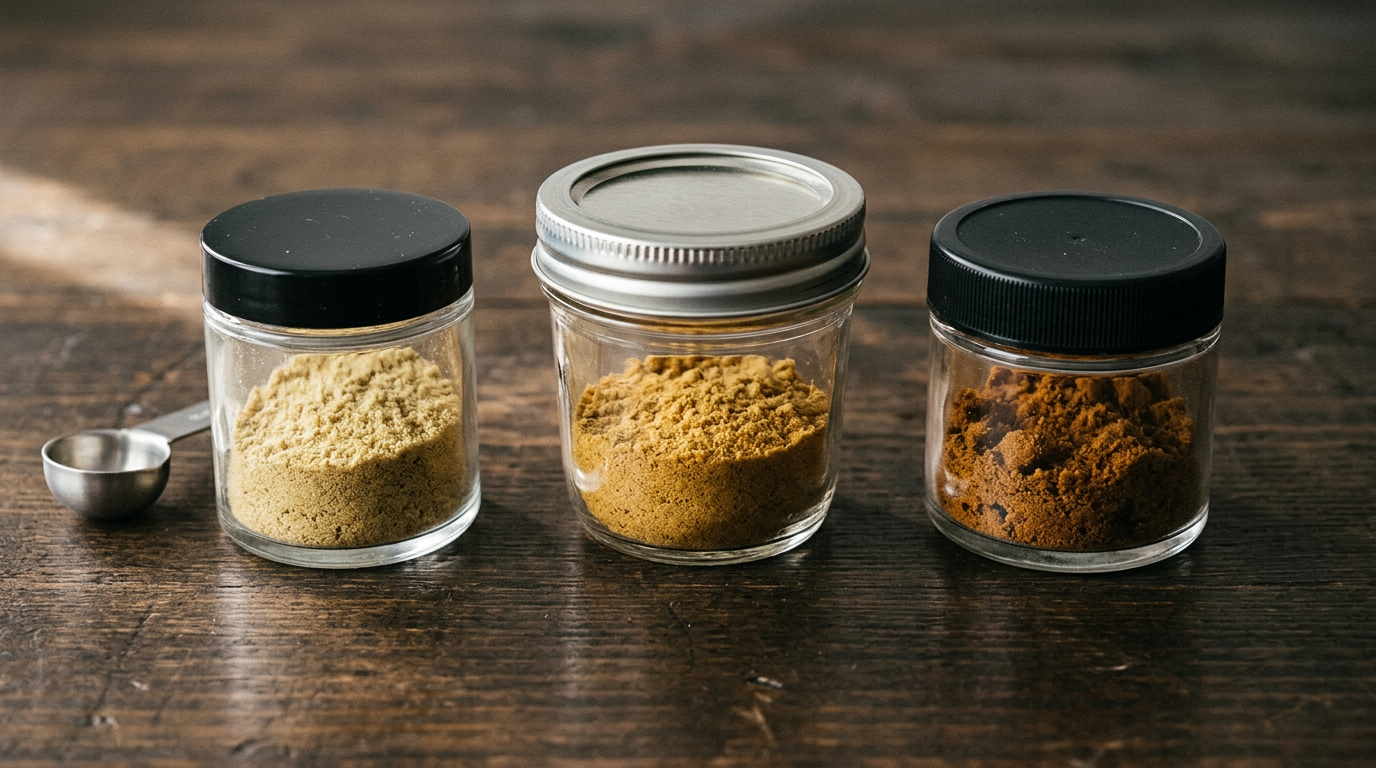
A small glass jar with a tight-fitting lid, like a mason jar or a dedicated concentrate container, is ideal. I keep mine in a drawer away from my stove and any windows. Some people store kief in the freezer, which does slow degradation significantly, but introduces moisture risk every time you open the container and let warm air in. If you go the freezer route, let the container come fully to room temperature before opening to prevent condensation from forming on your kief. For most people, a cool, dark drawer or cabinet at room temperature works perfectly well for storage periods of up to several months.
Does kief go bad? It doesn’t spoil in the way that food does, there’s no safety risk from “old” kief, but it does degrade over time. THC gradually converts to CBN (cannabinol), a less psychoactive compound, through a process called oxidation. Terpenes, being volatile aromatic compounds, evaporate and degrade faster than cannabinoids, which means older kief loses its flavor complexity before it loses all its potency. Well-stored kief maintains good quality for six months to a year. After that, it’s still usable but noticeably less potent and flavorful than fresh material. I cover the full shelf life story for cannabis products, flower, edibles, concentrates, and more, in my article on cannabis shelf life, which is worth a read if you’re building up any kind of collection.
One storage tip specific to kief: avoid using plastic containers if you can help it. Static electricity from plastic causes kief to cling to the walls of the container and makes it genuinely difficult to work with. Glass doesn’t generate static, and your kief will stay loose and easy to scoop. Small silicone containers are an acceptable alternative, silicone is non-static and non-reactive, but glass is my preference for anything being stored longer than a few weeks.
Is Kief Legal? Understanding Its Status Across the US
Kief carries the exact same legal status as cannabis flower in whatever jurisdiction you’re in, it is not treated as a separate, more restricted substance under state law in any US state, and federally it falls under the same Schedule I classification as all cannabis products. If you’re in a state with legal adult-use cannabis like California, Colorado, Washington, Oregon, Illinois, Michigan, or any of the other states that have legalized recreational use, kief is completely legal to possess, use, and make at home from cannabis you’ve legally obtained or grown. If you’re in a medical-only state, it’s legal for registered patients. If you’re in a state where cannabis remains fully illegal, Texas, Idaho, Wyoming, and others, kief is equally illegal.
Some people wonder whether kief’s higher concentration makes it legally different from flower, similar to how some states have specific rules about concentrates versus flower. In most states with legal cannabis, concentrates are regulated separately from flower (often with different possession limits), and kief technically qualifies as a concentrate. In California, for example, adult-use consumers can possess up to 8 grams of concentrated cannabis under state law. Check your specific state’s regulations for concentrate possession limits, as they can differ from flower limits. If you’re uncertain about the rules in your state, your state’s cannabis control board website is the authoritative source, not a dispensary website or a cannabis blog, including this one.
Does Kief Get You Higher? Setting Realistic Expectations
Yes, kief definitively produces a stronger effect than an equivalent amount of cannabis flower because it contains a significantly higher concentration of THC and other cannabinoids per gram. This isn’t a subtle difference. Adding even a small pinch of kief to a bowl or joint noticeably increases the intensity and duration of the experience for most consumers. The effect profile also tends to be fuller and more complex because kief retains the terpene character of the source strain, which contributes to what’s often described as the entourage effect, the way cannabinoids and terpenes interact to shape the overall experience.
That said, “higher” doesn’t automatically mean “better,” especially for consumers who are sensitive to THC or who prefer a more controlled, moderate experience. Kief is a tool, not a goal in itself. I use it strategically, a small amount to elevate a social session, a measured quantity in a recipe where I want a specific dose, a sprinkle on a bowl when I want something that lasts longer into the evening. The key is respecting its potency, especially if you’re new to concentrates. Start with less than you think you need, particularly with edibles, and give yourself time to assess before adding more.
For more on how different consumption methods affect the intensity and character of your experience, and how to think about dosing across methods, the smoking and consumption guide covers that territory thoroughly. You can also find a lot of useful context throughout our cannabis blog if you’re building your knowledge base from the ground up.
Frequently Asked Questions About Kief
What is kief and how is it different from regular weed?
Kief is the collection of separated trichome heads from cannabis flower, the tiny resin glands where the plant stores its cannabinoids and terpenes. Regular flower contains the full plant material including cellulose, chlorophyll, and other compounds that dilute the cannabinoid content. Because kief is composed almost entirely of trichome heads with minimal plant matter, it’s significantly more potent than flower, typically ranging from 40% to 60% THC compared to 15% to 25% for most flower.
How do I collect kief without a special grinder?
You can collect kief without a three-piece grinder by using a kief box or pollen sifter, a wooden or acrylic box with a fine mesh screen that you place cannabis on and gently agitate. Kief falls through the screen onto a smooth collection surface. For larger quantities, the dry ice method involves combining cannabis or trim with dry ice in a bucket and agitating it over a mesh bag, which causes trichomes to become brittle and separate efficiently. That said, a three-piece grinder with a kief catcher is genuinely the most convenient option for everyday consumers and is worth the modest investment.
Can you smoke kief by itself?
You can smoke kief by itself, but it’s not the most practical approach. Pure kief melts and can clog pipes, and it burns unevenly without the structural support of flower. The best technique for smoking kief solo is to sandwich it between two layers of flower in your bowl, a layer of flower on the bottom, kief in the middle, flower on top, which allows it to burn much more evenly. Using a hemp wick instead of a lighter also helps by giving you more temperature control and reducing the risk of scorching.
How do you decarb kief for edibles?
To decarb kief, spread it in a thin, even layer on parchment paper on a small baking sheet and bake at 240°F (115°C) for 25 to 30 minutes. This converts the inactive THCA into active THC, which is necessary for kief to produce psychoactive effects when eaten. The temperature is slightly lower and the time slightly shorter than decarbing flower because kief has less plant material to work through. Don’t skip this step, raw kief added directly to recipes will not produce meaningful effects.
How much kief should I use in edibles?
Because kief is roughly two to three times more potent per gram than average flower, you need to use significantly less of it to achieve the same dose. A general starting point for a moderately potent infusion is 1 to 2 grams of decarbed kief per cup of butter or oil, but the right amount depends on your kief’s THC percentage and your personal tolerance. Always start with a smaller serving of any kief edible, half a teaspoon of infused honey or a quarter of a standard-sized edible, wait at least 90 minutes to assess effects before consuming more.
Does kief go bad or lose potency over time?
Kief doesn’t spoil in a way that makes it unsafe, but it does degrade over time. Terpenes, being volatile compounds, evaporate and degrade relatively quickly, especially with exposure to heat, light, and air, meaning kief loses its flavor complexity before it loses all its potency. THC gradually converts to CBN through oxidation, reducing psychoactive effect over months. Well-stored kief in an airtight glass jar in a cool, dark place maintains good quality for six months to a year. After that, it’s still usable but noticeably less potent and aromatic.
Is kief illegal in the US?
Kief has the same legal status as cannabis flower in any given jurisdiction, it is not treated as a separate, more restricted substance at the state level in most US states. In states with legal adult-use cannabis (California, Colorado, Oregon, Washington, Illinois, and others), kief is legal to possess and use within the state’s concentrate possession limits. In states where cannabis is fully illegal, kief is equally illegal. Federally, all cannabis products including kief remain Schedule I controlled substances as of 2026. Always check your specific state’s regulations for concentrate possession limits, which may differ from flower limits.