I’ll tell you what, we’ve all been there. You’re standing in your buddy’s kitchen, a fresh bag on the counter, and somebody asks “how much is that?” and everybody in the room just kind of squints at it like they’ve got X-ray vision. We’ve all eyeballed an eighth at some point, and most of us have been wrong more times than we’d like to admit. Whether you’re a first-time buyer trying to figure out what you’re actually getting at a dispensary, or a seasoned home grower like me trying to portion out a harvest for edibles, understanding how weed is measured is one of those fundamental things that makes your whole cannabis life smoother. So pull up a chair, grab a cold drink, and let me walk you through everything, the standard units, the slang, the scale-free tricks, and the honest truth about when to stop guessing.
- The Standard Cannabis Measurement Units You Need to Know
- How to Measure Weed Without a Scale: The Real Talk
- Choosing and Using a Digital Scale: What Actually Matters
- Measuring Weed for Edibles and Baking: The Math That Actually Matters
- Can You Measure THC Content at Home? The Honest Answer
- Strain Density and Why Your Eyeball Will Lie to You
- Practical Measurement by Use Case: Joints, Bowls, and Vapes
The Standard Cannabis Measurement Units You Need to Know
Cannabis is sold in a standardized system of weights derived from the imperial ounce, and knowing these numbers cold will save you from ever getting shortchanged at a dispensary or confused at a pickup.
The whole system starts with the gram. One gram is the smallest quantity you’ll typically find at a dispensary, it’s roughly a single decent-sized joint or a couple of smaller bowls, depending on how you pack. When I first started growing my own out back here in Austin, I’d weigh out grams obsessively just to train my eye. It takes a while, but eventually you start to develop a feel for it.
From there, you climb up to an eighth, which is 3.5 grams, an eighth of an ounce, hence the name. This is probably the most common purchase quantity in the US cannabis market. It’s enough to last a casual smoker a good stretch of the week and is the sweet spot for trying a new strain without overcommitting. A quarter is 7 grams, a half-ounce is 14 grams, and a full ounce, also called a zip, a term you’ll hear constantly in cannabis culture, clocks in at 28 grams. That zip slang comes from the “Z” in ounce, and it’s one of those terms that’s so embedded in the culture that even legal dispensaries in states like Colorado and California will use it casually.
Beyond an ounce, you start getting into quantities that most recreational consumers won’t deal with regularly. A quarter-pound (QP) is 113 grams, a half-pound is 226 grams, and a pound is 448 grams. Those are grower and commercial territory, though if you’ve ever had a bumper outdoor harvest like I did with my Gorilla Glue plants a couple summers back, you understand why knowing those numbers matters.
For a clean visual reference of how these units stack up against each other, here’s the core measurement guide:
| Unit Name | Weight in Grams | Common Slang | Approx. US Price Range | Visual Reference |
|---|---|---|---|---|
| Gram | 1g | Dime bag (loosely) | $10–$18 | About the size of a large grape or a bottle cap |
| Eighth | 3.5g | Eight, Slice | $25–$55 | Fills a small sandwich bag corner; roughly a golf ball of fluffy sativa |
| Quarter | 7g | Q, Quad | $50–$100 | Two eighths; fits comfortably in your palm |
| Half Ounce | 14g | Half, Half-O | $90–$160 | A small fist-sized mound of flower |
| Ounce | 28g | Zip, O, Lid | $150–$300 | Fills a standard zip-lock sandwich bag |
| Quarter Pound | 113g | QP | $400–$800 | A medium-sized paper grocery bag bottom |
| Half Pound | 226g | Half-Pack | $700–$1,400 | About the size of a large grapefruit in dense buds |
| Pound | 448g | Pack, Elbow | $1,200–$2,500 | A full grocery bag; serious bulk territory |
How to Measure Weed Without a Scale: The Real Talk
Measuring cannabis without a scale is always going to be an approximation, but some methods are significantly more reliable than others, and knowing which is which can save you real money.

The most talked-about DIY method is the ruler-and-coin balance trick. You take a ruler (or any rigid, evenly balanced stick), find the center point, and balance it on a pivot, a pen, a pencil, whatever you’ve got. Place your cannabis on one side and a coin of known weight on the other. A US penny minted after 1982 weighs 2.5 grams. A US nickel weighs 5 grams. A dime weighs 2.268 grams, close enough to 2 grams for rough purposes. A quarter weighs 5.67 grams. This method can get you a ballpark, but the honest truth is that the accuracy depends entirely on how well you’ve balanced your pivot and how level your surface is. I’ve seen guys spend twenty minutes fiddling with a ruler and a penny and still end up off by half a gram. It’s a fun party trick, but I wouldn’t trust it for anything precision-critical like edibles dosing.
Another method you’ll see floating around is using a US dollar bill as a one-gram reference weight. A standard US Federal Reserve Note, any denomination, weighs approximately one gram. So if you have a makeshift balance, you can use a dollar bill to calibrate your one-gram reference point. Again, this is rough, and the bill’s weight can vary slightly with wear and moisture, but it’s a widely cited reference in cannabis culture for a reason: it works well enough in a pinch.
Then there are smartphone scale apps. I want to be straight with you here: most of these apps don’t actually work in any meaningful way for measuring cannabis. True scale apps require specific hardware, a pressure-sensitive surface, and most standard smartphones don’t have that capability built in. The apps that claim otherwise are largely novelty tools. A 2018 study published in PMC/NCBI looking at mobile health tools found significant reliability gaps in consumer phone-based measurement applications, which aligns with what growers and consumers report anecdotally. Save yourself the frustration, phone scale apps are a novelty, not a solution.
Eyeballing by density is a skill that takes real time to develop, and it’s complicated by one major variable: strain morphology. A dense, resinous indica like Kush Mints or Do Si Dos will look dramatically smaller than the same weight of a fluffy, airy sativa like Amnesia Haze or Sour Diesel. I’ve handed people what looked like a tiny nug of Slurricane and watched their eyes go wide when it hit the scale at 1.2 grams. Meanwhile, a big, gorgeous fluffy bud of Purple Haze might look like twice that and weigh less. This is probably the single biggest source of confusion for new consumers trying to eyeball their purchases.
Here’s my honest, no-judgment take on all of this: the best trick for measuring weed without a scale is to go buy a scale. A decent pocket digital scale costs less than a gram of mid-shelf flower at most dispensaries. If you’re buying cannabis regularly, measuring for edibles, or growing your own, a scale pays for itself the first time you use it. Everything else on this list is a stopgap for the moment when you genuinely don’t have one available, and those moments happen to all of us. But if you’re relying on ruler-and-penny balances as your primary measurement method, you’re going to be consistently off, and that matters whether you’re trying to portion a cannabutter batch or just make sure you got what you paid for.
For more on the full spectrum of consumption methods and how measurement affects your experience, our complete smoking methods guide covers how much you actually need for different formats.
Choosing and Using a Digital Scale: What Actually Matters
A digital pocket scale with 0.01-gram precision is the right tool for measuring cannabis, and the good news is that precision doesn’t cost much anymore.

When you’re shopping for a scale, the most important spec is resolution. For cannabis, you want a scale that reads to at least 0.1 grams, and ideally 0.01 grams if you’re doing any edibles work where dosing precision matters. The tare function, the button that zeros out the scale with a container on it, is non-negotiable. You want to be able to put a bowl or a piece of paper on the scale, zero it out, and then weigh your flower without the container weight throwing off your reading.
Pocket scales are the way to go for most cannabis consumers. They’re small enough to tuck in a drawer, accurate enough for everything from single-gram purchases to portioning out a harvest, and they typically run on standard AAA batteries. The American Weigh Scales brand and similar pocket scales available at most head shops or online retailers are perfectly serviceable for this purpose.
Can you use a kitchen food scale? Yes, but with a caveat. Most kitchen scales max out at 0.1-gram resolution, which is fine for measuring quarters and above, but gets imprecise when you’re trying to confirm you got a full gram or measure out 0.5 grams for a recipe. For casual purposes, weighing out a zip you just harvested, portioning a quarter into eighths, a kitchen scale does the job. For edibles work where you’re calculating milligrams per serving, you want that 0.01-gram precision scale.
Using a scale properly is simple: place it on a flat, level surface (not a tilted countertop or an uneven table), let it calibrate for a few seconds after powering on, tare it with your container, and then add your flower. Avoid air conditioning or fan drafts while weighing, moving air can throw off readings on sensitive scales. And if you’re weighing kief or concentrates, our kief guide has some specific handling tips that’ll keep your measurements clean.
| Method | Accuracy Rating | Best For | Limitations |
|---|---|---|---|
| Digital pocket scale (0.01g) | ★★★★★ Excellent | All purposes, edibles, purchasing, harvesting | Requires purchase (~$10–20) |
| Kitchen food scale (0.1g) | ★★★★☆ Good | Larger quantities (quarter oz and above) | Too imprecise for single grams |
| Ruler + coin balance | ★★☆☆☆ Poor | Emergency ballpark only | Highly variable; depends on setup skill |
| Dollar bill reference (1g) | ★★☆☆☆ Poor | Single gram rough check | Bill weight varies with wear |
| Eyeballing by density | ★★☆☆☆ Poor for beginners | Experienced growers with strain familiarity | Strain density variation makes this unreliable |
| Smartphone scale apps | ★☆☆☆☆ Not recommended | Novelty only | Most phones lack pressure sensors needed for real measurement |
Measuring Weed for Edibles and Baking: The Math That Actually Matters
When you’re cooking with cannabis, accurate measurement stops being about getting what you paid for and starts being about not accidentally sending your dinner guests to the moon, so precision here is genuinely important.

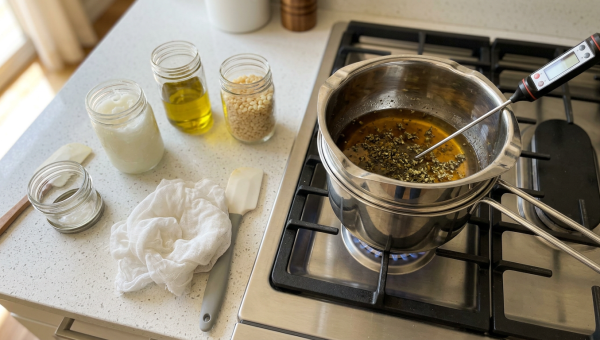
The core calculation for edibles comes down to understanding the relationship between the weight of your flower, its THC percentage, and how many servings you’re making. Here’s the basic math: if you have 3.5 grams (an eighth) of cannabis testing at 20% THC, you’re working with approximately 700 milligrams of THC total before any cooking losses. Decarboxylation, the heating process that activates THC, and the infusion process itself both reduce that number, with typical cannabutter and oil infusions retaining somewhere between 60% and 80% of the available THC depending on your method and temperature control.
Jessica Reed, our lifestyle and edibles expert, breaks down the full decarb-to-dose calculation in the cannabutter guide, and I’d strongly recommend reading that before you start any serious edibles project, because the measurement piece feeds directly into the dosing math. Getting your gram weights right at the start of the process is what makes the difference between a batch of brownies with predictable 10mg servings and a batch that’s all over the map.
For edibles work specifically, here’s the practical approach: weigh your decarbed flower on a 0.01g precision scale before you start your infusion. Note the exact weight, note the THC percentage from your dispensary receipt or lab test (if you grew your own, you’ll need to estimate, more on that below), and use those numbers to calculate your total available THC. Then divide by the number of servings you’re making. The cannabis edibles complete guide has a full dosing calculator walkthrough that makes this process straightforward even if math isn’t your thing.
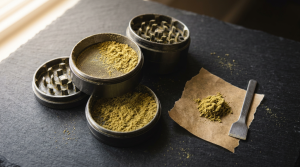
One thing people don’t think about enough when measuring for edibles: the difference between measuring whole flower versus ground flower. Ground cannabis packs more densely and can appear to be a larger volume than the same weight of whole buds. Always weigh by grams, not by volume, when cooking. A “tablespoon of weed” is not a measurement, it’s a recipe for inconsistency.
Can You Measure THC Content at Home? The Honest Answer
You cannot reliably measure the THC percentage of cannabis at home without laboratory equipment, but trichome inspection can give you a meaningful qualitative indication of harvest readiness and potency potential.

I want to be upfront about this because I see a lot of misinformation floating around. There are no consumer-grade home testing kits that accurately measure THC percentage. Color-change reagent tests can tell you whether THC is present, but they can’t quantify it. The only way to get a real THC percentage is through a licensed cannabis testing laboratory using high-performance liquid chromatography (HPLC) or gas chromatography, the same methods used by legal dispensaries to produce the numbers on their product labels.
What you can do as a home grower is use trichome inspection as a harvest timing guide, which correlates with potency development. Darrel Henderson, our growing specialist, covers this in depth in the harvesting guide, the short version is that clear trichomes indicate underdeveloped THC, milky/cloudy trichomes indicate peak THC levels, and amber trichomes indicate THC degrading into CBN. A jeweler’s loupe or a digital microscope (both inexpensive) lets you inspect trichomes closely enough to make informed harvest decisions.
For purchased cannabis, the THC percentage on a dispensary label is your most reliable reference, though it’s worth knowing that those numbers can vary by batch and testing lab. For home growers in states like Oregon, Washington, or Colorado where home cultivation is legal, sending a sample to a licensed testing lab is the only way to get a real number. Some states have provisions for consumers to submit samples; check your local regulations.
Strain Density and Why Your Eyeball Will Lie to You
Strain morphology is the single biggest variable in visual cannabis measurement, and understanding it will make you a smarter buyer and a better grower.
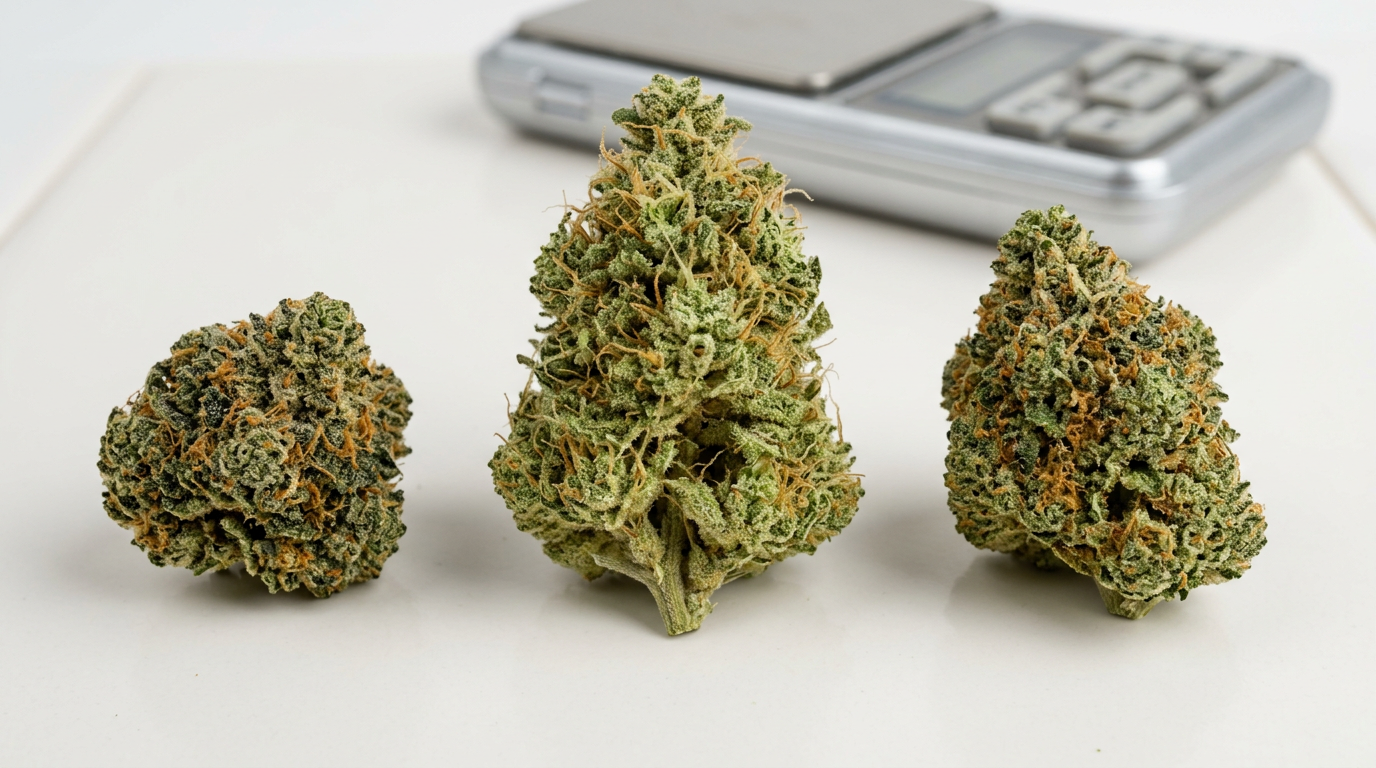
I’ve been growing outdoors in Central Texas for years, and nothing humbles your eyeballing skills like putting two different strains on a scale side by side. Dense, compact indica-dominant genetics, think something like Ice Cream Cake or Wedding Cake, produce buds that are tight, heavy, and often covered in so much resin that they feel almost sticky-solid in your hand. A single nug that looks like it’s barely the size of a shooter marble can hit 1.5 grams easily. Compare that to a big, airy, classic sativa structure like Jack Herer or Pineapple Express, where the buds are light, wispy, and look enormous relative to their actual weight. That visual mismatch is where new consumers get confused, and sometimes where they feel like they got shorted when they didn’t.
The practical takeaway: when you’re buying from a dispensary, the weight on the label is what matters, not the visual volume in the jar. When you’re buying elsewhere and don’t have a scale, a dense-looking small nug is often more gram-for-gram value than a fluffy large one. And when you’re growing your own, don’t judge your harvest by eye, weigh it. I’ve had outdoor grows where the final dried weight surprised me in both directions.
Moisture content also plays a significant role. Freshly harvested cannabis is mostly water weight, a fresh bud might lose 75% of its weight during the drying and curing process. This is why properly dried and cured flower is what dispensaries and reputable growers sell. If your purchase feels unusually heavy and damp, that moisture weight is inflating the number. Properly cured cannabis should feel dry to the touch with just a slight give, not bone dry, not moist. Our guide to cannabis shelf life covers moisture and storage in detail if you want to go deeper on that.
Practical Measurement by Use Case: Joints, Bowls, and Vapes
Different consumption formats require different measurement precision, and knowing the practical amounts for each will help you plan your supply and budget more effectively.

A standard joint uses somewhere between 0.5 and 1 gram of flower, depending on the size of your paper and how tightly you roll. A classic 1.25 paper joint with a good roll lands right around 0.75 grams for most people. King-size papers push you closer to 1–1.5 grams. Pre-rolls at dispensaries are typically sold as 0.5g, 0.75g, or 1g, those weights are on the label.
A standard bowl pack in a pipe or bong is usually 0.25 to 0.5 grams, depending on the bowl size. Small spoon pipes might take 0.2 grams for a single hit; larger bong bowls can hold 0.5 to 1 gram comfortably. For vaping dry herb, most sessions use 0.1 to 0.3 grams per load, making vaping one of the more economical consumption methods from a flower-usage standpoint.
For a full breakdown of how these formats compare in terms of experience and efficiency, the smoking methods guide is the most comprehensive resource we’ve put together on the site. And if you want to explore the broader world of growing your own supply, so you’re always measuring your own harvest rather than somebody else’s, the complete home growing guide is where I’d send any serious consumer who’s ready to take that next step.
You can also find more practical cannabis lifestyle content, strain deep-dives, and growing tips throughout our cannabis blog, we cover everything from seed selection to final cure.
Frequently Asked Questions
How many grams is an eighth of weed?
An eighth of weed is 3.5 grams, it’s one-eighth of an ounce (28 grams). This is the most commonly purchased quantity at US dispensaries and is typically enough for several sessions for a casual consumer. Some dispensaries round to exactly 3.5g while others may include a slight overage; always check your receipt if precision matters to you.
How do you measure weed without a scale?
The most practical no-scale methods are the ruler-and-coin balance (using coins of known weight as reference, a US nickel weighs 5 grams, a penny weighs 2.5 grams) and using a dollar bill as a rough 1-gram reference weight on a makeshift balance. Eyeballing by visual volume is unreliable due to strain density variation. Smartphone scale apps generally don’t work on standard phones. The honest answer is that a pocket digital scale costs less than $20 and solves the problem permanently.
What does a gram of weed look like?
A gram of cannabis looks different depending entirely on the strain’s density. A gram of a dense indica-dominant strain might be a single compact nug roughly the size of a large blueberry or a bottle cap. A gram of a fluffy sativa-dominant strain might look two to three times larger, closer to a small grape cluster. This is why visual estimation is so unreliable without scale experience with specific strains.
Can I use a food scale to weigh weed?
Yes, a kitchen food scale works for measuring cannabis, with one important caveat: most food scales have a resolution of 0.1 grams, which is adequate for quantities of a quarter-ounce and above but imprecise for single grams or small edibles portions. For anything requiring precision under 1 gram, including edibles dosing calculations, a dedicated pocket digital scale with 0.01-gram resolution is the better tool.
What is a “zip” of weed?
A zip is slang for one ounce of cannabis, 28 grams. The term comes from the “Z” in ounce and has been part of cannabis culture vocabulary for decades. It’s widely used in both legal and informal cannabis markets across the US, and you’ll hear it at dispensaries in states like California, Colorado, and Michigan just as readily as anywhere else.
How do I calculate THC milligrams per serving for edibles?
Start with the total weight of your flower in grams, multiply by the THC percentage expressed as a decimal (20% THC = 0.20), then multiply by 1,000 to convert to milligrams. That gives you total available THC in milligrams. Multiply by your estimated infusion efficiency (typically 60–80% for cannabutter or oil) to get your working THC total, then divide by the number of servings. For example: 3.5g × 0.20 × 1,000 = 700mg total, × 0.70 efficiency = 490mg working THC, ÷ 49 servings = 10mg per serving. The cannabutter guide walks through this calculation in full detail.
Does weed weight change after grinding?
No, grinding cannabis does not change its weight, only its volume and surface area. Ground cannabis takes up less space than whole buds but weighs the same. The misconception sometimes comes from the fact that grinding causes very fine kief and trichomes to separate and fall through grinder screens, which can represent a small but real loss of material if your grinder has a kief catcher that you’re not accounting for. Always weigh before grinding when measuring for edibles or portioning.