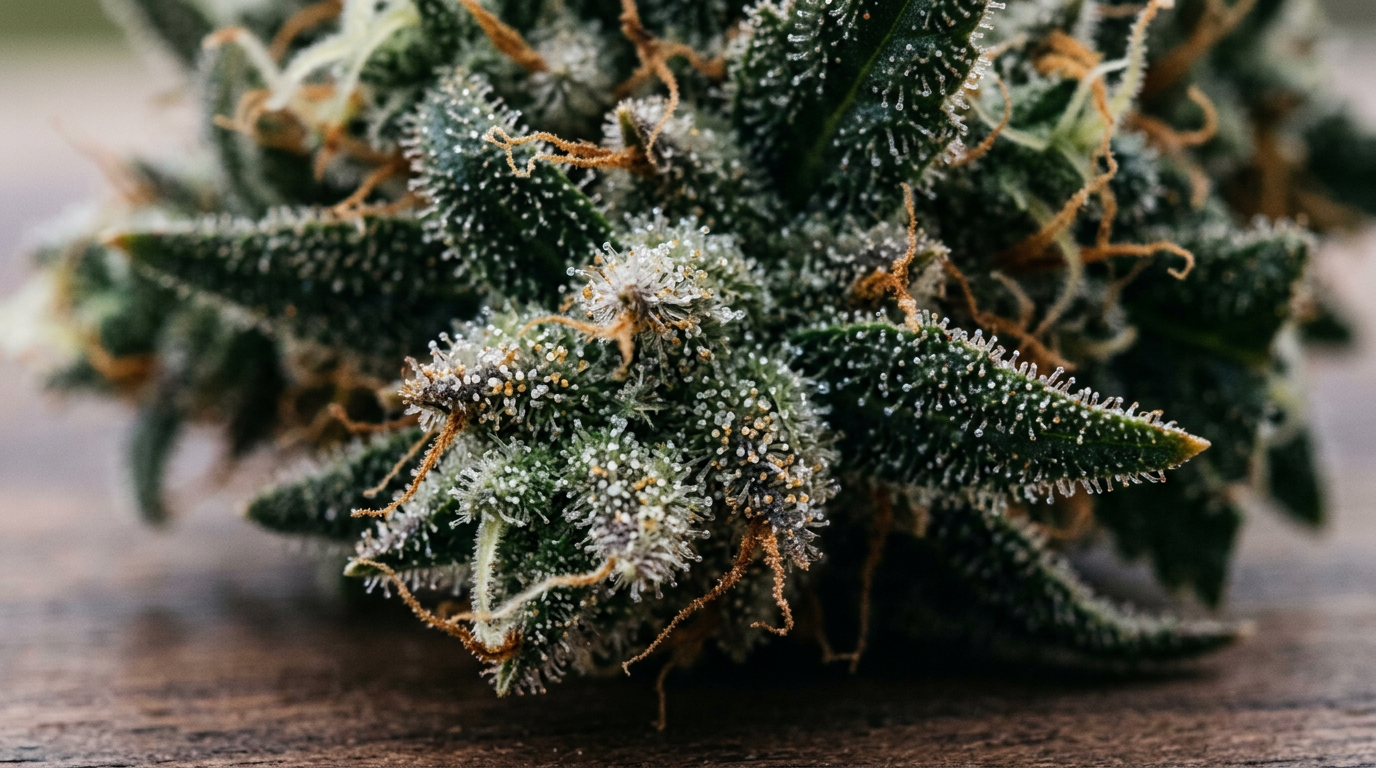
Trichomes are microscopic, hair-like glandular structures covering cannabis flowers and leaves. They function as the plant’s primary chemical factory, synthesizing and storing cannabinoids like THC and CBD, terpenes, and flavonoids. The frosty coating visible on quality cannabis buds is composed entirely of these resin-producing structures.
Reviewed by Maya Chen, Cannabis Science Writer | Updated March 17, 2026
What Trichomes Are and Why Cannabis Produces Them
Cannabis produces three distinct trichome types, each with a different role. Bulbous trichomes measure just 10 to 30 micrometers and produce minimal resin. Capitate-sessile trichomes sit flat against the plant surface with modest output. Capitate-stalked trichomes, standing 50 to 500 micrometers tall with a prominent mushroom-shaped head, are responsible for the vast majority of cannabinoid and terpene production. I examined all three types extensively during my graduate research at Oregon State, and the structural difference between them is striking under a digital microscope.
From an evolutionary standpoint, trichomes developed as defense. The sticky resin traps insects, UV-absorbing compounds protect reproductive tissue, and research suggests bitter secretions deter herbivores. The plant wasn’t building a recreational product. It was solving survival problems.
Did you know? According to the Oregon Liquor and Cannabis Commission, Oregon was among the first U.S. states to require lab-tested cannabinoid potency data on all legal cannabis products. Those THC percentages on every dispensary label are essentially a trichome density report, since virtually all measurable THC in harvested flower is synthesized and stored inside capitate-stalked trichome heads.
Trichomes, Cannabinoids, and the Entourage Effect
Each capitate-stalked trichome head is a biosynthesis chamber where the plant simultaneously constructs cannabinoids, terpenes, and flavonoids. These compounds interact through what researchers call the entourage effect, and trichomes are where that entire chemical relationship originates.
Research published in Cannabis and Cannabinoid Research confirmed that trichome density correlates directly with total cannabinoid content in harvested flower. I’ve reviewed lab reports from heavily trichomed cultivars hitting 28 to 32% total THC by dry weight, compared to 12 to 15% in sparsely coated specimens of the same genetic lineage grown under suboptimal conditions. That difference is entirely a trichome story.
Terpenes are stored in trichome heads alongside cannabinoids, which is why a strain’s terpene profile tracks so closely with how well trichomes develop during flowering. Rough handling, heat, and UV exposure all cause terpene volatilization to begin immediately after trichomes are damaged. Proper storage isn’t optional if you want to preserve aroma and effect.
Trichome Color and Harvest Timing
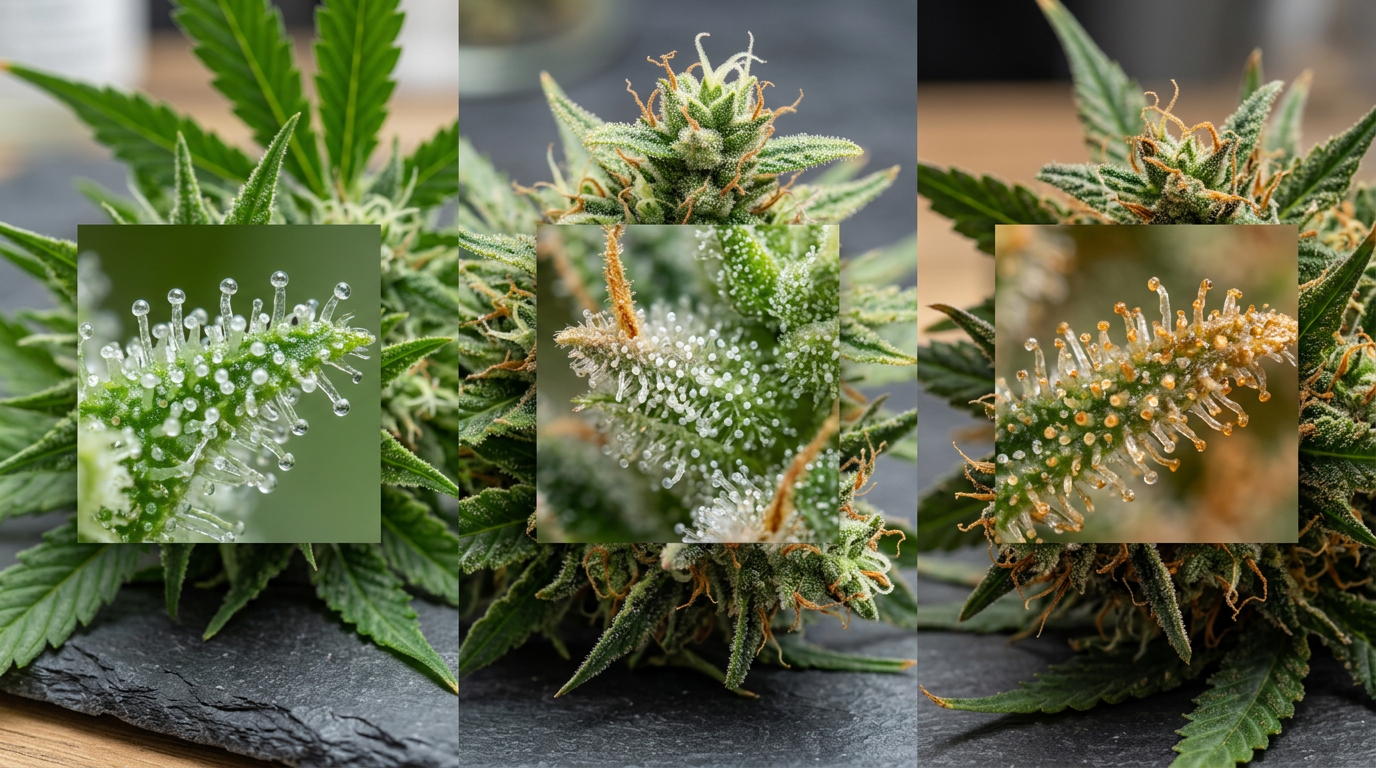
Trichome color shifts predictably from clear to cloudy white to amber as cannabis flowers mature, giving growers the most reliable harvest timing signal available, more accurate than pistil color or calendar-based estimates alone.
Clear trichomes mean THC biosynthesis is still active. Harvesting here leaves real potency unrealized. Cloudy or milky white trichomes signal peak THC concentration; strains grown for energetic effects like Green Crack are typically harvested at this stage to preserve lighter, more volatile terpenes. Amber trichomes indicate THC is oxidizing to CBN (cannabinol), which reduces psychoactive intensity while increasing sedative character. Growers targeting heavy body effects often wait until 20 to 30% of trichomes show amber coloring.
Reading this accurately requires magnification. A jeweler’s loupe at 30x to 60x works for basic assessment. A digital USB microscope at 100x gives a genuinely clear picture of color distribution. I consider it non-negotiable for any serious home grow.
Trichomes and Cannabis Concentrates
The concentrate industry is built around trichome isolation. Kief is the simplest form: agitate dried cannabis over fine mesh and trichome heads break free as powder. Traditional hash is compressed kief. Solventless methods like ice water hash use cold water and agitation to separate trichome heads while preserving the full terpene profile. Solvent-based extracts like Butane Hash Oil dissolve trichome contents using hydrocarbons, then purge the solvent. Products like Badder/Batter/Budder are post-processing variations on that method. In every case, the raw material being processed is the chemical content of trichome heads.
Key Facts
✓ Cannabis produces three trichome types; capitate-stalked trichomes (50 to 500 micrometers tall) account for the vast majority of cannabinoid and terpene production.
✓ Trichome color progression from clear to cloudy to amber is the most reliable harvest timing indicator available to growers.
✓ Virtually all THC, CBD, and terpenes in cannabis flower are synthesized and stored inside trichome gland heads, not surrounding plant tissue.
✓ UV-B light exposure during late flowering has been shown in research to stimulate increased trichome production as a photoprotective defense response.
✓ Kief, hash, bubble hash, and solvent-based concentrates are all forms of trichome isolation or extraction.
✓ Heat above 70°F (21°C), rough handling, UV exposure, and oxygen all degrade trichomes post-harvest, reducing potency and terpene content over time.
Frequently Asked Questions
Do trichomes themselves get you high?
Trichomes don’t produce intoxication. The THC and other cannabinoids synthesized inside trichome gland heads are what interact with your endocannabinoid system. Think of trichomes as the container, not the active ingredient. When you consume kief, the intensity comes from concentrated cannabinoid and terpene content packed inside those heads, not from the trichome structure itself.
What happens if you harvest cannabis with mostly clear trichomes?
Harvesting at this stage means consuming flower before peak cannabinoid concentration is reached. THC biosynthesis is still actively occurring, so psychoactive effect will be noticeably weaker than the same strain harvested at cloudy-white maturity. Some users report a more anxious, racy experience from early-harvested cannabis, which some researchers attribute to an elevated ratio of lighter terpenes that haven’t yet been joined by heavier compounds accumulating later in the flowering cycle.
Where on the cannabis plant are trichomes most concentrated?
Trichomes appear across the entire plant surface, including fan leaves and stems, but they concentrate most densely on the calyxes and sugar leaves surrounding female flower clusters. Sugar leaves emerging directly from bud sites carry enough trichomes that trim from quality harvests is worth processing into kief or hash. Fan leaves, by contrast, carry very low trichome density and are generally not worth processing for concentrates.
For more plant science terms explained with the same evidence-based approach, visit our full cannabis glossary.
Looking to grow strains known for exceptional trichome coverage and resin production? Browse genetics that consistently deliver that frosty, high-potency harvest.