Topping is a high-stress training (HST) technique where a grower removes the main growing tip of a cannabis plant above a node, splitting that single apical cola into two new main branches. This breaks apical dominance, redirects growth hormones outward, and produces a wider, bushier plant with multiple bud sites instead of one dominant central cola.
Reviewed by Darrel Henderson, Cannabis Cultivation Specialist | Updated March 31, 2026
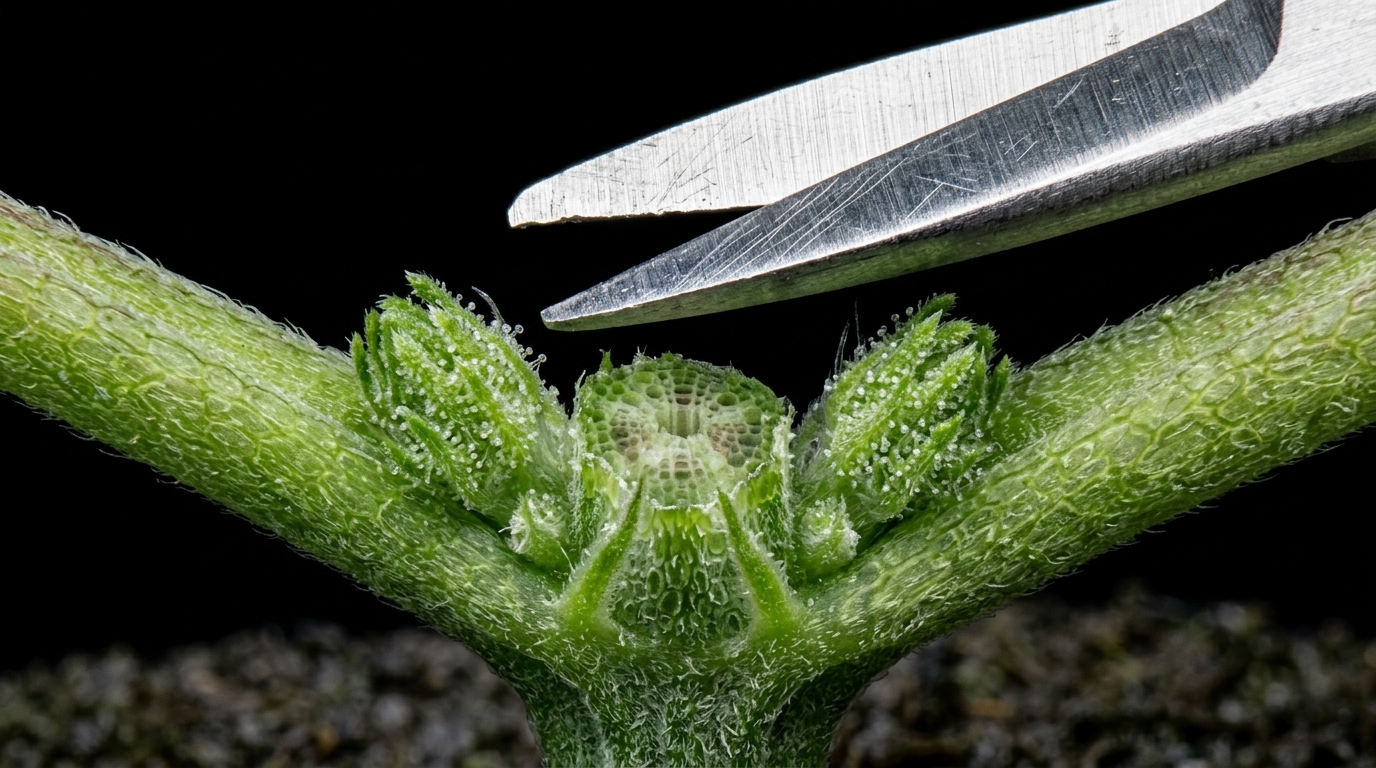
What Is Topping in Cannabis Growing?
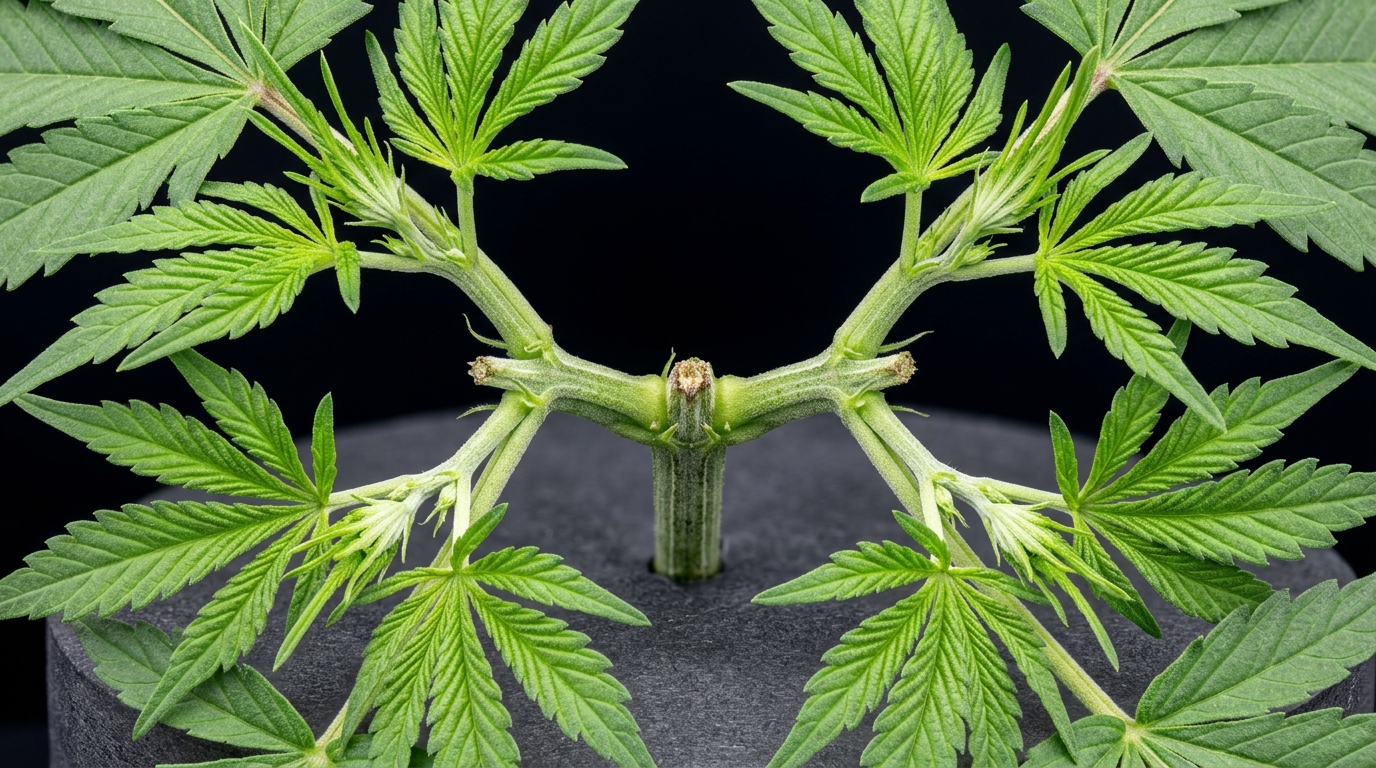
Topping is a clean, deliberate cut that removes the newest growth tip of the main stem, typically above the fourth or fifth node. The plant responds by pushing auxin (the primary growth hormone) into the two lateral shoots just below the cut, turning them into dual main colas. Done right, you go from one dominant top to two, and if you top again, those two become four.
I ran this technique on a Blue Dream pheno last spring and the canopy transformation was wild. One clean snip around week three of veg, and within five days I had two fat new shoots racing upward like they were competing with each other. That’s the whole point of the technique.
The science behind it comes down to apical dominance. The apical meristem, the very tip of the plant, produces auxins that suppress lateral branching. Remove it, and those suppressed side branches suddenly get the green light to grow. Research published in a 2023 study on nitrogen nutrition and pruning in cannabis confirms that pruning techniques directly influence how the plant allocates resources and cannabinoid production across its structure.
Topping is different from fimming, which is a messier partial removal of the tip that can produce three to four new tops but with less predictable results. Topping is surgical. You get two tops, every time, assuming you make a clean cut above the right node.
Why Growers Top Their Cannabis Plants
Topping improves yield potential by creating multiple colas of roughly equal size, allowing more of the plant’s energy to go into bud production rather than feeding one dominant main stem. It also makes canopy management dramatically easier, especially under a flat light footprint.
In my grow room, working with a 4×4 tent and a single overhead light, an untopped plant is basically wasted potential. That one main cola gets great light, sure, but everything below it sits in shadow. When I top and then train those two new branches outward with LST (low-stress training), I can fill the entire canopy and get even light distribution across a dozen or more bud sites.
According to research on pruning technique and cannabinoid content, strategic pruning can influence total cannabinoid concentrations at harvest. That’s not just about bigger weight. It’s about quality across the whole plant, not just the top cola.
Outdoor growers benefit just as much. A topped plant stays shorter and wider, which matters if you’re growing in a backyard where height draws attention. It also makes the plant more wind-resistant and easier to stake. I’ve topped OG Kush plants outdoors in Colorado and ended up with bushy four-foot-wide plants that stayed under the fence line while still producing serious weight.
Did you know? Colorado was one of the first U.S. states to legalize recreational cannabis cultivation for personal use. According to the Colorado Department of Revenue’s Marijuana Enforcement Division, home growers are permitted to cultivate up to six plants per person, making canopy-maximizing techniques like topping especially valuable for home growers working within plant count limits.
How to Top a Cannabis Plant: Timing and Technique
Topping should be performed during the vegetative stage, once the plant has developed at least four to five nodes and is growing vigorously. Cutting too early stresses an underdeveloped root system and can stall growth for weeks. Cutting too late wastes veg time you could have spent training.
My standard timing is node five. The plant is established, roots are healthy, and there’s enough structure below the cut that the two new tops have real support. I use sharp, sanitized scissors or a clean razor blade. Dull tools crush tissue. Dirty tools invite pathogens. Neither is acceptable.
Here’s exactly how I do it. I identify the newest growth tip, that tiny cluster of leaves at the very top of the main stem. Then I locate the node just below it, where two lateral shoots are already forming. I cut cleanly above that node, removing the tip entirely. Within 24 to 48 hours, those two lateral shoots start pushing upward hard.
Recovery time is typically five to seven days before you see vigorous new growth. Healthy plants in good growing conditions bounce back fast. Stressed plants, those dealing with nutrient issues, root problems, or environmental swings, take longer. Fix your environment before you top. Topping a sick plant just adds insult to injury.
You can top multiple times. Each topping doubles your cola count, so two tops become four, four become eight. Most growers stop at two or three rounds of topping to keep the veg period manageable. I usually do two tops on photoperiod strains, then flip to flower once the canopy fills out. Check out the cannabis glossary for more training-related terms if you’re building out a full training strategy.
Topping Autoflowers: Proceed With Caution
Autoflowering cannabis strains have a fixed, time-based life cycle that does not reset after stress. This makes topping autoflowers a genuine risk, since the recovery window is narrow and lost veg time cannot be recovered by simply waiting longer.
I’ve topped autos exactly twice in my career, both times on fast-growing, vigorous phenos that I knew had extra veg time built in. One worked out fine. The other stalled, never fully recovered, and produced about half what I expected. The risk-to-reward ratio just isn’t there for most autoflower grows. If you want to train autos, low-stress methods like LST or light defoliation are a better fit. Read more about the differences in the Autoflower vs Photoperiod glossary entry before you decide.
For Photoperiod strains, though, topping is one of the most reliable yield-boosting techniques available. You control the veg period, so you can give the plant all the recovery time it needs.
Key Facts
✓ Topping removes the apical meristem (main growing tip) above a node, splitting growth into two new main colas
✓ Best performed during vegetative stage when the plant has 4-5 nodes and is growing vigorously
✓ Recovery typically takes 5-7 days in a healthy plant before vigorous new growth resumes
✓ Each topping session doubles the number of main colas (1 top becomes 2, then 4, then 8)
✓ Not recommended for autoflowering strains due to their fixed life cycle and limited recovery window
✓ Always use clean, sharp tools to minimize tissue damage and reduce infection risk
✓ Combining topping with LST (low-stress training) maximizes canopy coverage and light penetration
Frequently Asked Questions
How many nodes should a cannabis plant have before topping?
Most experienced growers top at node four or five. This gives the plant enough root development and structural mass to handle the stress without stalling. I personally wait for node five every time. Going earlier is possible on very vigorous genetics, but I’ve seen too many seedlings stall from premature topping to recommend it as standard practice. When in doubt, wait one more node.
Is topping worth it for small home grows?
Absolutely, and I’d argue it’s even more valuable in a small grow. When you’re limited to a handful of plants, getting maximum yield from each one matters more, not less. A single topped plant trained properly across a 2×2 space can outperform two or three untopped plants crammed into the same area. The technique costs you nothing except a little veg time and a clean cut. The payoff at harvest is real.
What is the difference between topping and fimming?
Topping is a complete removal of the growth tip above a node, producing a reliable two-cola split every time. Fimming is a partial removal of the same tip, roughly taking off about 75% of it, which can produce three to four new tops but with less consistency. I use topping when I want predictable structure and fimming when I’m experimenting with a pheno and want to see how it responds to messier stress. For beginners, topping wins on reliability alone.
When is it too late to top a cannabis plant?
Once you’ve flipped to flower, topping is off the table. The plant is now in reproductive mode, and removing growth tips at that stage causes serious stress without the recovery time needed to make it worthwhile. Even in late veg, if you’re planning to flip within a week or two, skip the topping. The plant won’t have enough time to recover and fill out before the flip, and you’ll just be handing yourself a stressed plant going into flower.
Ready to put your topping skills to work? Start with proven feminized genetics that respond well to training and give you the veg time you need to maximize every cut.