Indoor cannabis gives you tighter environmental control, denser buds, and stronger bag appeal, making it the go-to for high-THC phenos and year-round harvests. Outdoor wins on terp complexity, raw yield per plant, and cost efficiency. If you want consistent, photogenic flower, go indoor. If you want rich flavor and a lower overhead, outdoor delivers.
Reviewed by Darrel Henderson, Cannabis Cultivation Specialist | Updated April 25, 2026
What Is Indoor Cannabis?
Indoor cannabis is flower grown entirely inside a controlled environment, whether that’s a tent, a dedicated grow room, or a full commercial facility. The grower manages every variable: light spectrum, temperature, humidity, CO2 levels, and feeding schedules. This total control is what defines the indoor growing method and separates it from any sun-dependent approach.
What Is Outdoor Cannabis?
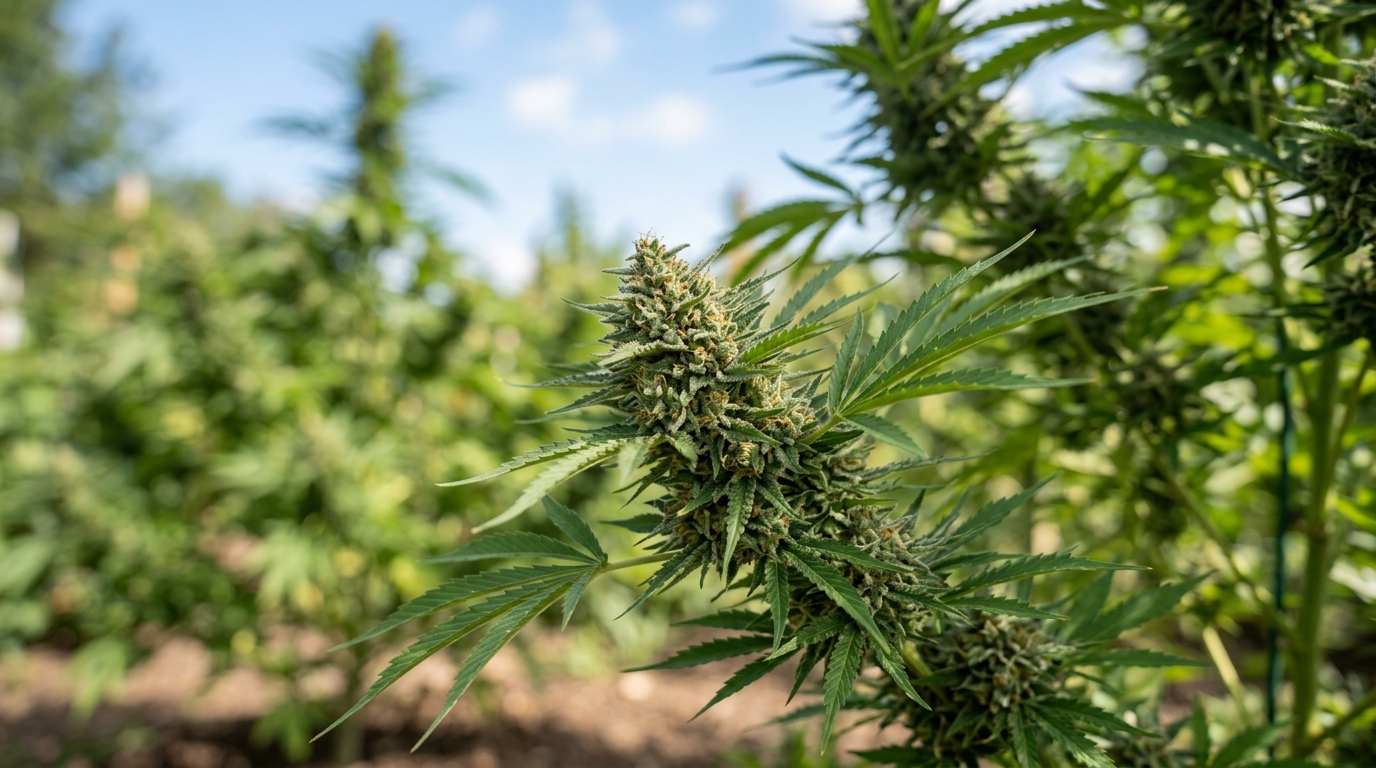
Outdoor cannabis is grown under natural sunlight, typically in soil or raised beds, with the sun providing the full light cycle from vegetative growth through flower. Plants can grow much larger than their indoor counterparts, often reaching tree-like sizes by harvest. The environment, including wind, rain, temperature swings, and soil microbiome, shapes the final product in ways no grow room can fully replicate.
Key Differences
The debate between indoor and outdoor has been running in grower circles for decades. I’ve grown both extensively, and the honest answer is that neither method is universally superior. Each has real strengths and real trade-offs that matter depending on your goals, budget, and available space.
A 2023 study comparing cannabinoid and terpene profiles across cultivation environments found that outdoor-grown cannabis consistently showed higher terpene content and greater lipid concentrations, while indoor flower tended toward higher THC levels. That lines up with what I’ve seen in my own grows. My outdoor Sunset Sherbet from last season absolutely crushed my indoor run on terps, but the indoor pheno came out noticeably more potent on paper.
| Factor | Indoor | Outdoor |
|---|---|---|
| THC Levels | Generally higher; controlled light maximizes cannabinoid production | Typically lower average; varies by strain and season |
| Terpene Profile | Good but often narrower; heat and artificial light can degrade volatile terps | Richer and more complex; natural stressors build diverse terpene expression |
| Bag Appeal | Dense, frosty, visually consistent buds | Looser structure, airy buds, less visual uniformity |
| Yield Per Plant | Limited by canopy space and light footprint | Massive potential; unrestricted root zone and full-spectrum sun |
| Cost to Produce | High; electricity, climate control, and equipment add up fast | Low; sunlight is free and soil inputs are minimal |
| Environmental Control | Total; you set every parameter | None; weather, pests, and humidity are all variables |
| Harvest Timing | Year-round with artificial lighting | Seasonal; one main harvest per year in most climates |
| Pest and Mold Risk | Manageable with proper Flushing and IPM protocols | Higher exposure to pests, mold, and weather damage |
| Carbon Footprint | Significant; lighting and HVAC are energy-intensive | Minimal; solar energy and natural water cycles do most of the work |
| Best For | High-THC phenos, year-round production, stealth grows | Bulk yields, terpene-forward flower, budget-conscious growers |
Did you know? According to the meta-analysis on closing the cannabis yield gap published in Frontiers in Plant Science, indoor cultivation facilities consume roughly 2,000 kilowatt-hours of electricity per pound of dried flower produced, making outdoor growing dramatically more sustainable from an energy standpoint. Several US states are already factoring energy use into cannabis licensing criteria as a result.
When to Choose Indoor
Go indoor when consistency is non-negotiable. If you’re chasing a specific pheno, dialing in a high-THC cultivar, or running multiple harvests per year, indoor is the only way to stay in full control. I set up my first dedicated grow room back in 2014, and the ability to dial Photoperiod lighting down to the hour changed everything about how I approached strain selection.
Indoor is also the right call when you’re working with limited space or need to stay discreet. A well-ventilated 4×4 tent in a basement can produce excellent flower with the right setup. Check out the complete indoor cannabis growing setup guide if you’re starting from scratch; it covers lights, ventilation, and everything in between.
Strains with dense, resin-heavy genetics really shine under controlled conditions. Something like Animal Mints or Kush Mints will stack Trichomes aggressively when you dial in your VPD and light intensity. Canopy management techniques like Topping and Lollipopping also pay off much more predictably indoors, where you can control how the plant responds without weather throwing off your timing.
If you’re running photoperiod genetics and want to flip to flower on your own schedule rather than waiting on the seasons, indoor is your only real option. The research at PMC on photoperiod effects in cannabis confirms that light cycle precision directly influences flowering initiation and cannabinoid accumulation, which is something outdoor growers simply can’t manipulate.
When to Choose Outdoor
Outdoor is the move when you want volume, flavor, and lower costs. Full sun gives plants a light intensity that no artificial setup can fully match, and that drives explosive vegetative growth. I’ve had outdoor plants hit six feet by mid-July in Colorado, something that would be physically impossible in my grow room.
If terps are your priority, outdoor wins. The natural stress response triggered by temperature fluctuations, UV exposure, and wind actually encourages plants to produce a wider range of secondary metabolites. That’s why outdoor-grown Sour Diesel or Jack Herer often smells more complex and layered than the indoor version of the same genetic. The 2023 cannabinoid and terpene study I referenced above backs this up with actual data.
Outdoor also makes sense for autoflower growers. Autoflower vs Photoperiod genetics thrive outdoors because they don’t depend on light cycle changes to flower; you can drop seeds in spring and harvest multiple rounds before frost. Strains like Northern Lights or Blue Dream grown outdoors in a warm climate can produce yields that would take multiple indoor runs to match.
Budget-conscious growers should almost always start outside. The electricity bill alone for a serious indoor setup can run hundreds of dollars per month. Outdoor removes that overhead almost entirely, letting you reinvest in better genetics or soil amendments instead. If you’re growing legally in a state with a good summer climate, the outdoor route is hard to argue against on a cost-per-gram basis.
Frequently Asked Questions
Is outdoor cannabis less potent than indoor?
Generally, yes, but not always dramatically so. The 2023 terpene and cannabinoid comparison study found indoor flower tended to test higher for THC, while outdoor showed richer terpene and lipid profiles. In my experience, a well-grown outdoor pheno of a naturally high-THC strain can absolutely compete with average indoor flower. Genetics matter more than environment once you cross a certain baseline of growing skill. A lazy indoor grow will lose to a dialed-in outdoor run every time.
Does indoor weed get you higher than outdoor?
Higher THC doesn’t automatically mean a more intense or better high. Research suggests the Terpenes and minor Cannabinoids present in outdoor flower may contribute meaningfully to the overall experience through what’s commonly called the entourage effect. Some experienced consumers actually prefer outdoor because the broader chemical profile feels more balanced and full-bodied. That said, if raw THC percentage is your target metric, indoor typically wins. It depends on what you’re looking for from your smoke.
What is the difference between indoor and outdoor rosin?
Indoor rosin typically presses cleaner and lighter in color because the starting material has lower lipid and plant wax content. Outdoor rosin often comes out darker and with a more complex, funky terpene profile because outdoor flower carries more of those secondary compounds. Neither is objectively better. Rosin made from high-quality outdoor hash can be absolutely spectacular. The starting material quality matters far more than the grow method alone. I’ve pressed outdoor-grown Girl Scout Cookies that produced rosin with a terp profile I couldn’t get anywhere near with indoor material.
Can I combine indoor and outdoor growing?
Absolutely, and a lot of serious growers do exactly that. Starting seeds indoors and transplanting outside once the weather stabilizes gives you the best of both worlds: a controlled early vegetative period followed by explosive outdoor growth under full sun. This approach is common in legal home grow states and works especially well with photoperiod strains. You can also use a greenhouse as a middle ground, which gives you some environmental protection while still benefiting from natural light. The Deps (light deprivation) method is a popular greenhouse technique worth looking into if you want outdoor-quality terps with more harvest timing control.
Whether you’re running a tight indoor tent or planning a big outdoor plot this season, the cannabis glossary has the terminology and growing concepts you need to make smart decisions at every stage.
Ready to pick the right genetics for your grow setup? Whether you’re dialing in an indoor room or planning a full outdoor season, starting with quality seeds makes all the difference.