When to harvest autoflower plants depends on trichome color, pistil change, and calyx swell rather than a fixed calendar date. Most autoflowers finish between 70 and 90 days from seed, but the only reliable confirmation is checking trichomes under magnification for the cloudy-to-amber ratio that matches your target effect.
Reviewed by Darrel Henderson, Cannabis Cultivation Specialist | Updated April 8, 2026
What “Harvest Ready” Actually Means for Autoflowers
Autoflowering cannabis completes its life cycle on an internal genetic timer rather than a light schedule, thanks to Cannabis ruderalis genetics. The autoflowering trait is tied to specific genetic loci, as documented in research on major-effect flowering time loci in cannabis. Because no light flip triggers harvest, readiness is a biological signal you read directly from the plant.
Most autoflowers finish between 70 and 90 days from seed. Fast phenos can wrap up near 60 days. Sativa-leaning autos can push 100 without issue.
The seed bank’s stated timeline is a starting point, not a finish line. I’ve had the same strain run 10 days past its advertised window just because my room ran a few degrees cooler than ideal. Always trust the plant over the calendar. You can find more context on autoflowering genetics throughout our cannabis glossary.
The Three Harvest Indicators That Actually Matter
Experienced growers use three overlapping signals to confirm autoflower harvest timing: trichome color under magnification, pistil color and curl percentage, and calyx swell. No single indicator tells the whole story. You need all three.
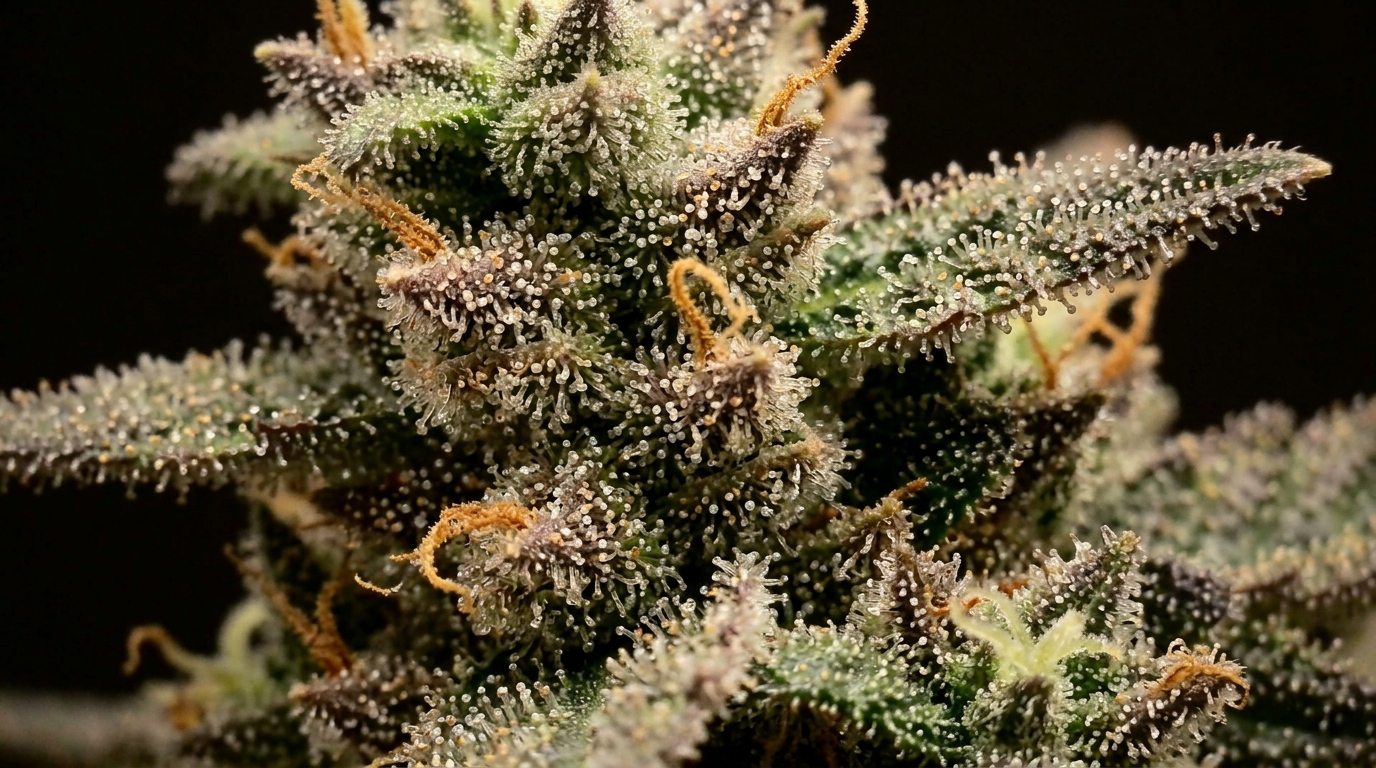
Trichome color is the most reliable method. Clear trichomes mean the plant is still building cannabinoids. Cloudy, milky white trichomes signal peak THC. Amber trichomes indicate THC degrading into CBN, which produces a heavier, more sedating effect. For a cerebral, energetic high I harvest when roughly 10 to 20 percent of trichomes have gone amber. For couch-lock, I let amber climb to 30 or 40 percent. A 30x jeweler’s loupe is the minimum. My $25 pocket scope from the hardware store has saved me from harvesting too early more times than I can count.
Pistil color is a solid secondary check. When 70 to 90 percent of pistils have shifted from white to orange or brown and curled inward, the plant is approaching the finish line. It’s not precise enough to use alone, but it’s a great early-warning system when you don’t have a loupe handy.
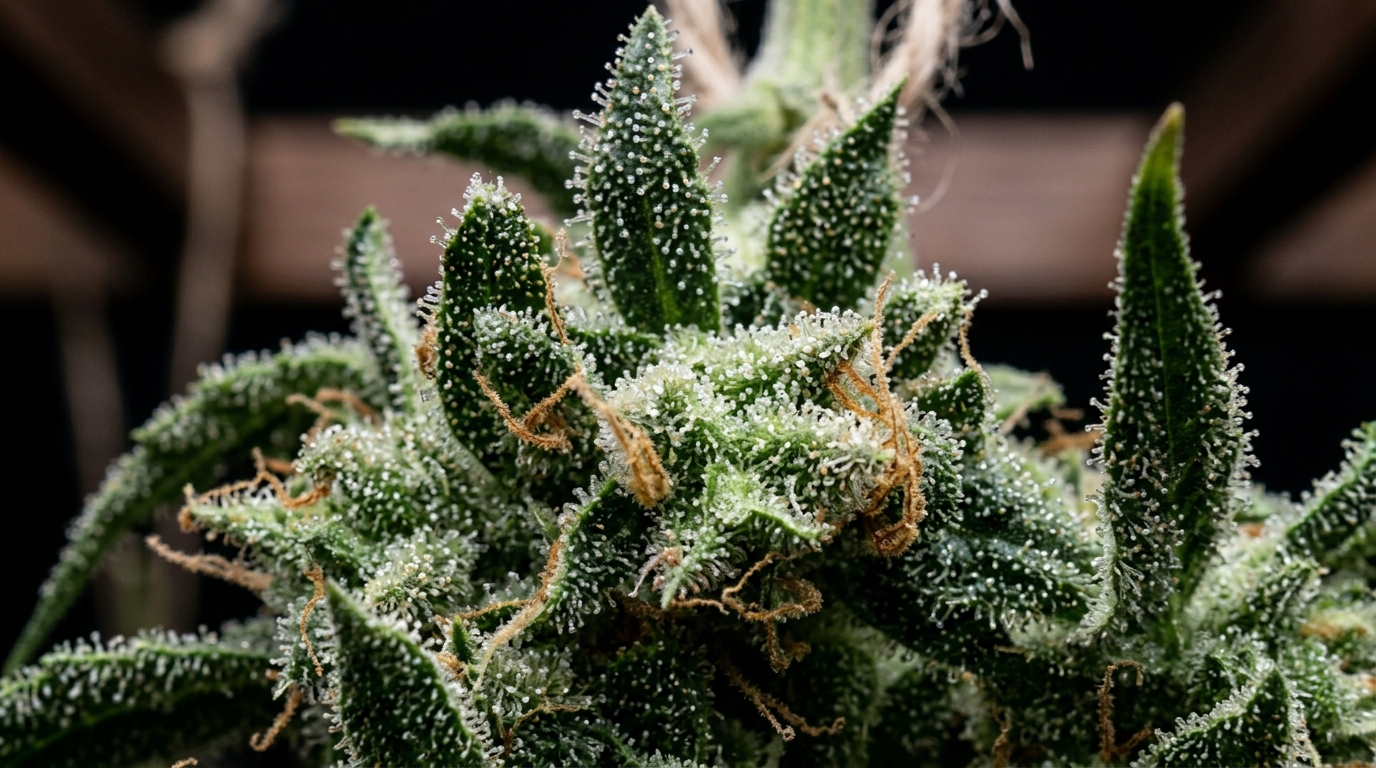
Calyx swelling is something newer growers often miss entirely. Right before peak ripeness, the calyxes visibly puff out, and the bud looks like it’s taken a deep breath. That swelling, combined with cloudy trichomes and curled pistils, is your green light. See our full Trichomes entry for a deeper breakdown of reading trichome development.
How Autoflower Harvest Timing Differs From Photoperiod Plants
With photoperiod strains, growers influence harvest timing partly through light manipulation. Autoflowers remove that variable completely, which changes how you approach the final weeks. You can’t stall a ripening auto by holding lights at 18 hours, and you can’t force an early finish by flipping to 12/12.
This is both a strength and a challenge. Predictable timelines make autos excellent for back-to-back grows and perpetual harvests. The challenge is that you can’t pause a plant that’s starting to over-ripen. When she’s ready, she’s ready.
I ran a fast pheno last fall that hit peak trichome development at day 63. I almost missed the window. Now I start checking trichomes at day 50 on every auto run, no exceptions. See the full breakdown of plant type differences in our Autoflower vs Photoperiod entry.
For larger autos with uneven canopy development, a staggered harvest works well. You pull the top colas first when they’re ripe, then let lower bud sites continue for another week or two. In my experience, this meaningfully improves quality from those lower sites rather than pulling everything at once.
Did you know? According to the Oregon Liquor and Cannabis Commission, outdoor cannabis harvest seasons are tied to natural light cycles for photoperiod plants, but autoflowers can produce multiple harvests per growing season in legal outdoor grows, giving licensed cultivators more production flexibility within the same calendar year.
Drying, Curing, and the Pre-Harvest Dark Period
Many growers run a 24 to 48 hour dark period before chopping. The idea is that darkness pushes remaining sugars out of the buds and into the roots, improving smoothness. I’ve done it both ways. Honestly, the difference is subtle, and a proper dry-and-cure protocol matters far more.
Harvest in the morning before lights come on. Terpene content peaks in cooler temperatures, and I’ve noticed a real difference in the smell of freshly cut buds harvested early versus mid-afternoon. Hang whole plants upside down in a dark space with good airflow at around 60°F and 60% relative humidity. Slow drying over 10 to 14 days preserves more terps and cannabinoids than rushing it. Then cure in sealed glass jars, burping daily for the first two weeks. Patience here is what separates good bud from great bud. Check our Flushing entry if you’re weighing whether a pre-harvest flush makes sense for your setup.
Key Facts
✓ Most autoflowers are harvest-ready between 70 and 90 days from seed, though individual phenos vary significantly
✓ Cloudy trichomes signal peak THC; amber trichomes indicate THC converting to CBN for a heavier effect
✓ When 70 to 90 percent of pistils have darkened and curled inward, the plant is approaching peak ripeness
✓ Calyx swelling in the final days before harvest is a reliable visual cue that ripeness is imminent
✓ A staggered harvest, taking top colas first, can improve quality from lower bud sites on uneven plants
✓ Slow drying at 60°F and 60% humidity followed by a jar cure preserves terpenes better than fast drying
✓ Autoflowers cannot be manipulated with light schedules to delay or accelerate harvest, unlike photoperiod plants
Frequently Asked Questions
Is 90 days too long for an autoflower?
No, 90 days is completely normal for many autoflower varieties. Sativa-leaning autos and high-yielding strains regularly run that long or longer. I’ve had autos push past 100 days in cooler grow room conditions, and they were worth every extra day. If trichomes are still mostly clear at day 90, the plant isn’t done. Don’t chop based on a number printed on the seed pack.
Can I harvest the top half of my autoflower first?
Yes, and it’s a solid strategy for plants with uneven canopy development. Top colas receive more direct light and typically ripen a week or two ahead of lower bud sites. You harvest the upper portion first, then let the lower buds continue to swell and develop. I use this approach regularly on bushier autos where the lower sites would otherwise get pulled before they’re ready. Keep cuts clean and make sure the remaining plant stays in a healthy environment for that final stretch.
What should an autoflower look like when it’s ready to harvest?
A harvest-ready autoflower shows several things at once. Buds are dense and fully swollen, with calyxes visibly puffed out. Most pistils (70 to 90 percent) have shifted from white to orange or brown and curled back into the bud. Under magnification, the majority of trichomes appear cloudy white, with some amber forming depending on your target effect. Fan leaves may be yellowing naturally as the plant burns through its remaining nitrogen reserves. That yellowing at this stage isn’t a problem; it’s a sign the plant is wrapping up on schedule.
Does a dark period before harvest actually improve quality?
The evidence is mostly anecdotal. Many experienced growers run 24 to 48 hours of darkness before chopping, believing it mobilizes stored starches out of the buds. In my own grows, the impact has been minor compared to what a proper slow dry and cure delivers. Try it if you want, but don’t skip your cure thinking the dark period does the same job. It doesn’t come close.
Ready to grow your own autoflowers from seed to harvest? Browse our full selection of autoflowering genetics, including fast-finishing and high-yield varieties suited for growers at every level.