Chronic is a slang term for high-quality, potent cannabis, popularized in the early 1990s by West Coast hip-hop culture and cemented in mainstream vocabulary through Dr. Dre’s landmark 1992 album The Chronic. Today the word describes top-shelf flower with strong effects, dense trichome coverage, and exceptional bag appeal.
Reviewed by Travis Cole, Cannabis Culture Writer | Updated April 3, 2026
What Does Chronic Mean in Cannabis Culture?
The word “chronic” entered cannabis slang through Los Angeles street culture in the late 1980s and early 1990s, gaining global recognition after Dr. Dre released The Chronic in 1992. Originally it referred to high-grade hydroponic weed circulating in Southern California, but the term spread far beyond its roots and became universal shorthand for the best bud you could get your hands on.
I remember the first time somebody handed me something they called chronic at a backyard cookout in San Marcos. Dense, sticky, smelled like a pine forest dipped in citrus. Nothing like the dry, seedy stuff I’d seen before. That moment is exactly what the word is supposed to capture.
In the broader cannabis glossary, chronic sits at the top of the quality ladder. At the bottom you’ve got Reggie Weed, dry and harsh and barely worth the effort. Then there’s Mid Weed, decent enough but nothing to write home about. Chronic is the top shelf, the stuff that makes you stop mid-conversation and say “wait, what is this?”
The term also carries a second, completely separate meaning. In clinical and research contexts, “chronic” simply means long-term or habitual, as in chronic cannabis use describing daily or near-daily consumption over months or years. That’s a different conversation, and we’ll get there below.
Why Chronic Became the Gold Standard of Weed Slang
High-quality cannabis is defined by density, trichome production, aroma, and potency. When those factors align in one flower, growers and consumers have always reached for a word that captures that peak experience.
The cultural weight behind this term is hard to overstate. Dr. Dre’s album didn’t just borrow the slang; it amplified it into every corner of American pop culture. By the mid-1990s, kids in rural Texas who had never seen a hydroponic setup were calling their best weed chronic.
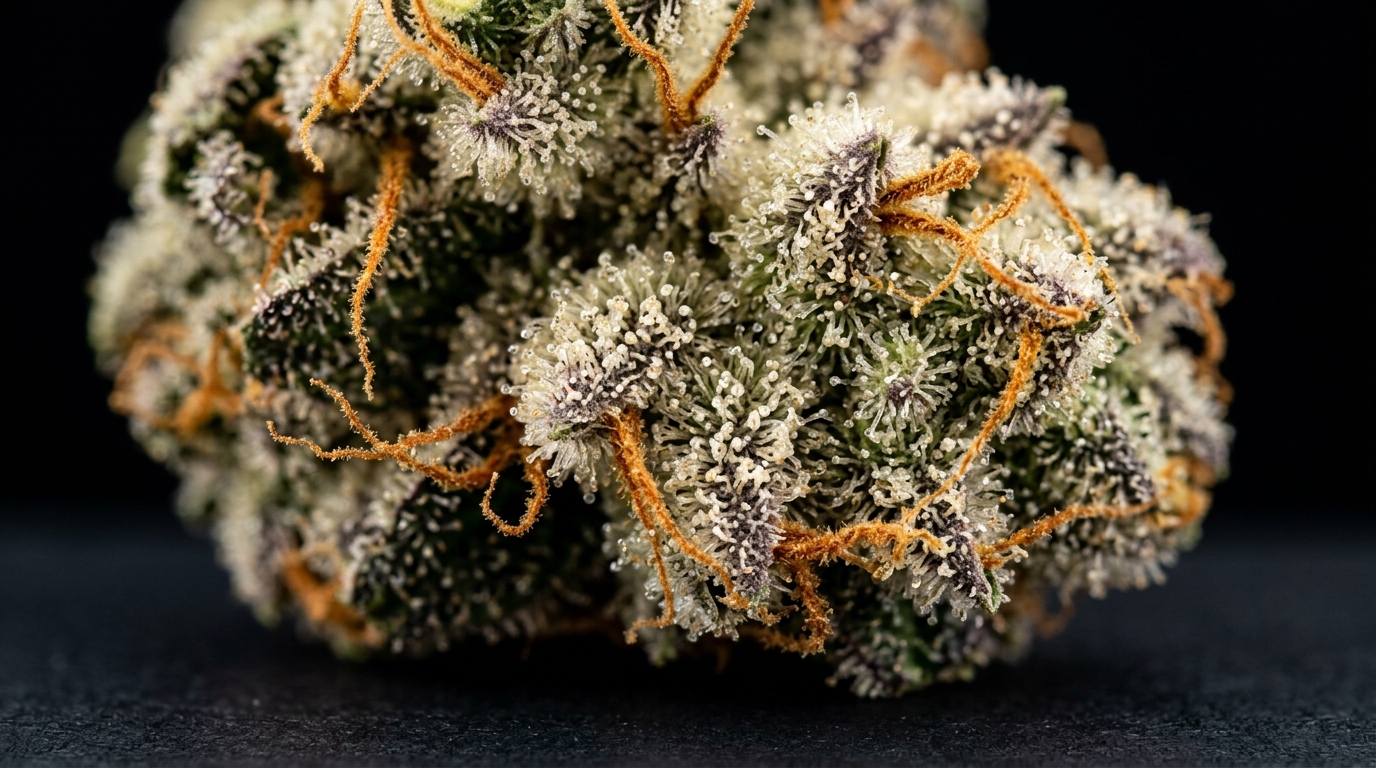
What actually makes a batch worthy of the name? Growers talk about it in terms of Trichomes, those tiny crystalline structures packed with Cannabinoids and Terpenes that give premium flower its frost, its smell, and its punch. When you hold a bud to the light and it sparkles like it’s been dusted with sugar, that’s the visual cue most people associate with chronic-grade weed. Strains like OG Kush, Girl Scout Cookies, and Gorilla Glue are the kind of genetics people point at when they use the word today.
I grew a run of Blue Dream outdoors a few summers back, big plants reaching past my fence line by August. When the harvest came in dense and frosty and the whole back porch smelled like blueberry lemonade, my neighbor leaned over the fence and said “man, that looks chronic.” He wasn’t wrong.
Chronic Weed vs. Chronic Cannabis Use
In medical and scientific literature, “chronic cannabis use” refers to habitual, long-term consumption, typically defined as daily or near-daily use over an extended period. This is entirely separate from the quality-based slang meaning, and understanding both sides of the word matters.
Research published by the National Institutes of Health on long-term marijuana use indicates that heavy, sustained consumption may be associated with changes in memory and cognitive function, particularly when use begins in adolescence. Some studies indicate that verbal memory deficits may persist even after stopping use, though individual outcomes vary widely.
Heavy use over time can also build tolerance and, for some people, dependence. According to a clinical review on heavy cannabis use and the brain, roughly 9 percent of cannabis users develop some form of dependence, with that number rising among daily users. Research suggests these risks are real, even if they don’t apply to every consumer.
None of that is meant to scare you off your porch session. Context is everything.
Did you know? According to the Centers for Disease Control and Prevention, average THC concentration in cannabis products has increased significantly over recent decades, meaning what qualifies as “chronic” quality today is considerably more potent than what earned that label back in the 1990s.
How to Spot Chronic-Quality Cannabis
Experienced consumers and growers use consistent markers to evaluate whether a flower deserves the top-shelf label. Structure, aroma, and trichome density are the three pillars most people reach for first.
Start with the smell. Chronic-grade flower hits you before you even open the jar. Rich, complex, loud. Whether it’s the diesel funk of Sour Diesel, the sweet cream of Ice Cream Cake, or the tropical punch of Pineapple Express, the aroma should be unmistakable and layered. Barely smells like anything? First red flag.
Next, look at the structure. Dense, well-formed buds with a thick resin coat are what you’re after. Trichomes should be visible to the naked eye, giving the flower a frosty, almost silvery appearance. Boof weed looks flat and dry by comparison. PGR Weed might look dense but smells like nothing and feels oddly hard, which is its own kind of tell.
The break matters too. Good flower should be slightly sticky when you pull it apart, not crumbling to dust or so wet it won’t burn. I always do a quick pinch test before I ever load a bowl. If it springs back a little and leaves residue on your fingers, you’re in good shape.
Key Facts
✓ “Chronic” as a cannabis quality term was popularized by Dr. Dre’s 1992 album The Chronic, originally referencing high-grade hydroponic weed from Southern California.
✓ In clinical contexts, “chronic cannabis use” means daily or near-daily use over months or years, a completely separate meaning from the quality-based slang.
✓ Research suggests approximately 9% of cannabis users develop some form of dependence, with higher rates among daily users.
✓ Chronic-quality flower is typically identified by dense trichome coverage, strong aroma, tight bud structure, and high potency.
✓ The term sits at the top of the informal cannabis quality hierarchy, above mid-grade and well above low-quality weed like Reggie.
✓ Modern cannabis testing shows today’s top-shelf flower is often significantly more potent than what earned the “chronic” label in the 1990s.
Frequently Asked Questions
What is chronic weed, exactly?
Chronic weed is slang for high-quality, potent cannabis. The term originally described top-grade hydroponic flower circulating in early 1990s Los Angeles, then spread into mainstream use after Dr. Dre’s 1992 album made it a household word. Today it broadly refers to any premium flower with strong potency, dense trichome coverage, rich aroma, and tight bud structure. It’s the opposite of low-grade weed like Reggie and sits well above mid-grade on the informal quality scale most consumers use.
Is there a difference between chronic weed and dank weed?
The two words are close cousins and often used interchangeably, but there are subtle differences. Dank tends to emphasize aroma and moisture, describing flower that’s pungently fragrant and properly cured. Chronic leans more toward overall quality and potency as a complete package. In practice, if something is chronic it’s almost certainly dank too. Think of dank as describing how it smells and feels, and chronic as describing where it lands on the quality ladder overall.
Does “chronic” always mean high THC?
Not necessarily, though high potency is part of the association. Chronic-quality cannabis is about the full package: structure, smell, trichome density, and effect. A well-grown, properly cured flower with a rich terpene profile and 20 percent THC can absolutely qualify, even if it’s not the highest number on the shelf. Some consumers prefer strains with balanced cannabinoid profiles over pure THC bombs. That said, you’re rarely going to hear anyone call a 10 percent THC flower chronic without a few raised eyebrows.
What’s the difference between chronic weed and chronic cannabis use?
These are two completely separate uses of the same word. Chronic weed is a quality descriptor, slang for top-shelf cannabis. Chronic cannabis use is a clinical term meaning habitual, long-term consumption, typically daily or near-daily use sustained over months or years. Research suggests that chronic use in the clinical sense can be associated with tolerance, dependence, and in some cases cognitive effects, particularly with early-onset heavy use. When you see “chronic” in a medical or research context, it’s almost always referring to frequency of use rather than quality of the product.
Ready to grow your own chronic-quality flower from seed? Start with genetics built for top-shelf results.