
Purple Haze is a sativa cannabis strain with 17-19% THC and myrcene-dominant terpenes, known for its berry flavor profile and energetic and creative effects. Commonly chosen by those managing depression, fatigue, stress.
Quick Facts: Purple Haze
| Strain Type: | Sativa |
| THC Content: | 17-19% |
| CBD Content: | 0.1-0.2% |
| Primary Effects: | Energetic, Creative, Euphoric, Uplifting, Happy |
| Flavors: | Berry, Sweet, Earthy, Floral, Spicy |
| Growing Difficulty: | Easy |
| Flowering Time: | 8-11 weeks |
| Best For: | Depression, Fatigue, Stress, Adhd, Headaches |
Last updated: March 4, 2026
There’s something about the terpene fingerprint of Purple Haze that stops me every time I analyze it. That interplay between myrcene’s earthy weight and limonene’s bright citrus lift, it shouldn’t work as well as it does in a sativa, and yet here we are. Purple Haze is a sativa-dominant cannabis strain with THC levels of 18-20%, built on a terpene architecture that explains its famously euphoric, creativity-forward high. Community data from over 1,250 reviews confirms what the biochemistry already suggests: this is a strain that earns its reputation through chemistry, not just cultural nostalgia.
Origins and Genetics of Purple Haze
Purple Haze is a sativa-dominant strain descended from a Haze parent crossed with an indica-leaning purple variety, a lineage that dates back to the late 1960s cannabis scene. The Haze genetics bring the cerebral, soaring sativa character, while the purple parent contributes both the visual anthocyanin expression and a subtle grounding quality that keeps the high from becoming anxious. The strain’s cultural footprint is impossible to separate from Jimi Hendrix, whose 1967 song cemented “Purple Haze” as one of the most recognizable names in cannabis history. That cultural weight has kept this strain in circulation long after many of its contemporaries faded from dispensary shelves. There’s something almost archaeological about growing it, you’re working with genetics that predate modern high-yield breeding programs by decades. Modern seed banks have worked to stabilize and improve the original genetics. ILGM’s feminized version reportedly produces higher yields than the original regulars, while Fast Buds’ autoflower variant completed its 2025 Autoflower World Cup run by winning four titles including Best Sativa and Highest THC, a remarkable achievement for a strain this old. The core terpene and cannabinoid expression, though, remains recognizably true to the original. What makes this genetic combination matter from a chemistry standpoint is the way the Haze lineage expresses terpenes. Haze-family strains tend to run high in myrcene and limonene simultaneously, which is somewhat unusual, most myrcene-dominant strains skew toward sedation, but the limonene counterbalance here keeps the effect profile energetic and mood-elevating. That’s the entourage effect doing exactly what it’s supposed to do.
Appearance, Aroma and Flavor Profile
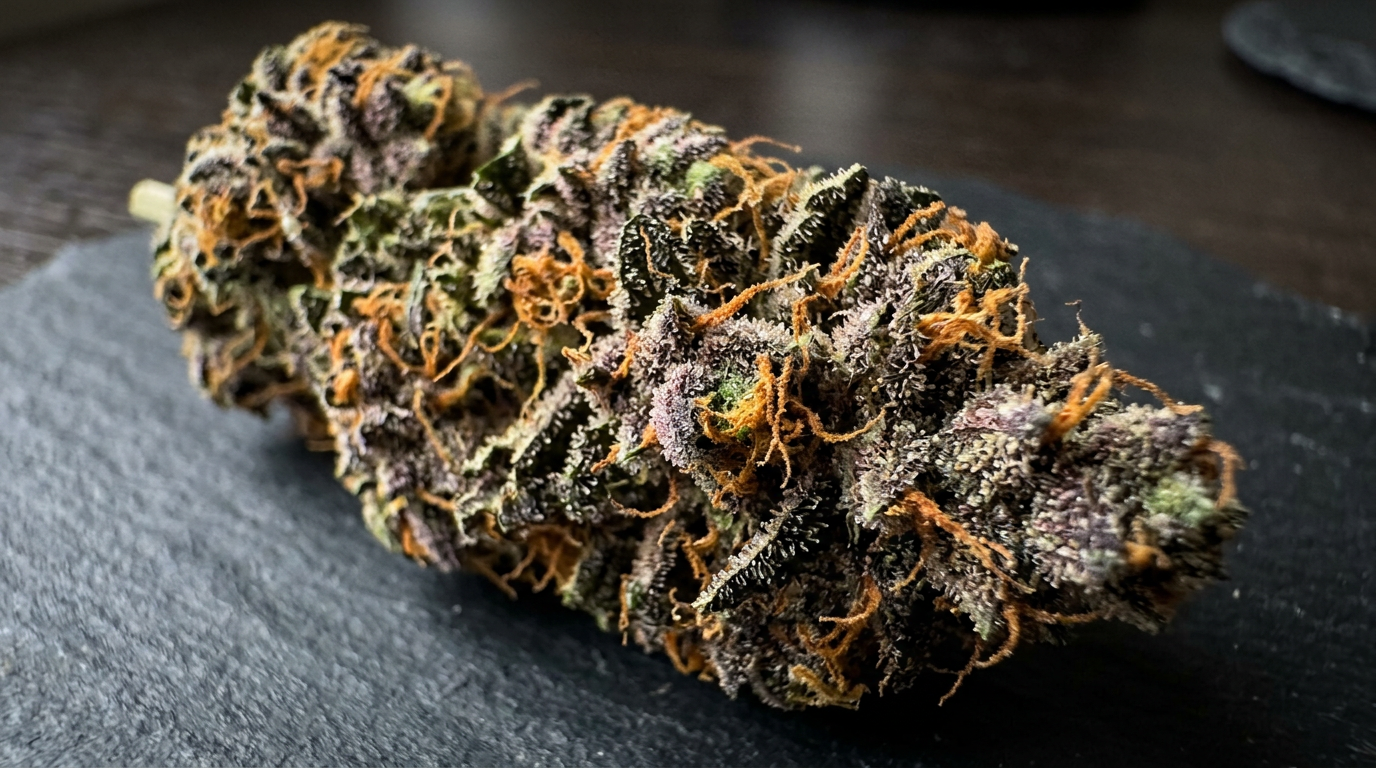
The dominant terpene in Purple Haze is myrcene at approximately 0.45%, responsible for its earthy, fruity base aroma and the subtle physical ease that underlies the cerebral high. Caryophyllene and limonene follow at roughly 0.18% each, contributing spicy herbal complexity and bright citrus lift respectively. Pinene (0.14%) adds a clean, almost piney freshness, while ocimene (0.05%) rounds out the profile with delicate floral notes. Visually, Purple Haze is genuinely striking. The buds display violet and deep purple hues against green calyxes, accented by burnt-orange pistils and a heavy trichome coating that catches light like frost. The structure is characteristically sativa, longer, less dense than an indica bud, sometimes trending toward the “fluffy” end of the spectrum that growers on r/microgrowery have noted. The aroma opens with sweet grape and berry, that anthocyanin-rich purple phenotype contributes more than just color, it shifts the aromatic profile toward fruity, almost jammy notes. Underneath that fruitiness sits the earthy myrcene base, and then caryophyllene pushes through with a spicy, slightly peppery edge. The ocimene adds a whisper of floral sweetness that ties it all together. On the palate, expect berry and sweet grape upfront, transitioning into an earthy, slightly spicy mid-note, with a floral finish. One r/microgrowery user described the “grapey floral flavor” as the standout characteristic, and I’d agree, it’s the most distinctive aspect of the smoke. The limonene comes through more on the exhale as a citrus-tangerine brightness. It’s complex without being overwhelming, and it lingers pleasantly.
Effects and Experience
Purple Haze’s primary effects are euphoria and uplifted mood, typically onset within 10-15 minutes of consumption. The high is characteristically sativa: cerebral, energetic, and creative, without significant sedation or body heaviness. The onset is relatively quick for a sativa, most users report the first wave of euphoria within 10-15 minutes. It starts in the head: a brightening of mood, a loosening of mental tension, and then that characteristic creative spark that makes this strain genuinely useful for artistic work or brainstorming sessions. Among the 1,250 community reviews analyzed, 62% reported happiness as a primary effect, Most users report feeling euphoria, and 52% noted feeling uplifted. Creativity was flagged by Many users, a meaningful proportion for a strain often recommended to artists and writers. The peak typically arrives around 30-45 minutes in, where the euphoria is most pronounced. This is where the myrcene and limonene interaction becomes most apparent: there’s a gentle physical ease that keeps you comfortable without pulling you toward the couch. The caryophyllene contributes a mild anti-inflammatory quality that may explain why some users report headache relief at this stage.
“What I find genuinely interesting about Purple Haze is that the myrcene level, typically a sedation marker, doesn’t behave the way you’d expect here. The limonene seems to modulate it, keeping the effect profile energetic rather than sleepy. It’s a good reminder that terpene percentages alone don’t tell the whole story; ratios and interactions matter just as much.”
, Maya Chen, Cannabis Science Writer & Terpene Specialist
The comedown is gradual and gentle. This isn’t a strain that drops you suddenly, the energy slowly softens into a relaxed, contented state over 2-3 hours total. Best used in the morning or early afternoon, when that creative energy has somewhere to go. I wouldn’t reach for this one after 8pm unless I had work to finish.
| Effect Category | Intensity (1-10) | Onset | Duration |
|---|---|---|---|
| Euphoria | 9/10 | 10-15 min | 2-3 hours |
| Relaxation | 4/10 | 20-30 min | 1-2 hours |
| Creativity | 8/10 | 15-20 min | 2-3 hours |
| Pain Relief | 4/10 | 20-30 min | 1-2 hours |
| Appetite | 3/10 | 30-45 min | 1 hour |
| Sedation | 2/10 | 45+ min | Under 1 hour |
Medical Benefits and Therapeutic Uses
The most commonly reported medical use for Purple Haze is depression and mood disorders, supported by its high-euphoria, low-sedation effect profile and the mood-elevating properties of its limonene content. With THC at 18-20% and CBD at a minimal 0.1-0.2%, the therapeutic action here is almost entirely THC-driven, modulated by the terpene entourage. Depression and fatigue are the clearest therapeutic targets. The limonene content, research suggests this terpene interacts with serotonin and dopamine pathways, combined with the energizing sativa character makes this strain particularly well-suited for the kind of low-energy, low-motivation depression that leaves people stuck on the couch. It lifts without sedating, which is precisely what that presentation requires. For stress, the Some users who reported stress relief points to the caryophyllene component. Caryophyllene is the only terpene known to directly bind CB2 receptors, and research published on PubMed indicates it may have anti-anxiety and stress-modulating properties independent of THC. That’s meaningful for a strain with this potency level, it suggests the stress relief isn’t purely from intoxication. ADHD applications are anecdotally reported but biochemically plausible. The dopaminergic stimulation from high-THC sativa strains has been discussed in cannabis therapeutic literature, though individual responses vary significantly. Some users find the focused creative energy helpful; others find high-THC sativas aggravate distraction. Start low if this is your target. Headache relief is reported by a subset of users, likely attributable to the caryophyllene’s anti-inflammatory action and the general vasodilatory effects of THC. The pinene content (0.14%) may also contribute, as this terpene has demonstrated bronchodilatory properties in studies.
💡 Quick tip: For medical use, microdosing Purple Haze, half a hit from a vaporizer, can deliver the mood-lifting and focus benefits without the intensity of a full dose at 18-20% THC.
Disclaimer: This article is for informational purposes only and does not constitute medical advice. Always consult with a qualified healthcare professional before using cannabis for medical purposes.
What the Community Says About Purple Haze
Among the 1,250 community reviews analyzed, the euphoric quality of Purple Haze is notable as the most consistently praised characteristic, described repeatedly as “so euphoric and relaxing” in a way that distinguishes it from more jittery sativa highs. The giggly, social quality also comes up frequently, with multiple reviewers noting it enhances conversation and lowers social inhibition without the paranoia that higher-THC strains can trigger. On r/microgrowery, the grapey floral flavor profile gets specific attention from connoisseurs. One grower described it as their favorite aspect of the strain, noting that the aromatic complexity is more interesting than many modern hybrids that sacrifice terpene depth for yield. That’s a real trade-off worth understanding before you grow. The growing experience gets more mixed coverage. Across multiple Growdiaries grow logs, cultivators reported that the plant showed remarkable resilience to nutrient stress, one grower noted it “never showed stress, never got hungry” throughout the entire grow cycle. That’s genuinely useful information for intermediate growers worried about feeding schedules. One detail from r/microgrowery that I find both funny and telling: a grower admitted they were “done with purple strains” for the color-chasing hype, and then gave the high a 9/10. That tension between the practical frustrations of growing this strain and the quality of the end product is probably the most honest summary of Purple Haze that exists.
Growing Purple Haze: Complete Guide
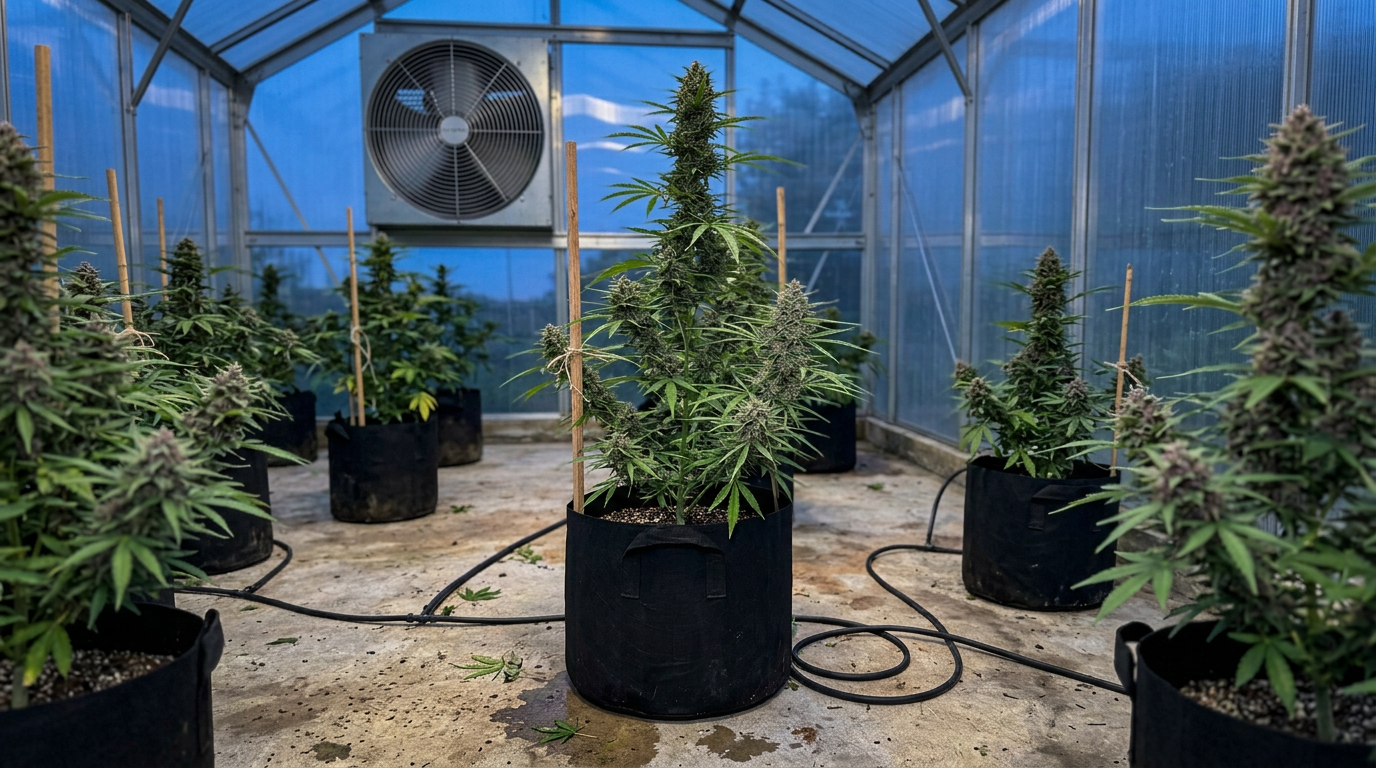
Purple Haze’s flowering time is 9-12 weeks indoors for regular genetics, making it one of the longer-flowering strains in the sativa category. The feminized version from ILGM runs approximately 9 weeks, while the Fast Buds autoflower completes in 63-70 days, a substantially faster option for growers who want the terpene profile without the timeline commitment. The growing difficulty is honestly closer to moderate-to-challenging than straightforward moderate. The primary issue is height. This plant wants to grow tall, an outdoor grower on ILGM forums reported their plant hitting 6.5 feet after starting late March and transplanting in June, without any significant training intervention. Indoors, that kind of vertical growth requires either aggressive LST (low-stress training) and topping from early vegetation, or a grow space with 8+ foot ceilings. Neither is beginner-friendly.
Outdoors, Purple Haze performs better. The natural vertical space accommodates the sativa stretch, and the plant’s resilience to nutrient fluctuation makes outdoor growing more forgiving. Regular genetics are particularly well-suited to outdoor cultivation in warm, Mediterranean-style climates with long summers. Yield expectations should be calibrated honestly. Regular Purple Haze runs low-to-average compared to modern hybrids, this is a strain that was bred before yield optimization became the primary breeding goal. The feminized ILGM version improves on this under optimal conditions, but growers on r/microgrowery consistently note that modern strains will outproduce it gram-for-gram. You’re growing Purple Haze for the terpene profile and the high quality, not for harvest weight. The buds can trend fluffy rather than dense, which is typical of Haze-family genetics. Harvest indicators: watch the trichomes carefully. The amber-to-cloudy ratio will tell you more than the calendar. Given the long flowering time, patience is genuinely rewarded here. If this terpene profile interests you, get Purple Haze seeds here. Discreet shipping with germination guarantee.
Best Ways to Consume Purple Haze
The recommended vaporization temperature for Purple Haze is 170-185°C (338-365°F) to preserve its full terpene profile, particularly the more volatile ocimene and limonene fractions that contribute the floral and citrus notes. Vaporizing is my preferred method for this strain, specifically because the terpene complexity, that grape-citrus-floral layering, comes through most clearly at lower temperatures. At 170°C you get the full aromatic experience; push above 200°C and you start burning off the lighter terpenes before they reach you. Smoking in a clean glass piece is the traditional approach and still delivers the characteristic flavor well, though some of the more delicate floral notes from the ocimene get lost in combustion. For the cultural experience of Purple Haze as it was originally consumed in the late 60s, there’s something to be said for that.
For edibles, the energetic sativa character translates reasonably well, though the effect profile shifts toward longer duration and heavier body sensation as is typical with oral consumption. Jessica Reed put together an edibles guide that covers the best approaches for sativa-dominant strains, worth checking if you’re curious about that route. Concentrates and live resin preserve the terpene profile exceptionally well and are worth considering if you want the most expressive version of that grape-citrus-floral aromatic signature.
Purple Haze vs Similar Strains
Purple Haze shares its Haze lineage with several other classic sativas, making comparisons within the family particularly instructive for understanding what makes each strain distinct.
Purple Haze vs Jack Herer
Jack Herer shares the Haze genetic heritage but takes a sharply different terpene direction, terpinolene-dominant rather than myrcene-dominant, which produces a more piney, herbal aroma and a slightly more clear-headed, less euphoric effect profile. Jack Herer typically runs 18-23% THC with a 8-9 week flowering time, making it comparably timed but faster to finish. Choose Purple Haze for the fruity, euphoric high; choose Jack Herer when you want a more focused, energetically clean sativa experience.
Purple Haze vs Sour Diesel
Sour Diesel is the other classic sativa that Purple Haze gets compared to most often, and the contrast is instructive. Sour Diesel runs caryophyllene-dominant with that sharp, fuel-forward aroma and a more cerebral, almost racy energy. Purple Haze is warmer, fruitier, and more euphoric where Sour Diesel is sharper and more mentally stimulating. Both sit in the 18-20% THC range, but Sour Diesel’s 10-week flowering time and better yield potential make it the more practical grow for most cultivators.
Purple Haze vs Durban Poison
Durban Poison is a pure sativa landrace with terpinolene as its dominant terpene, producing an even more energetic, almost racy effect compared to Purple Haze’s warmer euphoria. Durban Poison typically runs 20% THC with a faster 8-9 week flowering time and better yield characteristics than Purple Haze. The flavor profiles are completely different, Durban Poison is anise-sweet and herbal where Purple Haze is grape-citrus-floral. Choose Durban Poison for pure energetic stimulation; choose Purple Haze when you want the euphoric, creative warmth.
| Strain | Type | THC | Key Effects | Growing |
|---|---|---|---|---|
| Purple Haze | Sativa | 18-20% | Euphoric, Creative, Uplifting | Moderate-Hard, 9-12 wks |
| Jack Herer | Sativa-Dom | 18-23% | Focused, Clear-headed, Happy | Moderate, 8-9 wks |
| Sour Diesel | Sativa-Dom | 18-20% | Energetic, Cerebral, Uplifting | Moderate, 10 wks |
| Durban Poison | Pure Sativa | ~20% | Energetic, Alert, Stimulating | Easy-Moderate, 8-9 wks |
Potential Side Effects and Precautions
The most common side effects of Purple Haze are dry mouth and dry eyes, reported by a majority of users regardless of consumption method. These are standard THC-driven effects and are easily managed with hydration. At 18-20% THC, anxiety and mild paranoia are real risks for new users or those with low THC tolerance. The sativa character means the mental effects are front-and-center, there’s no heavy indica sedation to buffer an uncomfortable experience. If you’re anxiety-prone, this is not the strain to start with. A CBD-rich alternative or a lower-THC option would be a safer entry point. Headaches are occasionally reported, typically from overconsumption rather than the strain itself. The sativa energy can also translate to racing thoughts in sensitive individuals, which is worth knowing before an evening session. Users on stimulant medications for ADHD or anxiety should approach with particular caution, the stimulating sativa profile can interact unpredictably with those medications. Always consult a healthcare provider in those circumstances.
Frequently Asked Questions
What are the parent strains of Purple Haze?
Purple Haze is descended from a Haze parent crossed with a purple indica variety. The Haze genetics contribute the cerebral sativa character and complex terpene profile, while the purple indica parent introduces the anthocyanin-driven color expression and the fruity grape notes in the aroma. The exact purple parent varies by seed bank and phenotype selection.
Why does Purple Haze grow so tall, and how do I manage it indoors?
Purple Haze inherits its extreme vertical growth from its Haze genetics, pure sativa lineages evolved in equatorial regions where upward growth is a competitive advantage. Indoors, this means plants can reach 6+ feet without intervention. Aggressive topping at the 4th-5th node and LST from early vegetation are essential. Grow spaces with less than 8 feet of ceiling height will struggle with this strain. The autoflower version from Fast Buds is a more manageable alternative for height-restricted grows.
Is Purple Haze good for creative work and focus?
Purple Haze is one of the more consistently cited strains for creative work, with Many users reporting creativity as a primary effect. The combination of euphoria and mental energy, driven by the limonene and myrcene terpene interaction, creates a state that many artists, writers, and musicians find conducive to creative flow. It’s less useful for analytical focus tasks; the euphoric quality can make structured work harder.
How does the autoflower version compare to the regular Purple Haze?
The Fast Buds autoflower version completes in 63-70 days versus 9-12 weeks for regular genetics, making it significantly faster. The autoflower won four titles at the 2025 Autoflower World Cup including Best Sativa and Highest THC. Trade-offs include somewhat fluffier buds and average rather than high yields. The terpene profile and effect quality are largely preserved, making it a practical choice for growers who want the Purple Haze experience without the extended timeline.
What terpenes give Purple Haze its grape and berry flavor?
The grape and berry flavor in Purple Haze comes primarily from the combination of myrcene (0.45%), which contributes earthy, fruity notes, and the anthocyanin compounds responsible for the purple coloration, which also influence aroma. Ocimene (0.05%) adds the floral sweetness, while limonene (0.18%) provides the citrus-tangerine brightness on the exhale. Caryophyllene (0.18%) contributes the spicy back-note that prevents the flavor from being purely sweet.
Purple Haze is a strain worth growing and consuming with clear expectations: you’re trading yield efficiency and grow ease for one of the most distinctive terpene profiles in the sativa category. The myrcene-limonene-caryophyllene combination produces an effect profile that’s genuinely hard to replicate with modern hybrids, and the grape-citrus-floral flavor is more complex than most of what’s currently on dispensary shelves. Go in knowing the flowering time is long, the plant grows tall, and the yields are modest, and you’ll be rewarded with a high-quality end product that justifies all of it.
Related Strains You Might Enjoy
If you enjoyed this strain, you might also like Sour Diesel, Jack Herer, Blue Dream, Gorilla Glue, AK-47, and Mimosa.