
Kush Mints is an indica-dominant hybrid cannabis strain with 27.5-38.36% THC and limonene-dominant terpenes, known for its menthol flavor profile and relaxed and euphoric effects. Commonly chosen by those managing anxiety, depression.
Quick Facts: Kush Mints
| Strain Type: | Hybrid |
| THC Content: | 27.5-38.36% |
| CBD Content: | <1% |
| Primary Effects: | Relaxed, Euphoric, Happy, Uplifted, Creative |
| Flavors: | Menthol, Mint, Ammonia, Pine |
| Growing Difficulty: | Moderate |
| Flowering Time: | 82 days |
| Best For: | Anxiety, Depression |
Last updated: March 9, 2026
My friend Maya texted me out of nowhere: “You need to try Kush Mints. Like, tonight.” She’s the science one, so when she gets excited about a terpene profile, I pay attention. She explained the limonene content was doing something unusual, almost decongestant-like, and honestly that sold me before I even smelled it. Kush Mints is an indica-dominant hybrid cannabis strain crossed from Animal Mints and Bubba Kush, with THC levels ranging from 27.5% to 38.36%. With over 500 community reviews averaging 4.64 out of 5 stars, this strain has built a serious reputation for its unmistakable minty-earthy aroma and deeply relaxing yet euphoric effects.
Effects and Experience
Kush Mints’ primary effects are relaxation and euphoria, with onset typically within 10 to 15 minutes of consumption. The experience leans physically heavy but keeps enough mental brightness to avoid full couchlock territory, at least in the first hour. Here’s how it tends to play out. You take a hit, and within about 10 minutes there’s this warm wave that starts in your shoulders and works its way down. The euphoria kicks in around the same time, not a racy, heart-pounding kind of happy, but a genuine “everything is fine and I don’t need to check my phone” kind of happy. Among the 500+ community reviews I referenced, relaxation was the most commonly reported effect (21% of mentions), followed by euphoria at 17% and happiness at 15%. That’s a pretty consistent picture. The creative bump is real but mild, A few users report feeling it. Don’t expect a sudden urge to write a novel. Expect to finally finish the show you’ve been putting off for three weeks.
“Kush Mints is what I reach for when the week has been genuinely terrible and I need to decompress without going full zombie mode. It relaxes everything, my shoulders, my jaw, my internal monologue, but I’m still present enough to have a real conversation or enjoy a good playlist. It’s the rare strain that feels both medicinal and fun at the same time.”
, Jessica Reed, Cannabis Lifestyle Writer & Product Reviewer
The comedown is gentle. No sudden crash, no anxiety spike. It fades the way a good evening fades, gradually, without drama. This makes it a strong candidate for what I’d call a “great early evening strain,” which is exactly how experienced users describe it. Not a wake-and-bake choice. Not a midnight sedative. That sweet spot right after dinner.
| Effect Category | Intensity (1-10) | Onset | Duration |
|---|---|---|---|
| Euphoria | 8/10 | 10–15 min | 2–3 hrs |
| Relaxation | 9/10 | 10–15 min | 3–4 hrs |
| Creativity | 5/10 | 20–30 min | 1–2 hrs |
| Pain Relief | 8/10 | 15–20 min | 3–4 hrs |
| Appetite | 6/10 | 30–45 min | 2–3 hrs |
| Sedation | 7/10 | 45–60 min | 2–3 hrs |
Appearance, Aroma and Flavor Profile
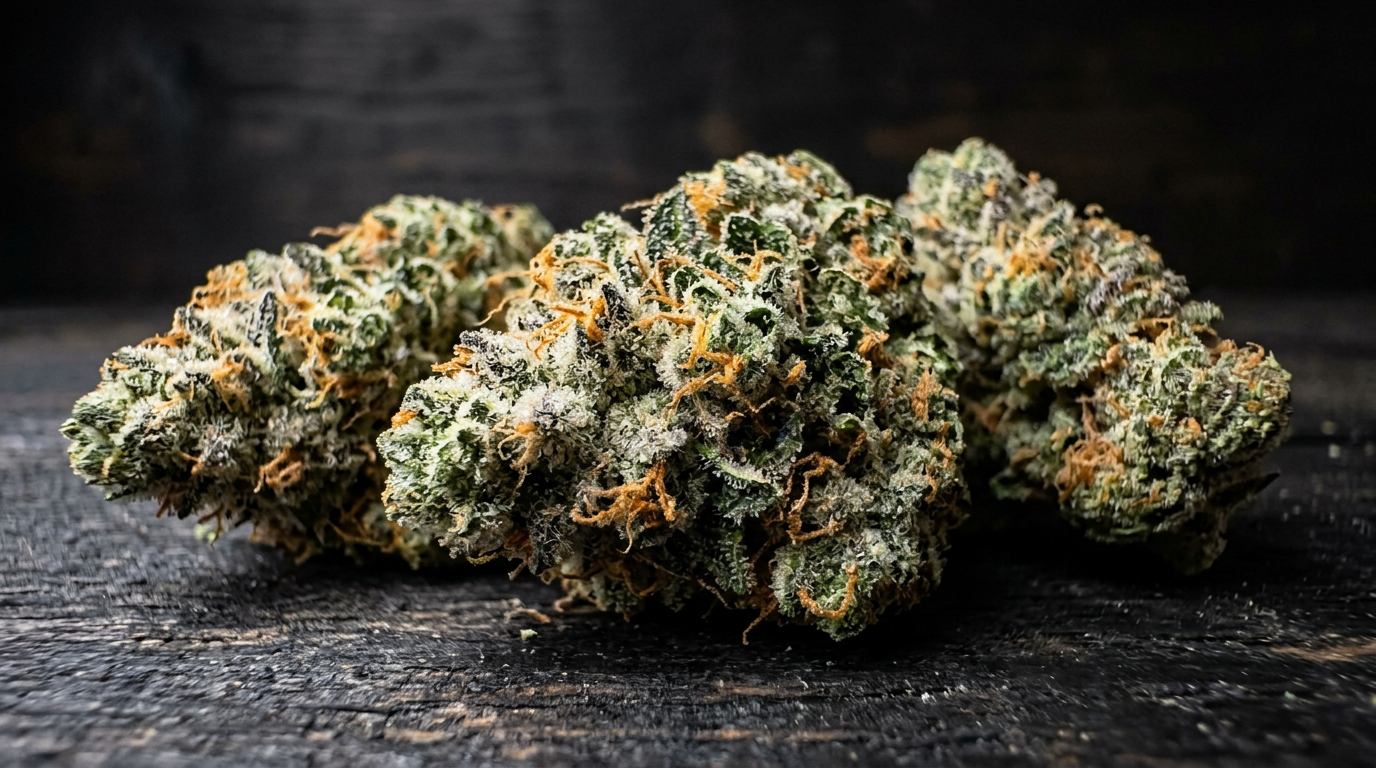
The dominant terpene in Kush Mints is limonene at 0.56%, responsible for its bright citrus edge and that oddly decongestant-like quality that users keep mentioning. Caryophyllene (0.47%) adds a peppery, spicy backbone, while linalool (0.27%) brings a subtle floral calm underneath it all. Myrcene and pinene round out the profile with earthy and pine undertones. The buds are dense and sticky, the kind that leave residue on your fingers. Well-cured batches (Grassroots is the name that comes up most often in community reviews) show deep green nugs with visible trichome frost and a structure that feels almost too pretty to break up. Some users have described the nug size as “ridiculous”, and honestly, that tracks. The aroma is the thing that gets people. Opening a well-cured batch reportedly hits you immediately with a strong, sweet, minty smell, not like a candy mint, more like cool earth and menthol had a very sophisticated baby. The mint/menthol note is consistently described as unique to this strain. It’s not subtle. Earthy and sweet cake notes follow underneath, with hints of pine and citrus from the limonene. The flavor on the exhale mirrors the aroma closely, minty, earthy, with a sweet finish that lingers longer than you’d expect. It’s a genuinely distinctive smoke.
Medical Benefits and Therapeutic Uses
The most commonly reported medical use for Kush Mints is anxiety relief, according to community data, with Some users reporting it for that purpose. Depression follows at 27%, and there are specific accounts of meaningful relief from PTSD symptoms, one reviewer described it as a permanent fixture in their treatment lineup. The combination of high THC (27.5%–38.36%) with a limonene-dominant terpene profile is worth paying attention to here. Research published on PubMed suggests that limonene may have anxiolytic properties, which could help explain why anxiety relief is the top-reported benefit. This isn’t just a THC percentage story, the terpene stack is doing real work. The linalool content (0.27%) adds a calming, floral element that complements the body relaxation from the indica genetics. Some users have specifically noted that the terpene profile matters more than the THC number for therapeutic effects, and with Kush Mints, that’s a perspective worth taking seriously. For pain relief, the combination of high THC and the body-heavy indica lean makes it a reasonable option for muscle tension, chronic discomfort, or end-of-day physical fatigue. One community member noted it was particularly effective for PTSD symptom management in a way that felt sustainable. Dosage note: with THC potentially reaching the upper 30s percentage-wise, new users should start with a single small hit and wait a full 20 minutes before deciding if they need more. This is not a beginner’s first strain.
Disclaimer: This article is for informational purposes only and does not constitute medical advice. Always consult with a qualified healthcare professional before using cannabis for medical purposes.
Best Ways to Consume Kush Mints
The recommended vaporization temperature for Kush Mints is between 185°C and 210°C (365°F–410°F) to preserve its terpene profile, particularly the limonene and caryophyllene that make this strain’s flavor so distinctive. Vaping at the lower end of that range (around 185°C–190°C) is where the mint and citrus notes shine brightest. You get the full flavor experience without burning off the more delicate terpenes too quickly. This is my personal preference, a clean, flavorful vapor that actually tastes like what the strain smells like. Smoking in a clean glass piece is a close second. The flavor comes through beautifully, and the density of the buds means they burn slowly and evenly. Rolling works too, but you’ll lose some of the more nuanced mint notes to combustion heat.
💡 Quick tip: One experienced user mixed Kush Mints with a daytime-friendly strain for a more balanced effect, great if you want the relaxation without the full evening-wind-down vibe.
For edibles, the high THC content means you want to be very precise with dosing. The effects are already potent when smoked, multiply that delay and intensity with edibles and you’re in a different situation entirely. I’ll just say: start with half of whatever you think you need. Actually, a quarter. Concentrates made from well-cured Kush Mints flower can be exceptional, the terpene-forward profile translates beautifully into live resin or rosin. If you see Kush Mints live resin at your dispensary, that’s worth picking up.
Origins and Genetics of Kush Mints
Kush Mints is a cross between Animal Mints and Bubba Kush, developed by Masonic Seed Co out of Los Angeles (also credited to Nice Seeds). Masonic Seed Co has an award-winning track record with strains like Wilson and Banana God, so this wasn’t an accidental hit. Animal Mints itself is a complex hybrid bringing minty, fuel-like characteristics and strong euphoric effects. Bubba Kush contributes the deep indica body relaxation, the dense bud structure, and that earthy sweetness that grounds the whole flavor profile. The combination produced something that kept the best of both parents, the distinctive mint aroma from Animal Mints and the physical weight from Bubba Kush, while adding a brightness from the limonene-forward terpene profile that neither parent is particularly known for. The strain also goes by Kush Mintz and Kush Mint, so don’t be confused if you see it listed under those names. Same genetics, same experience, when the cure is right. It became popular partly through word of mouth in the California market and partly because that aroma is genuinely hard to forget. Once you smell a well-cured batch, you know exactly what you’re looking at the next time you encounter it.
What the Community Says About Kush Mints
Among community platform 500+ reviews averaging 4.64 out of 5, the most consistent theme isn’t the THC percentage, it’s the aroma. Multiple reviewers specifically described being hit in the face by the smell the moment they accessed the flower. That sensory immediacy is a recurring detail that shows up across reviews in a way that feels genuine rather than hype. Several Reddit threads highlight the quality variability problem with this strain. One user described a $55 purchase from a specific producer as dry, mostly stem and seed, a genuine waste. The same community members who gave Grassroots-grown Kush Mints a 10/10 were the ones warning loudest about other producers. Producer matters more with this strain than with most. A medical user who reported using Kush Mints for PTSD management described it as a permanent part of their routine, not just something they tried once. That kind of consistent therapeutic loyalty shows up in the data too, with anxiety and depression relief being the top two medical use cases across community reports. One detail I found genuinely interesting: a reviewer noted that the limonene in this strain behaved almost like a decongestant. Maya would love that observation, she’s always saying the terpene science on this strain deserves more attention than it gets.
Growing Kush Mints: Complete Guide
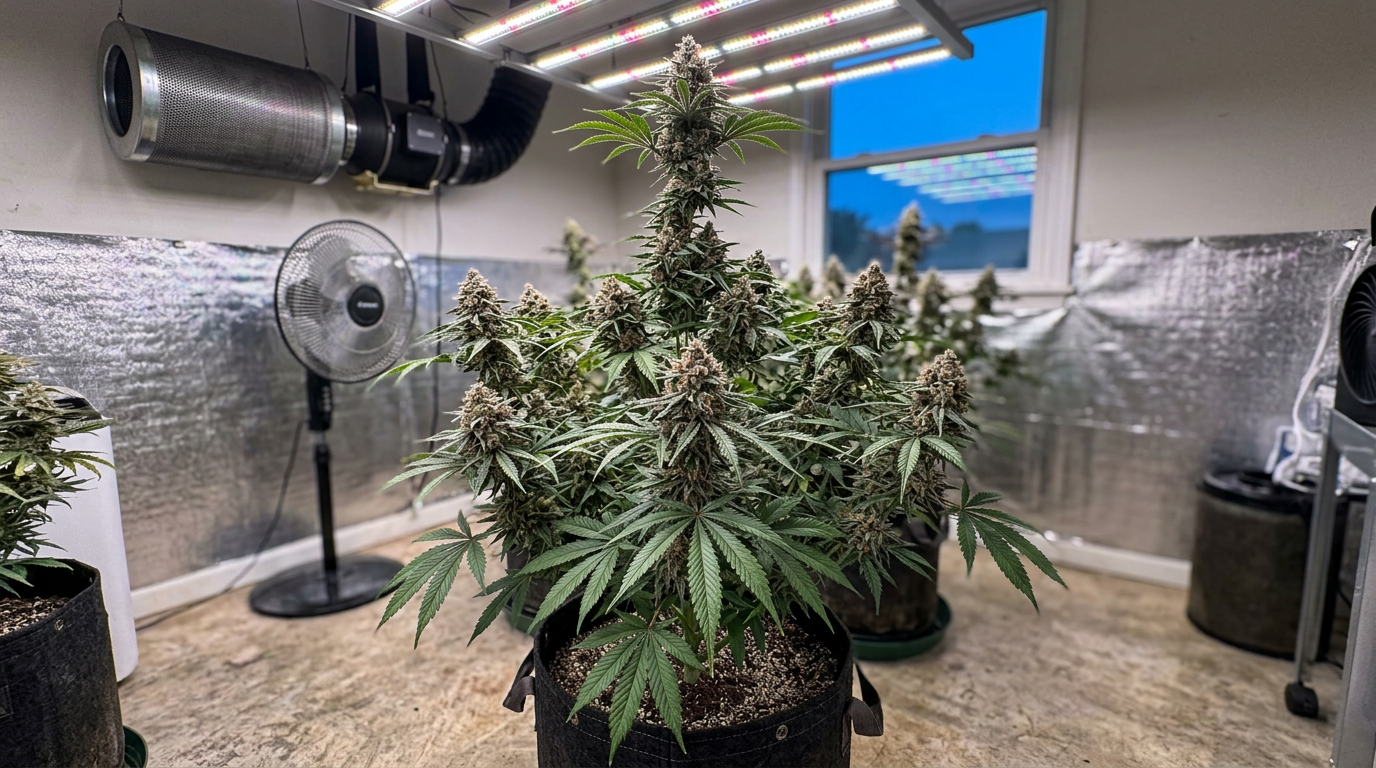
Kush Mints’ flowering time is approximately 82 days (around 11–12 weeks) indoors, making it a longer-than-average flowering strain that rewards patient growers. The biggest challenge, and growers on Reddit are consistent about this, is the extreme stretch during the flowering phase. Plants go significantly taller than you’d expect. One grower noted they had to flip to flower earlier than planned just to manage the height. If you’re working with limited vertical space, that’s a real problem you need to plan for.
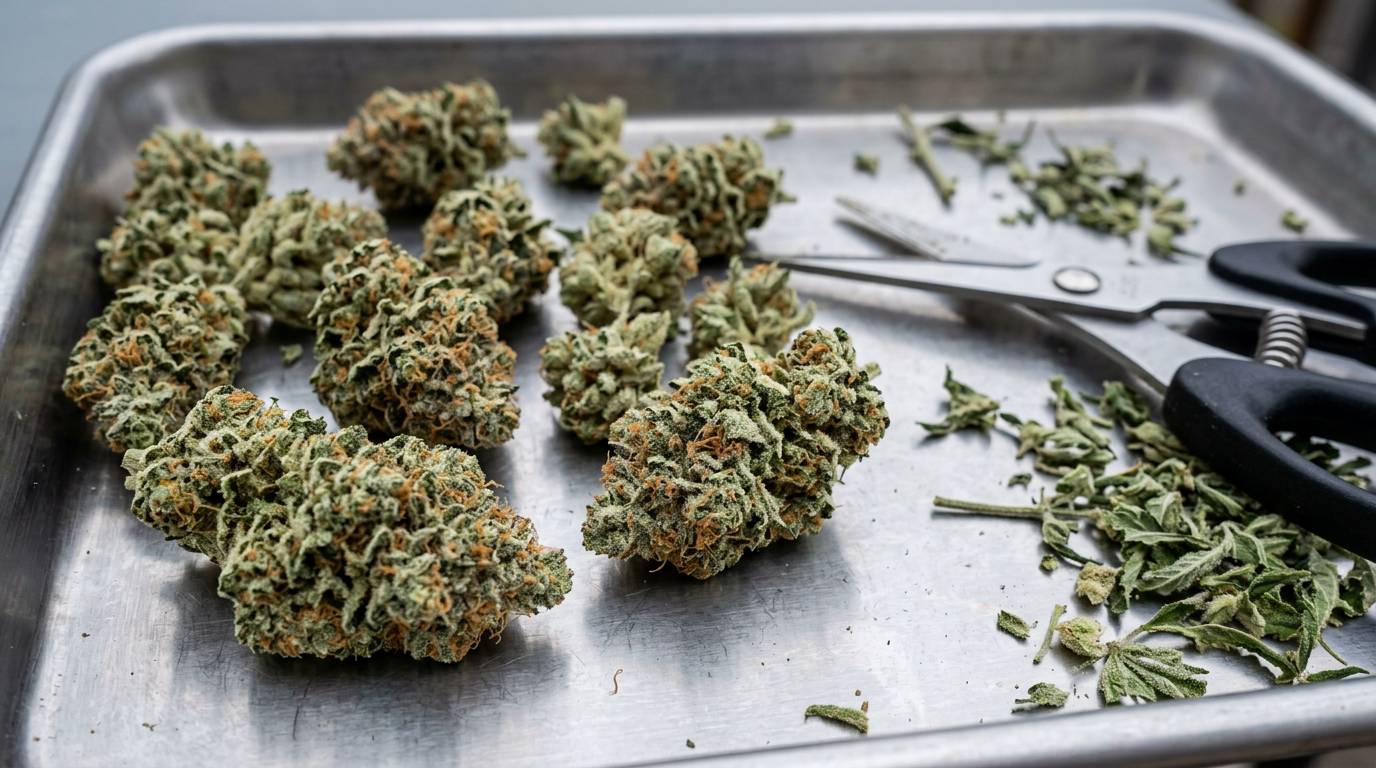
Topping and LST (low-stress training) are strongly recommended. Adding perlite or vermiculite to your substrate improves gas-to-water ratio and helps manage root health through the longer flowering period. Difficulty level sits at intermediate to advanced, this isn’t a strain for a first-time grower. Yields are reported as high when plants are properly trained and given adequate space, though exact gram-per-square-meter figures aren’t consistently verified across grow logs. The cure is critical, multiple growers emphasized that a slow, controlled dry and cure is what separates a 10/10 batch from a disappointing one. Rush the cure and you lose the mint. It’s that simple. Want to grow Kush Mints yourself? Check our seed collection, discreet packaging and germination guarantee included.
Kush Mints vs Similar Strains
Kush Mints shares genetic roots with its parent strains and has a flavor profile that overlaps with several other indica-dominant hybrids. Here’s how it stacks up against the closest comparisons.
Kush Mints vs Do-Si-Dos
Do-Si-Dos shares OG Kush genetics in its lineage and delivers a similarly heavy body effect, but it leans harder into the sedative end of the spectrum. Where Kush Mints keeps some mental brightness through its limonene content, Do-Si-Dos trends toward couchlock more quickly. If you want the relaxation with a bit more functional headspace, Kush Mints is the call. If you’re trying to sleep, Do-Si-Dos might edge it out.
Kush Mints vs Biscotti
Biscotti also comes from a Cookies-adjacent lineage and hits a similar THC range, but its terpene profile skews toward caryophyllene and limonene in a way that produces a more cerebral, creative effect. Kush Mints is more physically grounding. Both are great for evening use, but Biscotti suits social settings slightly better, while Kush Mints is the one you reach for when you genuinely need to decompress alone.
Kush Mints vs Ice Cream Cake
Ice Cream Cake shares the indica-dominant hybrid structure and that sweet, dessert-like flavor profile. Ice Cream Cake’s sedation tends to arrive faster and heavier, while Kush Mints offers a longer window of euphoric functionality before the body heaviness takes over. The mint note in Kush Mints is also genuinely unique, Ice Cream Cake doesn’t have anything close to that aroma signature.
| Strain | Type | THC | Key Effects | Growing |
|---|---|---|---|---|
| Kush Mints | Indica-dominant Hybrid | 27.5–38.36% | Relaxed, Euphoric, Happy | Intermediate+ |
| Do-Si-Dos | Indica-dominant Hybrid | 19–30% | Sedated, Relaxed, Euphoric | Intermediate |
| Biscotti | Indica-dominant Hybrid | 21–26% | Creative, Relaxed, Happy | Intermediate |
| Ice Cream Cake | Indica-dominant Hybrid | 20–25% | Sedated, Happy, Relaxed | Moderate |
Potential Side Effects and Precautions
The most common side effects of Kush Mints are dry mouth and dry eyes, which are standard with high-THC strains and easily managed with water and eye drops. Some users report mild dizziness, particularly at higher doses, which, given the THC range, is a real possibility if you’re not careful. The THC ceiling here is genuinely high. 38.36% is not a casual number. Anxiety and paranoia are possible side effects for anyone sensitive to THC, or for experienced users who simply take too much. This is especially relevant because the smooth, minty flavor can make it easy to overconsume without realizing it. New users, people with anxiety disorders, and anyone with low THC tolerance should approach Kush Mints with real caution. One small hit, then wait. The National Institute on Drug Abuse has resources on cannabis use and potential risks that are worth reading if you’re new to high-THC strains.
Frequently Asked Questions
What strains make up Kush Mints?
Kush Mints is a cross between Animal Mints and Bubba Kush. Animal Mints contributes the distinctive minty aroma and euphoric effects, while Bubba Kush brings the indica body relaxation and dense bud structure. The strain was developed by Masonic Seed Co and Nice Seeds out of Los Angeles and is also known as Kush Mintz or Kush Mint.
How strong is Kush Mints compared to other strains?
Kush Mints is considered a very high-THC strain, with lab-tested results ranging from 27.5% to 38.36%. This puts it at the upper end of the potency spectrum, significantly stronger than average strains that typically test between 15% and 25% THC. Experienced consumers should still start low; new users should approach it with significant caution.
Why does Kush Mints smell like mint?
The distinctive mint and menthol aroma in Kush Mints comes primarily from its Animal Mints parent strain genetics combined with its specific terpene expression. The limonene-dominant terpene profile (0.56%) adds a citrus brightness, while the overall genetic expression produces that cool, minty character that users consistently describe as unique to this strain. It’s not a common terpene combination, which is why the smell is so recognizable.
Is Kush Mints good for anxiety?
Community data shows that 36% of Kush Mints users report using it for anxiety relief, making it the most commonly cited therapeutic use. The limonene terpene content may contribute to its anxiolytic properties. That said, the very high THC content can trigger anxiety in sensitive users or at higher doses, so paradoxically, it can help anxiety when used carefully and worsen it if you overdo it.
How long does Kush Mints take to flower?
Kush Mints has a flowering time of approximately 82 days (around 11–12 weeks) when grown indoors. This is longer than many hybrid strains, which typically flower in 8–9 weeks. The extended flowering period is worth it for the yield and potency, but growers need to plan for significant vertical stretch during the early flowering phase, often requiring earlier flipping and active training techniques.
If you’re looking for a strain that earns its reputation through aroma alone, and then delivers on effects, Kush Mints is genuinely worth seeking out. Just be picky about the producer. The difference between a well-cured batch and a mediocre one is the difference between a 10/10 experience and a $55 headache. Buy from growers who take the cure seriously, start with less than you think you need, and save it for an evening when you actually have nowhere to be.
Related Strains You Might Enjoy
If you enjoyed this strain, you might also like Gorilla Glue, Amnesia Haze, Lemon Cherry Gelato, Zoap, and Sunset Sherbet.