
Amnesia Haze is a sativa cannabis strain with 20-25% THC and myrcene-dominant terpenes, known for its citrus flavor profile and energetic and uplifting effects. Commonly chosen by those managing depression, fatigue, stress.
Quick Facts: Amnesia Haze
| Strain Type: | Sativa |
| THC Content: | 20-25% |
| CBD Content: | 0.1-0.5% |
| Primary Effects: | Energetic, Uplifting, Creative, Euphoric, Focused |
| Flavors: | Citrus, Earthy, Herbal, Spicy, Woody |
| Growing Difficulty: | Easy |
| Flowering Time: | 10-12 weeks |
| Best For: | Depression, Fatigue, Stress, Adhd, Anxiety |
Last updated: March 6, 2026
There’s something that happens when you hold a well-grown Amnesia Haze bud up to the light, the trichome density catches you off guard, almost translucent, like the plant spent every last bit of energy on resin production. That citrus-forward aroma hits before you even break the bud open, sharp and zesty with an earthy undercurrent that tells you exactly what the terpene lab data will confirm. Amnesia Haze is a sativa cannabis strain descended from the legendary Haze family, with THC levels of 20-25% and a terpene profile unusually dominated by terpinolene rather than the myrcene you’d expect from most popular strains. With 1,788 community ratings averaging 4.26 out of 5 stars, this strain has earned its reputation through chemistry, not just marketing.
Origins and Genetics of Amnesia Haze
Amnesia Haze traces its lineage directly to the Haze family, one of the most influential genetic lines in cannabis history. The Haze genetics that form its backbone originated in Santa Cruz, California in the 1970s, a cross of South Asian, South American, Thai, and Mexican landrace strains. Amnesia Haze emerged from Dutch breeding programs that refined this complex genetic base, with breeders including Barney’s Farm, Sensi Seeds, Royal Queen Seeds, and Zamnesia each developing their own phenotypes. The result of this multi-continental genetic heritage is a strain that expresses strongly sativa traits: tall structure, long internodal spacing, extended flowering time, and a cerebral effect profile that leans heavily into the euphoric and energetic. The Haze lineage also explains the terpinolene dominance, a terpene associated with uplifting, creative effects that appears far more commonly in sativa-dominant genetics than in indicas. What’s genuinely interesting from a breeding perspective is how different the phenotypic expression can be across breeders. Low-Key MTL Cannabis, for instance, has produced verified lab results of 24.5% THC with 3% total terpenes, an exceptionally high terpene load that explains why their version consistently gets praised for complexity of flavor. Meanwhile, other phenotypes from different breeders can express looser bud structure and slightly different aromatic profiles while maintaining the same core genetic identity. The strain also has a well-regarded autoflowering variant, which incorporates ruderalis genetics to reduce plant height to 50-100cm and compress the growth cycle, a practical option for growers without the vertical space that the regular version demands.
Appearance, Aroma and Flavor Profile
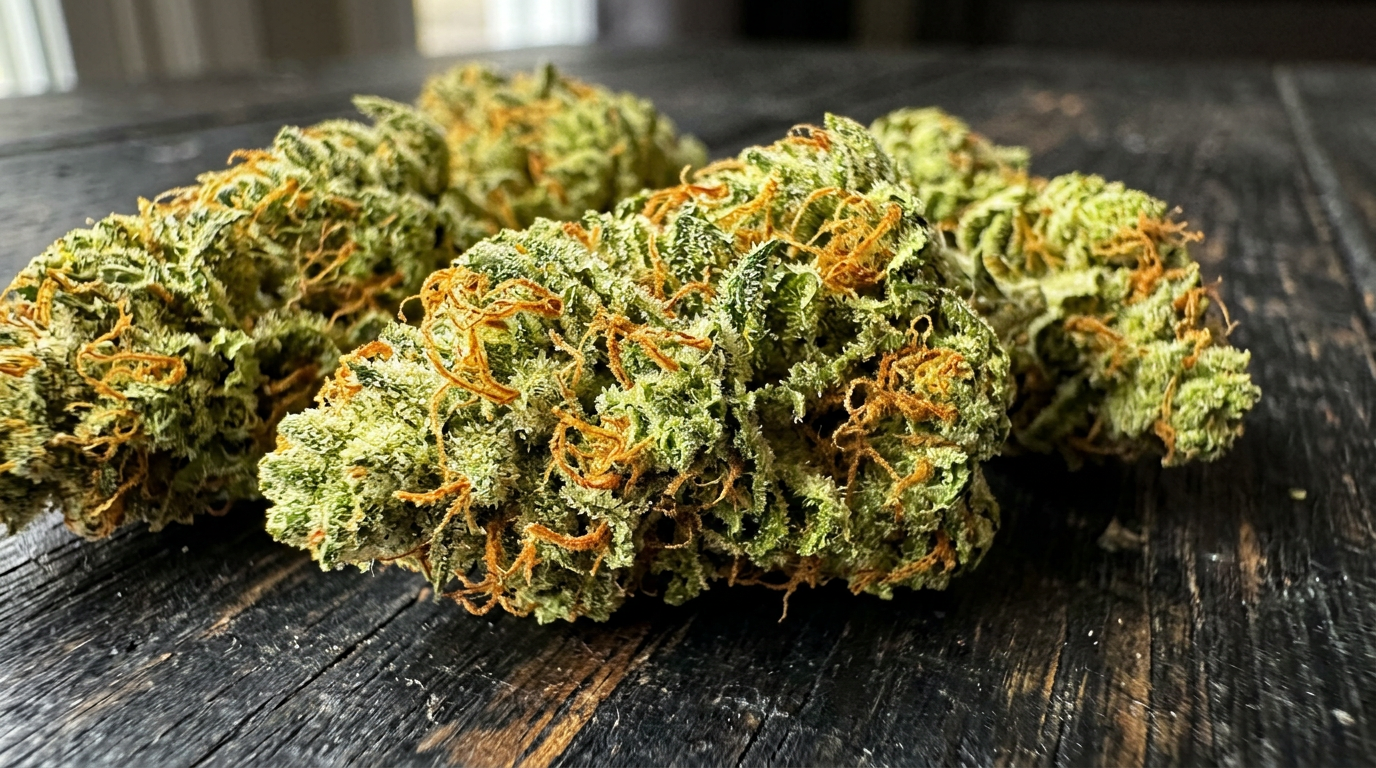
The dominant terpene in Amnesia Haze is terpinolene, responsible for its zesty, citrus-forward aroma with earthy and slightly herbal undertones. Supporting terpenes include myrcene at 0.39%, caryophyllene at 0.35%, and limonene at 0.31%, with smaller contributions from humulene at 0.13% and pinene at 0.10%. Visually, Amnesia Haze buds tend toward the elongated, airy structure typical of sativa genetics, not the dense, compact nugs you’d get from an indica-dominant strain. The trichome coverage is exceptional on well-grown specimens, creating that frosty, crystalline appearance that catches light beautifully. Colors range from medium to bright green, often with orange pistils threading through the bud structure. The aroma is where this strain genuinely distinguishes itself. Terpinolene delivers that zesty, almost citrus-candy top note, bright and energizing before you even consume anything. Limonene reinforces the lemon and citrus character, while myrcene adds an earthy, slightly herbal base that keeps the profile grounded. Caryophyllene contributes a subtle spicy, peppery edge that you notice most in the exhale. Humulene brings a faint woody, hoppy note that rounds out the complexity. On the palate, the flavor mirrors the aroma closely, citrus and herbal on the inhale, with that spicy caryophyllene warmth on the exhale and a woody, earthy finish that lingers pleasantly. One important caveat: this strain is unusually sensitive to drying and curing. A poor cure can dramatically alter the aromatic profile, sometimes in unpleasant ways. When it’s done right, the flavor complexity is genuinely remarkable. When it’s rushed, you lose most of what makes this strain worth growing.
Effects and Experience
Amnesia Haze’s primary effects are euphoria and uplifting energy, typically onset within 10-15 minutes of consumption. The experience is distinctly cerebral, this is not a strain that settles into your body first. It goes straight to the head. The onset is relatively quick for a sativa, with a wave of euphoria that community data shows Many users report as their primary experience. Happy effects top the list at Most users, followed by uplifted at 55%, energetic at 43%, and relaxed at 41%. That relaxed percentage is worth noting, the high THC content (20-25%) combined with the myrcene in the terpene profile creates enough physical ease to prevent the anxious edge that some pure sativas produce. The experience timeline runs roughly like this: the first 15-30 minutes bring that euphoric, almost giggly social energy. Peak effects hit around 45 minutes and can sustain for 2-3 hours with the right dose. The comedown is gradual rather than abrupt, a gentle landing rather than a cliff. Multiple experienced users describe the high as “really long lasting and actively enjoyable,” which tracks with what the terpinolene content predicts: this terpene is associated with sustained, clear-headed cerebral effects rather than the heavy sedation you’d get from a myrcene-dominant strain.
“What I find genuinely compelling about Amnesia Haze from a terpene science perspective is that terpinolene dominance, it’s relatively rare in commercially popular strains, and it produces a qualitatively different kind of sativa high than you get from limonene-forward or pinene-forward genetics. The clarity is sharper, the creative window feels wider, and there’s less of that wired, jittery edge. For daytime creative work, the chemistry here is almost purpose-built.”
, Maya Chen, Cannabis Science Writer & Terpene Specialist
Best times of day: morning through early afternoon. This is not an evening strain unless you want to be wide awake at midnight. The energetic, focused effects make it well-suited for creative projects, social situations, or any task requiring sustained mental engagement.
| Effect Category | Intensity (1-10) | Onset | Duration |
|---|---|---|---|
| Euphoria | 9/10 | 10-15 min | 2-3 hours |
| Relaxation | 4/10 | 30-45 min | 1-2 hours |
| Creativity | 8/10 | 15-20 min | 2-3 hours |
| Pain Relief | 5/10 | 20-30 min | 1-2 hours |
| Appetite | 3/10 | 45-60 min | 1 hour |
| Sedation | 2/10 | 60+ min | 30-60 min |
Medical Benefits and Therapeutic Uses
The most commonly reported medical use for Amnesia Haze is stress relief, cited by Some users, followed by depression at 28%, anxiety at 24%, pain at 20%, and fatigue at 13%. The stress and depression applications make biochemical sense. The combination of 20-25% THC with a terpinolene-dominant, limonene-containing profile creates conditions for meaningful mood elevation. Research published in the National Library of Medicine suggests that limonene has demonstrable anxiolytic and antidepressant properties in preclinical models, and its presence alongside terpinolene may contribute to the mood-lifting, energizing character that makes this strain useful for depressive states characterized by low energy and anhedonia. The fatigue application is straightforward, the energetic, uplifting effects are essentially the pharmacological opposite of fatigue. For people dealing with tiredness that has a psychological component (rather than purely physical exhaustion), the cerebral stimulation here can be genuinely effective. The ADHD application is more nuanced. Some users with ADHD report that the focused, engaged quality of the Amnesia Haze high helps them sustain attention on tasks. This is consistent with what we know about certain sativa-dominant profiles and dopaminergic activity, though individual responses vary considerably. I’d always recommend starting with a very low dose if you’re exploring this for ADHD, the high THC content can tip into overstimulation at higher doses. The anxiety listing deserves honest context. Anxiety appears in both the “helps with” and the “side effects” categories for this strain, because the high THC content and sativa character can exacerbate anxiety in sensitive individuals or at high doses. If anxiety is your primary concern, a lower-THC option or a strain with higher CBD content would be a more reliable starting point. For those whose anxiety is secondary to depression or stress, lower doses may provide relief.
Disclaimer: This article is for informational purposes only and does not constitute medical advice. Always consult with a qualified healthcare professional before using cannabis for medical purposes.
What the Community Says About Amnesia Haze
Among community platform 1,788 reviews, the quality variation between sources comes up repeatedly, and it’s one of the most useful pieces of information for anyone buying rather than growing this strain. Several experienced users note that the effects change dramatically depending on cure time, with a rushed cure producing a noticeably flatter, less complex experience than a properly dried and cured batch. Across multiple grow logs, cultivators working with the ILGM autoflower version reported harvests around 212 grams from a single plant after seven days of hang-drying, solid results that reflect both the strain’s yield potential and the grower’s patience with the drying process. The Royal Queen Seeds autoflower version showed up in first-time grow accounts with positive flavor notes but looser bud structure, which is consistent with what I’d expect from a sativa-dominant autoflower under less-than-ideal conditions. One detail from community data that genuinely surprised me: users consistently describe a “giggly, social” quality to the high that makes it unusually good in group settings. That tracks with the euphoria and happy ratings at the top of the effect frequency data, this is not an introspective, solo strain. The social dimension seems to be a genuine and reproducible feature of the terpene profile.
Growing Amnesia Haze: Complete Guide
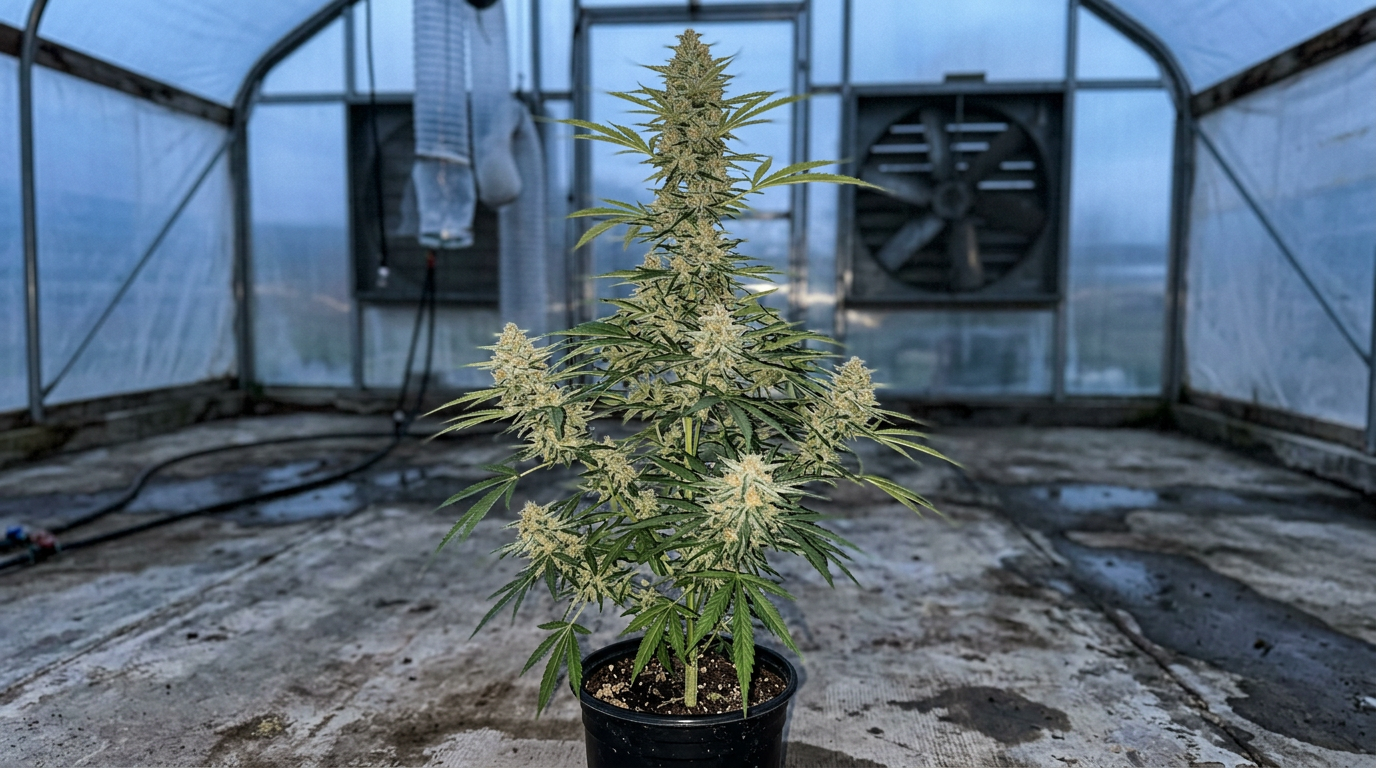
Amnesia Haze’s flowering time is 10-12 weeks indoors, making it one of the longer-flowering strains in regular cultivation, a commitment that rewards patient growers with exceptional terpene development and yield. This is an intermediate-to-advanced grow. The sativa dominance means significant vertical stretch during the vegetative phase, with plants reaching 5-6 feet under regular photoperiod conditions. Height management is the first challenge: topping early and applying low-stress training or a SCROG setup is essentially mandatory for indoor grows with standard ceiling heights. The autoflower version, which stays at 50-100cm, is a legitimate alternative for space-constrained situations. Climate requirements are specific. Optimal temperature sits around 25°C (80°F), and the plant is sensitive to environmental fluctuations. Good ventilation is critical, sativa genetics generally need strong airflow to prevent the humidity issues that can develop in a dense canopy. Keep relative humidity below 50% during flowering to protect the developing buds. The yield potential is real but requires patience. Growers working with regular genetics can expect 5-7 oz per plant under good conditions; autoflower versions typically come in at 3-5 oz. The Sensi Amnesia XXL version has a reputation for particularly strong growth behavior and harvest weight. The most critical variable, and I cannot emphasize this enough based on what community data shows, is the drying and curing process. Slow-drying for 7-10 days followed by a minimum 2-week cure in sealed glass containers is what separates an exceptional Amnesia Haze from a mediocre one. Rush this step and you lose the terpene complexity that makes the strain worth growing in the first place.
💡 Quick tip: If you’re new to growing sativas, the autoflower version of Amnesia Haze gives you the same terpene profile in a much more manageable plant size and timeline.
If this terpene profile interests you, get Amnesia Haze seeds here. Discreet shipping with germination guarantee.
Best Ways to Consume Amnesia Haze
The recommended vaporization temperature for Amnesia Haze is 170-185°C (338-365°F) to preserve its terpene profile, particularly the more volatile terpinolene and limonene compounds that define the citrus-forward character. Vaporizing is my preferred method for this strain specifically because the terpene complexity deserves to be experienced fully. At lower temperatures (around 170°C), you get the most aromatic, flavorful expression of the terpinolene and limonene. Pushing higher toward 185°C releases more of the caryophyllene and myrcene for a slightly warmer, spicier character. Smoking remains a popular option and delivers the full entourage effect, though some of the more delicate aromatic notes are lost to combustion heat. If you’re smoking, a clean glass piece gives you the best flavor read on the terpene profile. Edibles are viable but shift the experience significantly, the onset extends to 60-90 minutes, and the effects tend toward the more body-relaxed end of the spectrum as THC converts to 11-hydroxy-THC in the digestive process. For the energetic, creative daytime experience that defines this strain, inhalation methods are more reliable. Darrel, who’s grown several Haze-family strains, mentioned that the 3% total terpene content in well-grown Amnesia Haze makes it one of the more rewarding strains to experience through a quality vaporizer, the aromatic complexity at controlled temperatures is genuinely impressive.
Amnesia Haze vs Similar Strains
Amnesia Haze vs Jack Herer
Both strains share a terpinolene-dominant profile, which is actually rare enough to make this comparison particularly relevant. Jack Herer is a Haze-Skunk-Northern Lights cross with THC typically in the 20–25% range, slightly lower than Amnesia Haze’s 20-25%. Jack Herer flowers faster at 8-10 weeks and is generally considered more forgiving to grow. If you want the terpinolene-driven creative high in a more manageable plant, Jack Herer is the practical choice. Amnesia Haze delivers more intensity and terpene complexity when grown well.
Amnesia Haze vs Sour Diesel
Sour Diesel is the other great sativa benchmark, but the terpene profiles diverge significantly. Sour Diesel runs caryophyllene and myrcene-forward with that distinctive fuel character, while Amnesia Haze is citrus and terpinolene-dominant. Both offer energetic, cerebral highs in the 20-25% THC range, but the experiential quality is different, Sour Diesel has a more intense, almost aggressive energy, while Amnesia Haze is euphoric and social. Flowering time is similar. Choose Sour Diesel for focus and drive; choose Amnesia Haze for creative euphoria and social settings.
Amnesia Haze vs Green Crack
Green Crack is the pure energy strain, myrcene and caryophyllene-forward, with a more sharply stimulating effect profile and THC typically around 20–25%. Where Amnesia Haze is euphoric and expansive, Green Crack is focused and almost caffeinated in its energy. Green Crack also flowers faster at 7-9 weeks and is somewhat easier to grow. If productivity and sharp focus are the goal, Green Crack delivers more directly. For euphoric creativity with better flavor complexity, Amnesia Haze wins.
| Strain | Type | THC | Key Effects | Growing |
|---|---|---|---|---|
| Amnesia Haze | Sativa | 20-25% | Euphoric, Creative, Social | Difficult, 10-12 weeks |
| Jack Herer | Sativa-dominant | 18-23% | Creative, Focused, Uplifting | Moderate, 8-10 weeks |
| Sour Diesel | Sativa-dominant | 20-25% | Energetic, Focused, Cerebral | Moderate-Difficult, 10-11 weeks |
| Green Crack | Sativa | 17-25% | Energetic, Focused, Alert | Moderate, 7-9 weeks |
Potential Side Effects and Precautions
The most common side effects of Amnesia Haze are dry mouth and dry eyes, which are standard at this THC range and manageable with hydration. More notable for this specific strain: the high THC content combined with the sativa character creates real potential for anxiety, paranoia, or racing thoughts in sensitive individuals or at higher doses. This is not a beginner strain. The 20-25% THC range and the intensity of the cerebral effects can overwhelm users without tolerance, and the long duration of the high means there’s a sustained window of potential discomfort if the experience goes sideways.
People with a history of anxiety disorders, psychosis, or THC sensitivity should approach with significant caution or choose a CBD-balanced alternative. The anxiety-relief data from community reports reflects low-to-moderate doses, the same strain at high doses is more likely to trigger anxiety than resolve it.
Frequently Asked Questions
What makes Amnesia Haze’s terpene profile unusual compared to other sativas?
Amnesia Haze is terpinolene-dominant, which is relatively rare among popular commercial strains. Most high-profile sativas are myrcene or limonene-forward. Terpinolene is associated with a distinctive clear-headed, creative, uplifting effect profile that differs from the more stimulating limonene-driven high or the earthy myrcene base. The full terpene stack, terpinolene, myrcene at 0.39%, caryophyllene at 0.35%, and limonene at 0.31%, creates the complex citrus-spicy-earthy aroma that defines the strain.
How long does Amnesia Haze take to flower indoors?
Amnesia Haze flowers in 10-12 weeks indoors under standard photoperiod conditions, making it one of the longer-flowering strains in regular cultivation. The autoflowering version compresses this timeline significantly and keeps plant height to 50-100cm. Most experienced growers recommend waiting the full duration rather than harvesting early, the final weeks of flowering are when terpene development peaks.
Why does Amnesia Haze quality vary so much between sources?
Two factors drive quality variation: breeder phenotype differences and post-harvest handling. Multiple breeders, Barney’s Farm, Sensi Seeds, Royal Queen Seeds, Zamnesia, each maintain their own Amnesia Haze phenotype, and these can differ in bud density, terpene expression, and potency. Beyond genetics, this strain is unusually sensitive to the drying and curing process. A rushed cure can flatten the terpene profile dramatically, producing a noticeably inferior experience compared to a properly slow-dried, well-cured batch from the same genetics.
Is Amnesia Haze suitable for daytime use?
Amnesia Haze is primarily a daytime strain. The energetic, euphoric, and focused effects, driven by the terpinolene-dominant profile and 20-25% THC, are poorly suited to evening or pre-sleep use. Most users find the high sustains for 2-3 hours with clear-headed energy throughout. Morning through early afternoon is the optimal window, particularly for creative work, social activities, or any task requiring sustained mental engagement.
How does Amnesia Haze compare to other Haze-family strains for growing difficulty?
Amnesia Haze sits at the more demanding end of the Haze family. The long 10-12 week flowering time, significant vertical stretch (5-6 feet), and sensitivity to environmental conditions and post-harvest handling make it an intermediate-to-advanced grow. Other Haze-family strains like Super Lemon Haze offer slightly more forgiving growth characteristics with shorter flowering windows. Growers new to sativa cultivation often find the Amnesia Haze autoflower version a more manageable entry point.
Amnesia Haze rewards the patient and the precise, whether you’re growing it or consuming it. The terpinolene dominance gives it a genuinely distinctive effect profile within the sativa category, and the citrus-forward terpene complexity is among the most interesting I’ve encountered in a Haze-family strain. My practical recommendation: if you’re buying, prioritize source quality and ask about cure time. If you’re growing, treat the drying and curing process as seriously as the grow itself, that’s where the real chemistry happens.
Related Strains You Might Enjoy
If you enjoyed this strain, you might also like Purple Haze, Kush Mints, and Strawberry Cough.