Supercropping is a high-stress training (HST) technique where growers intentionally pinch and bend cannabis branches to damage inner fibers while keeping the outer skin intact. The controlled injury triggers a healing response that strengthens the branch, improves light penetration across the canopy, and can increase overall bud production at harvest.
Reviewed by Darrel Henderson, Cannabis Cultivation Specialist | Updated April 5, 2026
What Is Supercropping?
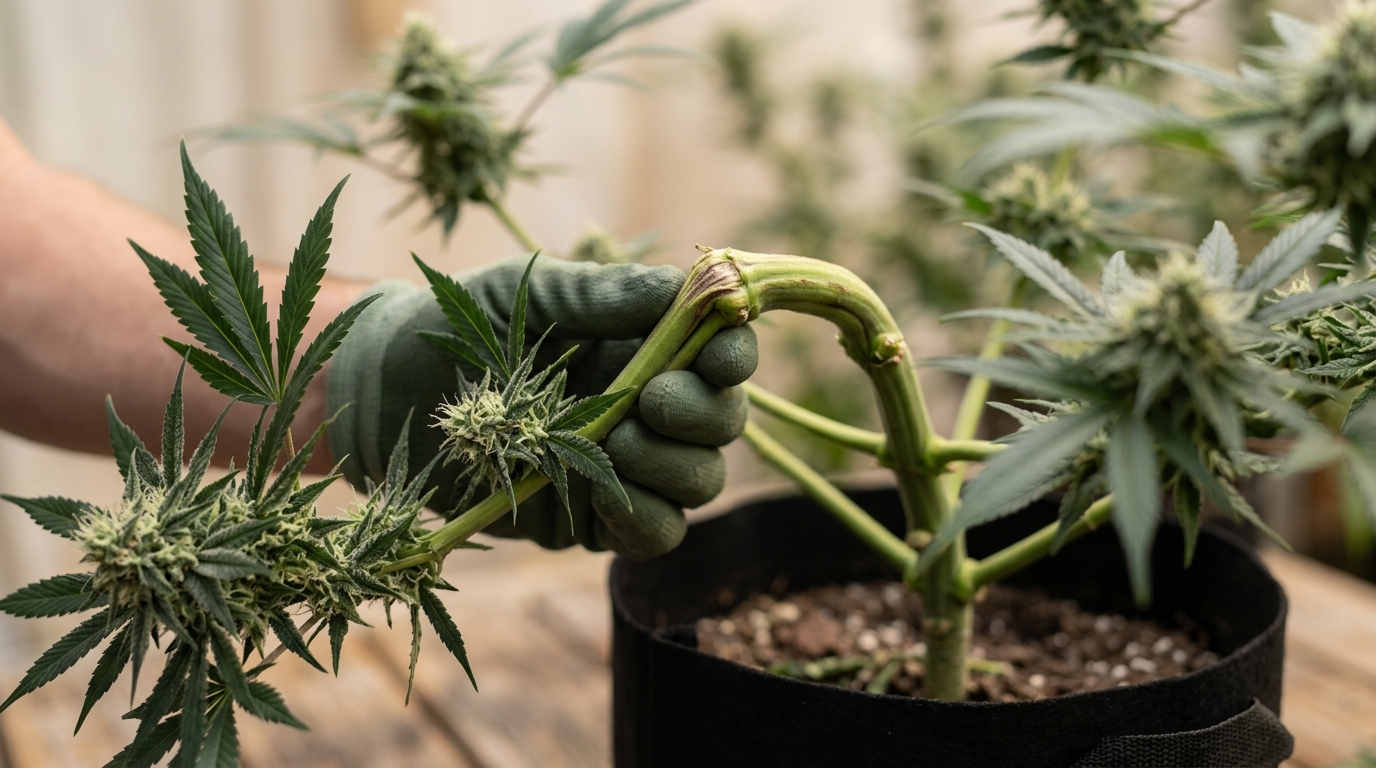
Supercropping is classified as a high-stress training (HST) method, meaning it deliberately causes controlled physical stress rather than simply redirecting growth. Unlike low-stress techniques such as LST, supercropping requires you to damage the inner vascular tissue of a branch through firm pinching and bending, while leaving the outer skin unbroken.
I first tried it during a Blue Dream run back when I was still dialing in my canopy management game. Honestly, the first time you do it, your stomach drops a little. You’re bending a healthy branch until you feel something give inside, and every instinct says you just killed it. But that’s the whole point. The plant responds to that micro-trauma by building a dense knuckle of reinforced tissue at the bend, which ends up stronger than the original branch ever was.
The science connects to how cannabis responds to mechanical stress. Research published in Cannabis and Cannabinoid Research confirms that plants redirect resources toward damaged sites as part of their wound-response biology, which is exactly what makes supercropping effective when done right.
Why Growers Supercrop: The Real Benefits
The primary goals of supercropping are canopy leveling, improved light distribution, and increased yield potential. Tall branches get bent down to match shorter ones, so your entire canopy sits at roughly the same distance from your light source. That alone can meaningfully change how evenly your plants develop.
When I ran a Gorilla Glue pheno last fall that was shooting way ahead of the rest of the canopy, supercropping was the fastest fix I had. Bent that dominant branch over in about 30 seconds. Within a week the knuckle had formed, the other branches caught up, and I lost zero recovery time.
The healing knuckle itself is worth talking about. That thickened tissue allows better water and nutrient transport through the branch, meaning more flow to the bud sites above the bend. In my experience, supercropped branches often produce denser, heavier colas than untouched ones on the same plant, assuming your environment is dialed in. Some growers also report better trichome coverage after supercropping runs, though genetics and environment play heavily into that.
Did you know? Colorado allows adults to grow up to six cannabis plants at home under Amendment 64. According to the Colorado Department of Regulatory Agencies, home growers are subject to plant count limits regardless of training method, which is exactly why techniques like supercropping matter so much. Getting more from fewer plants is the whole game.
How and When to Supercrop Cannabis
Timing matters more than most new growers realize. Supercropping works best during the vegetative stage or in the first one to two weeks of flower, when branches are still pliable and the plant has enough recovery time before committing fully to bud production. Too late in flower is a mistake I’ve seen plenty of people make.
The technique itself takes about a minute per branch once you’ve got the feel for it. Pinch the branch firmly between your thumb and forefinger, roughly a third of the way up from the base of the node you’re targeting. Roll the tissue back and forth while applying gentle pressure until you feel the inside soften. Then bend the branch to roughly 90 degrees and hold it there for a few seconds. It should stay in position on its own. If it springs back, use soft plant tie or a strip of tape to hold it while the knuckle forms.
Recovery typically takes 3 to 7 days. The branch will droop for the first day or two. Don’t panic. The knuckle starts forming within 24 to 48 hours, and by day 5 that branch is usually standing on its own and growing upward again.
Supercropping autoflowers is a topic that comes up constantly. My honest take: it can work, but the margin for error is much smaller. Autos don’t have the same recovery window that photoperiod plants do. If you want to try it on autos, do it early, limit it to one or two branches, and watch the plant closely. Check out the Autoflower vs Photoperiod breakdown if you’re still deciding which route fits your setup.
Supercropping vs. Other Training Techniques
Supercropping sits in a different category than low-stress methods, but it’s often used alongside them rather than instead of them. Knowing where it fits helps you build a smarter training plan from the start.
Topping removes the apical meristem to create two main colas instead of one. It’s a permanent structural change. Supercropping doesn’t remove anything; it redirects existing growth by bending. I often top early in veg and use supercropping later to manage the branches that result. They work well together.
LST uses ties to gently bend branches over time without causing internal damage. It’s softer and better suited to autoflowers and sensitive genetics. Supercropping is faster and more aggressive, which is why experienced growers reach for it when they need quick canopy correction rather than gradual reshaping. For a broader look at where supercropping fits in your grow room toolkit, the cannabis glossary covers the full range of training and cultivation terms.
Key Facts
✓ Supercropping is an HST technique that damages inner branch tissue while leaving the outer skin intact
✓ The plant responds by forming a dense “knuckle” of reinforced vascular tissue at the bend point
✓ Best performed during late vegetative stage or the first 1-2 weeks of flower
✓ Recovery typically takes 3 to 7 days under healthy growing conditions
✓ Works best on photoperiod strains; autoflowers require extra caution due to their fixed growth timeline
✓ Can be combined with topping and LST for more complete canopy management
✓ No special tools required, just your fingers and optionally some soft plant tie
Frequently Asked Questions
What does supercropping actually do to the plant?
It creates controlled internal damage that triggers the plant’s wound-response system. The plant rushes resources to the damaged area and builds a reinforced knuckle of tissue. That healing process also improves nutrient and water flow through the branch, which can lead to denser bud development above the bend. The main practical benefit most growers see is a more level canopy and better light coverage across all bud sites.
Is supercropping worth the risk?
For most photoperiod grows, yes. The technique is free, requires no tools, and the payoff in canopy evenness alone justifies the work. The main risk is overdoing it, either snapping the outer skin entirely or supercropping too late in flower when the plant can’t recover effectively. Careful timing keeps the risk low. It’s one of the higher-return training methods available to home growers working within plant count limits.
How long does recovery take after supercropping?
Most healthy plants show visible recovery within 24 to 48 hours, with the branch beginning to stand back up and the knuckle starting to form. Full recovery usually happens within 3 to 7 days. Plants in peak vegetative health with strong root systems tend to recover on the faster end. If your plant is already dealing with nutrient issues or environmental stress, recovery takes longer and the risk of complications goes up. Fix any existing problems before you train.
Can you supercrop during flower?
You can, but the window is short. The first one to two weeks of flower is the generally accepted cutoff. After that, the plant is committing energy to bud production rather than vegetative repair, and a significant stress event can cost you yield instead of adding to it. If you’re in early flower with a branch shooting way above your canopy, a careful supercrop is still reasonable. Mid to late flower? Leave it alone and adjust your light height instead.
Ready to put supercropping to work? Start with genetics that reward training. Our indoor seed selection includes high-yielding photoperiod strains that respond exceptionally well to high-stress techniques like supercropping.