Autoflowers flower based on age rather than light schedule, finishing in 8 to 11 weeks from seed with no light-cycle management required. Photoperiod strains need a shift to 12/12 lighting to trigger flowering and give you more control over plant size, yield, and canopy management. Choose autos for speed and simplicity; choose photos when you want maximum yield potential and the ability to clone.
Reviewed by Darrel Henderson, Cannabis Cultivation Specialist | Updated March 28, 2026
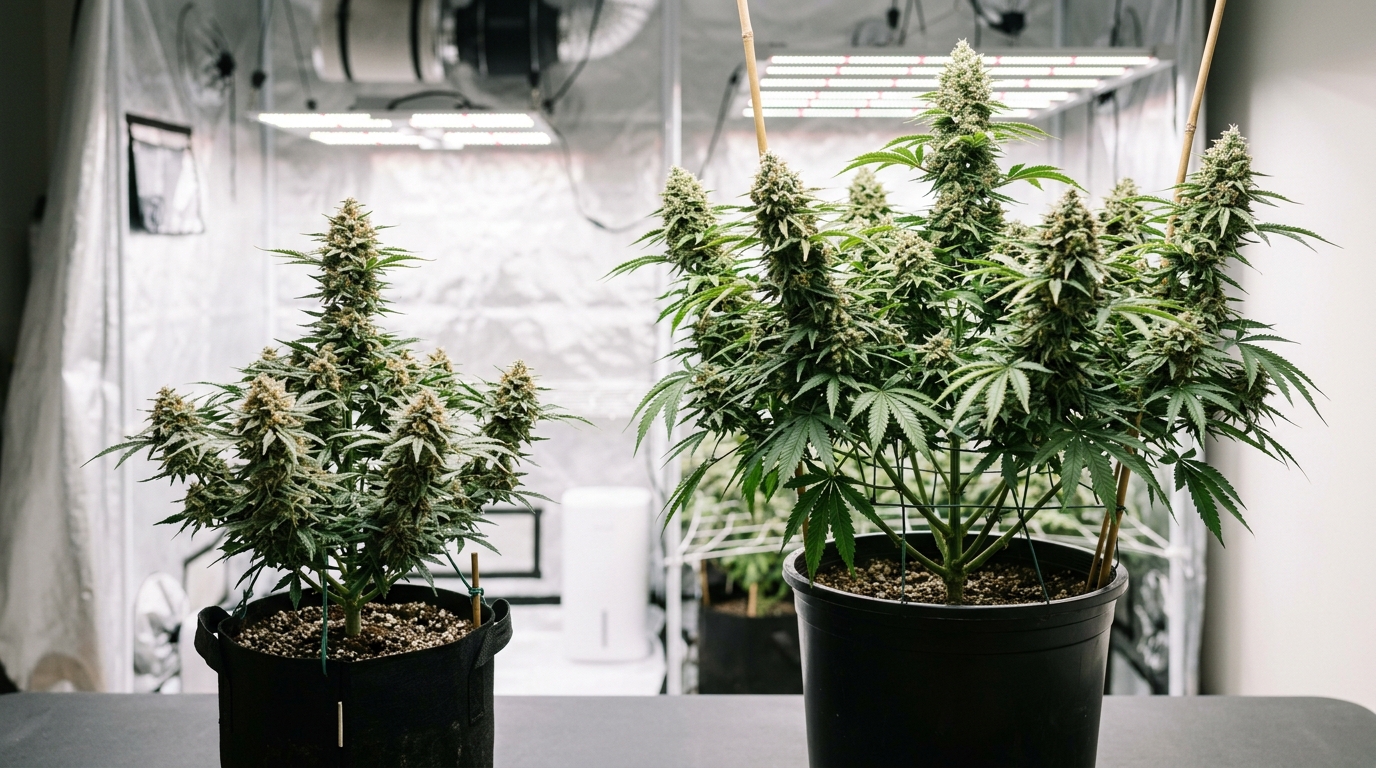
The autoflower vs photoperiod debate is probably the first real decision every new grower faces. I’ve grown both for over a decade out of my Denver setup, and honestly the “which is better” framing misses the point. They’re different tools. Knowing when to reach for each one is what separates growers who are happy with their harvests from growers who are frustrated with them. Check out our full cannabis glossary if you want to get the vocabulary down before we dig in.
What Is an Autoflower?
An autoflowering cannabis strain flowers automatically based on age, typically transitioning 3 to 5 weeks after germination regardless of how many hours of light it receives. This trait comes from Cannabis ruderalis genetics, a subspecies that evolved in harsh, short-season climates where waiting for a seasonal light shift wasn’t an option. You can read the full breakdown in our guide on What Is Cannabis Ruderalis?
What Is a Photoperiod Strain?
A Photoperiod strain is a cannabis plant that relies on changes in the light cycle to trigger flowering. Indoors, growers flip the timer from an 18/6 or 20/4 vegetative schedule down to 12 hours of light and 12 hours of darkness to initiate bud production. Outdoors, the plant reads the shortening days of late summer and responds naturally. Most classic and modern elite genetics, from OG Kush to Gelato, are photoperiod plants.
Key Differences
| Factor | Autoflower | Photoperiod |
|---|---|---|
| Flowering trigger | Age (automatic) | Light cycle (12/12) |
| Seed to harvest | 8 to 11 weeks | 14 to 22+ weeks |
| Typical plant size | Compact (60 to 120 cm) | Variable (can exceed 200 cm) |
| Average yield (indoor) | Lower to moderate | Moderate to very high |
| Cloning | Not practical | Yes, fully supported |
| Light schedule flexibility | High (18/6 to 24/0) | Requires 12/12 for flower |
| Recovery from stress | Limited (time-constrained) | Good (veg stage can extend) |
| Multiple harvests per year (indoor) | 3 to 4 possible | 2 to 3 typical |
| Outdoor season requirement | Any season, short window | Needs full season |
| Beginner-friendliness | High (no light management) | Moderate (more variables) |
The genetics behind these differences are well-documented. Research published in a major-effect flowering time loci study identified specific genomic regions responsible for the autoflowering trait, confirming that the day-neutral flowering behavior in ruderalis-derived strains is driven by distinct genetic architecture compared to photoperiod-sensitive cannabis. A separate study on photoperiod effects on cannabis flowering showed that even small deviations from the 12/12 schedule can measurably impact bud development in photoperiod strains, something autos are completely immune to.
Did you know? Colorado, one of the first U.S. states to legalize recreational cannabis, allows home cultivation of up to 6 plants per adult. According to the Colorado Department of Public Health and Environment, only 3 of those 6 plants may be flowering at any one time. That restriction makes autoflowers particularly appealing for home growers in Colorado since their faster cycle lets you rotate harvests more efficiently within that 3-plant flowering cap.
When to Choose Autoflower
Speed is the number one reason I point beginners toward autos. When I first started mentoring new growers here in Denver, the ones who got discouraged fastest were the ones who had to wait 5 months for their first harvest. Autos cut that wait dramatically. You pop a seed, keep your lights on a consistent schedule, and the plant does the rest on its own timeline.
Stealth grows and small spaces are another obvious fit. Autos stay compact almost by design, which means you can run a solid grow in a 2×2 or 2×4 tent without fighting your canopy every week. I’ve run Northern Lights autos in a 2×4 and pulled respectable yields without any serious training beyond a light LST.
Outdoor growers in short-season climates have the most to gain. If you’re somewhere with a growing window of only 3 to 4 months, a photoperiod plant may not finish before frost. An auto can go from seed to harvest in under 70 days, which means you can even squeeze in two outdoor runs in a single season if you time it right. Check out our guide on How to Grow Cannabis at Home for full season-planning tips.
Light leaks are also a non-issue with autos. In a photoperiod grow, even a small light leak during the dark period can stress your plants or cause hermaphroditism. Autos don’t care. That alone makes them way more forgiving in imperfect setups.
One thing I always tell people though: don’t stress an auto. Because they’re running on a fixed internal clock, they don’t have extra time to recover from topping mistakes, transplant shock, or nutrient burns the way a photo does. Keep it simple, keep it stable, and let the plant do its thing.
When to Choose Photoperiod
If yield is your priority, photos win. Full stop. A well-dialed photoperiod plant in a proper setup can produce two to three times what a comparable auto delivers, sometimes more. I ran Girl Scout Cookies photos last fall in a 4×4 with a 600W HPS and pulled over 400 grams dried. That’s not a number I’ve matched with autos in the same space.
Cloning is another massive advantage. With photos, you can take cuttings from a mother plant and preserve exceptional phenos indefinitely. Found a Gorilla Glue pheno with insane trichome coverage and terps that knock you sideways? Clone it and run it forever. You simply can’t do that with autos in any practical way since they start aging the moment they sprout.
Experienced growers who want full canopy control also lean toward photos. Techniques like super cropping, mainlining, and SCROG (screen of green) all work best when you can extend the vegetative stage as long as needed to fill your space properly. Our guide on Super Cropping Cannabis covers exactly how to get the most out of that veg window.
Photos also give you a recovery window. If you accidentally over-fertilize or your plant gets stressed from a heat spike, you can just keep it in veg longer until it bounces back. With an auto, that clock keeps ticking whether the plant is healthy or not.
Outdoor growers in full-season climates with long summers can grow absolutely massive photoperiod plants. In places like California’s Emerald Triangle, outdoor photos can reach tree-like proportions and yield several pounds per plant. That scale is just not possible with autos. For a deeper look at how seed type affects your approach, our article on Feminized vs Autoflower vs Regular Seeds breaks down all three categories side by side.
Frequently Asked Questions
Are autoflowers weaker or less potent than photoperiod strains?
This was true 10 years ago. Early auto genetics were often lower in THC and produced airy, less-developed buds compared to their photo counterparts. Modern breeding has closed that gap significantly. Today’s top-shelf autos from reputable breeders regularly test above 20% THC with solid Trichomes coverage and complex Terpenes profiles. The potency difference is now mostly about the specific strain and breeder rather than the auto vs photo distinction itself.
Can I grow autoflowers and photoperiod plants in the same room?
Technically yes, but it creates a real headache. Autos do best on 18 to 20 hours of light per day throughout their entire life. If you flip your room to 12/12 to flower your photos, your autos will still flower (they always do), but they’ll produce less because they’re getting less light during the process. The practical answer is to run them in separate spaces or at least separate tents if you want both types performing at their best.
How do I tell an autoflower from a photoperiod plant once it’s growing?
The clearest sign is when pistils (white hairs) start appearing at the nodes without any light schedule change. If your plant is 4 to 5 weeks old, still on an 18/6 schedule, and you’re seeing preflowers or early bud sites forming, it’s almost certainly an auto. Photoperiod plants will hold in veg indefinitely under 18+ hours of light and won’t show serious bud development until you flip to 12/12. Plant size at 4 weeks is another clue since autos tend to stay noticeably more compact early on. For more on reading your plant’s development stage, our guide on When to Harvest Cannabis covers the full lifecycle from preflower to ripe trichomes.
Which is better for a first-time grower: autoflower or photoperiod?
Most first-timers do better starting with autos, and I say that having taught a lot of new growers over the years. The main reason is simplicity. You don’t have to manage a light flip, worry about light leaks causing hermies, or figure out how long to veg. You just keep the lights consistent and let the plant move through its stages on its own. The downside is that autos are less forgiving of rookie mistakes since they can’t wait for you to fix a problem. If you’re comfortable following a feeding schedule and keeping your environment stable, autos are a great first run. If you want more control and don’t mind a longer timeline, start with a beginner-friendly photoperiod strain like Northern Lights or Blue Dream.
Ready to pick your first seeds? Whether you’re going auto for speed or photo for yield, we’ve got genetics worth growing. Browse our full autoflower seed collection and find your next run.